

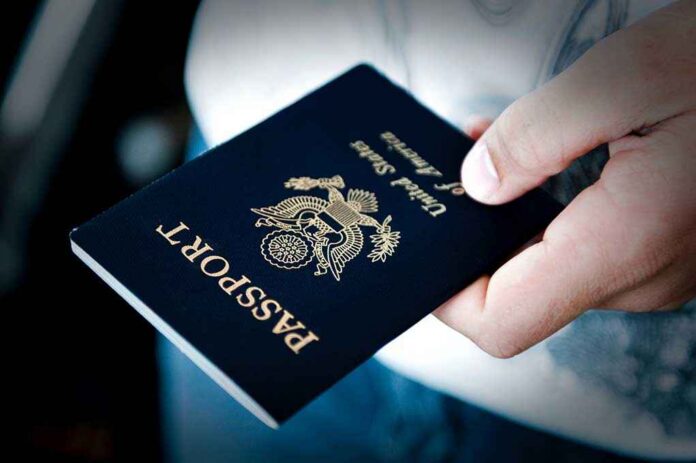
The Netherlands just told a transgender American, “We believe you,” and still refused to protect her.
Story Snapshot
- An Amsterdam court upheld the denial of asylum for U.S. transgender woman Veronica Clifford-Arnold in August 2025.
- Dutch authorities treated her personal account as credible but said it didn’t meet the legal threshold for persecution.
- The United States remains classified by the Netherlands as a “safe country,” based on a review completed in September 2024.
- The case became a high-profile test of whether political shifts in America can overturn “safe country” assumptions in Europe.
A Credible Fear That Still Doesn’t Qualify
Veronica Clifford-Arnold, a 28-year-old transgender woman from the United States, asked the Netherlands for asylum after describing death threats, street harassment in San Francisco, and difficulty obtaining medical care she believed she needed to live safely. The Dutch Immigration and Naturalization Service accepted the core of her story as believable. The court’s decision turned on a colder question: whether the U.S. state system is so unable or unwilling to protect her that asylum becomes justified.
That distinction matters because asylum isn’t supposed to reward a preference for a better country; it’s supposed to prevent someone from being forced back into serious danger. Dutch officials argued her situation, while troubling, didn’t show a collapse of protection in the United States or conditions so severe that her “ability to exist” was fundamentally blocked. To many readers, that sounds like hair-splitting. To asylum systems trying to stay functional, it’s the line between rescue and an open door.
How the “Safe Country” Label Locks the Door
Dutch asylum law leans heavily on a list of “safe countries of origin,” and the United States sits on that list after a Ministry of Foreign Affairs assessment completed in September 2024. When a country is deemed safe, the burden shifts sharply onto the applicant to prove they face exceptional, individualized persecution and that their government can’t or won’t protect them. The court effectively said: credible fear alone doesn’t defeat the presumption that America still operates courts, police, and remedies.
This is where the story becomes more than one person’s tragedy; it becomes a clash between politics and paperwork. Clifford-Arnold tied her danger to U.S. policy changes after President Donald Trump’s January 2025 inauguration. Advocates argue the Dutch “safe” assessment looks outdated in that context. The Dutch system, however, moves on scheduled reviews and evidence thresholds, not headlines. If every political swing in a democracy triggered automatic asylum eligibility, European courts would invite a flood they cannot process.
Why a Western Democracy Asylum Claim Feels Like Dynamite
Asylum claims from Americans land differently because they implicitly accuse a wealthy democracy of failing at basic civil order. That’s not just embarrassing diplomatically; it’s politically combustible at home for the Netherlands, where voters scrutinize immigration costs and capacity. Conservative common sense says a nation has a right to set firm standards and protect its borders, and it also says the system collapses if “I feel unsafe” becomes the test. Asylum requires proof of targeted persecution and the absence of effective state protection.
That doesn’t mean Clifford-Arnold’s fears are imaginary; it means courts demand a specific kind of proof. Did she seek police protection? What happened when she did? Are there legal remedies available in the U.S. that could realistically reduce the risk? When a country is labeled safe, an applicant must demonstrate that those avenues are effectively closed to them in practice, not merely difficult, slow, or politically contentious. The Dutch court’s posture suggests it believed U.S. mechanisms remain available, even if imperfect.
The Growing Wave Behind One “Landmark” Case
Clifford-Arnold’s case drew attention partly because she said she expected to be the only American making such a request, then watched the number grow—reporting at least 29 other Americans in similar processes, with earlier reporting suggesting around 50 inquiries within a month of the 2025 inauguration. Even if those figures are partly self-reported and fluid, they signal something real: some Americans now view Europe’s asylum system as a potential escape route, not just an abstract human-rights topic.
That trend sets up the next fight: whether the Netherlands should revisit the U.S. “safe country” label sooner than the normal cycle. A fair-minded system should stay open to new evidence, but it also has to resist being whipped around by social-media virality and partisan panic. The most sustainable approach is a sober reassessment built on documented conditions, not a single heartbreaking profile. If the U.S. remains safe for most people most of the time, Dutch courts will continue to demand extraordinary proof from extraordinary cases.
What This Decision Signals to Americans Watching From Home
The court’s rejection sends a blunt signal: moving from fear to refugee status requires more than proving you’re scared or even proving you’ve been mistreated. It requires showing a severe and durable inability to live safely with state protection. Americans who assume “Europe will save me” may discover the opposite—European governments often treat U.S. applicants as people with options, including internal relocation, civil litigation, elections, and functioning institutions, even when those institutions frustrate them.
The open question is whether Dutch policy can stay credible if claimants present stronger, more systematic evidence of state-level medical denial or targeted violence with no effective remedy. That’s the pressure point: not whether America has problems, but whether those problems reach the asylum definition of persecution with government failure. Clifford-Arnold’s case may not be the last; it may be the test run that teaches future applicants exactly what documentation, police reports, and legal records they’ll need—and what they still won’t be able to prove.
For readers who value rule of law, the Dutch decision offers a hard truth: compassion without standards becomes chaos, and chaos ultimately harms everyone, including genuine refugees. For readers sympathetic to Clifford-Arnold, the same decision exposes a different hard truth: “safe country” labels can lag behind lived reality. The Netherlands chose administrative stability over a precedent that could redefine asylum from the West. The next chapter depends on whether the evidence, not the outrage, changes.
Sources:
Court to rule on Netherlands’ rejecting asylum request of American trans woman
Dutch court denies U.S. trans woman asylum on basis of her gender identity