In less than 24 hours, President Trump went from pausing most ICE vehicle stops after two fatal shootings to publicly ordering those same traffic stops back on, putting whoever pulled the plug squarely on notice.
Story Snapshot
- Trump officials quietly told Immigration and Customs Enforcement to suspend most vehicle stops after two deadly shootings in Texas and Maine.
- Trump then blasted the pause and said ICE must not “give up” traffic stops, calling them a key crime-fighting tool.
- The clash exposes a deeper fight over how far immigration agents should go on American roads and highways.
- The episode fits a larger pattern of aggressive enforcement, public backlash, and fast reversals under Trump’s mass deportation agenda.
Deadly Shootings Force A Sudden Nationwide Halt
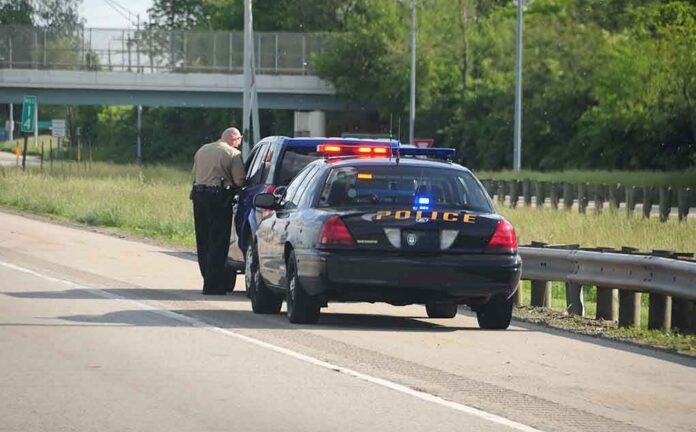
Trump’s own administration first slammed the brakes. After an Immigration and Customs Enforcement officer shot and killed a Colombian driver in Biddeford, Maine, and another motorist in Houston just days earlier, officials in Washington quietly ordered ICE officers to suspend most vehicle stops nationwide. The directive reached agents through internal guidance and emails, telling them to stop initiating traffic stops during enforcement operations except in limited, serious criminal cases. This was a major shift for an agency that had leaned heavily on car stops as part of Trump’s broader deportation push.
News outlets described the pause as a “huge reversal” from ICE’s recent tactics, which relied on traffic stops to detain immigrants far from the border. Immigration and Customs Enforcement enforcement teams within the Enforcement and Removal Operations division were told they could still help local police when serving criminal warrants involving suspects in vehicles, but the era of routine ICE-initiated car stops was, at least on paper, put on hold. The order came as members of Congress and the public demanded answers on why agents were firing into cars, and whether basic rules on use of force and reasonable suspicion were being followed.
Trump Blasts The Stand-Down And Calls Traffic Stops Essential
The pause did not last long without challenge from the top. Within a day, President Trump went on Truth Social and rebuked reports of the ICE traffic stop halt. He praised Immigration and Customs Enforcement officers, declared crime is “way down,” and insisted traffic stops are “one of ICE’s most important and effective crime fighting tools.” He warned that giving up vehicle stops would be “playing right into the criminals hands” and framed the issue as a showdown with “Radical Left” Democrats who, he claimed, would like to see enforcement weakened. The message was crystal clear to agents: go back to stopping cars.
Trump’s post did more than cheerlead. It effectively put whoever ordered the stand-down on notice. He told Immigration and Customs Enforcement to “go back and do your very important job” and keep arrest statistics flowing. For conservatives who believe the border crisis has flooded the country with dangerous criminals, this fits common sense: you do not handcuff your own officers after they confront violent suspects. For critics, Trump’s tone ignored serious questions about training, use of force, and whether ordinary immigrants, or even citizens, are being put in danger by aggressive highway tactics.
Legal Limits, Reasonable Suspicion, And A Pattern Of Overreach
Immigration and Customs Enforcement may call traffic stops a crime-fighting tool, but the law sets guardrails. Federal immigration agents cannot stop cars for basic traffic violations the way local police can; they must have a particular reason tied to immigration or a federal crime. Court rulings and settlement agreements have tried to rein in abuses, requiring probable cause to arrest without a warrant and reasonable suspicion before stopping a vehicle. Despite that, investigations have found agents using race, language, and job type as key factors, raising serious civil rights concerns.
Under Trump, legal and political battles over these practices have intensified. A federal report described a “short timeframe” in which immigrants stopped by agents were held far longer than guidelines suggest. A settlement in the case Castañon Nava versus the Department of Homeland Security forced Immigration and Customs Enforcement to end unlawful “collateral arrests” through car stops in several Midwestern states. Yet the Supreme Court later allowed immigration officers to use race and ethnicity among factors in “roving patrols” in Los Angeles, a decision that civil libertarians warned would open the door to profiling. This push and pull sets the stage for every new directive, including the recent halt and Trump’s rapid counter-order.
Trump’s Mass Deportation Agenda And Roadside Enforcement
The clash over traffic stops is not a random policy hiccup. It fits neatly into Trump’s broader enforcement blueprint. His administration has launched mass deportation flights, expanded quick removals without court hearings, and created Homeland Security task forces in every state to chase cross-border crime. Tens of billions in new funding have gone to Immigration and Customs Enforcement and related agencies to ramp up arrests and detention. In practice, that has meant more officers on city streets, in workplace raids, and now, in the middle of American roads.
🚨BREAKING: President Trump has called for ICE to resume traffic stops, overriding Homeland Security Secretary Markwayne Mullin's pause on the tactic ordered Tuesday following two fatal shootings by ICE agents in Texas and Maine.
"We CANNOT give up one of ICE's most important… pic.twitter.com/Z5cDnCOsiB
— Off The Press (@OffThePress1) July 15, 2026
Critics argue this looks less like normal law enforcement and more like a creeping “secret police” presence. Stories describe armed, masked officers breaking car windows, dragging out occupants, and even using chemical sprays on bystanders recording them. Several people have been shot during immigration operations, with multiple deaths linked to aggressive vehicle tactics. Polling shows about two-thirds of Americans now believe Immigration and Customs Enforcement has “gone too far” in enforcement, even as many still want strong borders and real consequences for violent offenders. That split runs straight through the current traffic stop fight.
Accountability, Common Sense, And What Comes Next
From a conservative, rule-of-law view, the core question is simple: can the United States keep tough immigration enforcement without turning highways into war zones? Trump’s instinct to protect his officers and resist what he sees as politically driven limits will resonate with many voters who are tired of crime and chaos. At the same time, the two recent shootings, the lawsuits, and the repeated court interventions show that unchecked power on the roadside invites real abuses and tragic mistakes.
Whoever ordered Immigration and Customs Enforcement to stand down on traffic stops likely saw that danger and tried to reset the balance, at least temporarily. Trump’s public demand to resume vehicle stops yanks the pendulum back toward aggressive enforcement. What has not changed is the underlying reality: agents still need reasonable suspicion, solid training, and clear rules if they are going to point guns at people on American roads. Without that, every new incident risks not only lives, but the public trust that any serious crime-fighting effort needs to survive.
Sources:
redstate.com, stateline.org, nytimes.com, yahoo.com, aol.com, pbs.org, nbcnews.com, reuters.com, abcnews.com, devdiscourse.com, rawstory.com, carbajal.house.gov, cnn.com
© conservativehub.com 2026. All rights reserved.