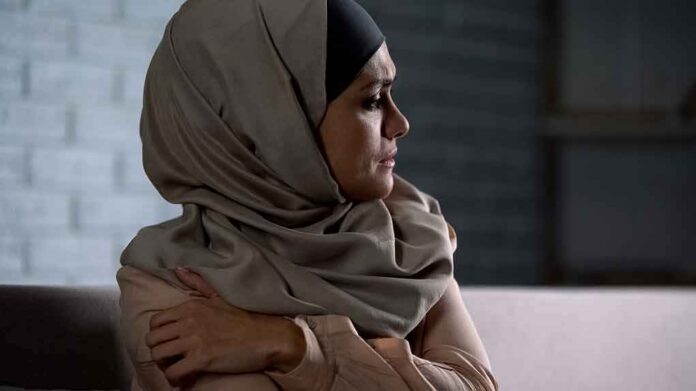
Iran executed Marzieh Nieri after a court rejected her claim that she acted to stop a sexual assault.
Quick Take
- Nieri was executed at Qazvin Central Prison after being convicted in a killing tied to a 2021 confrontation.
- Reporting says she told the court she stabbed a man with a kitchen knife while defending herself from a sexual assault attempt.
- The court rejected her self-defense claim and treated the case under Iran’s retribution law.
- Human-rights reporting says she had been forced into marriage as a teenager and was 18 at the time of the incident.
The execution and the court fight behind it
Iranian authorities executed Marzieh Nieri at dawn in Qazvin Central Prison, according to multiple reports. Euronews said she was 23, while human-rights reporting described her as 24 and said the sentence was carried out on August 8, 2026. The basic outline is clear: a woman accused of killing her husband was put to death after the state rejected her claim that she was defending herself.
The case began in October 2021, when Nieri was 18. Euronews reported that she told the court one of her husband’s business partners, after drinking, tried to assault her and that she cut him with a kitchen knife in self-defense. Reporting in Spanish and Polish matched that account and added that her husband died during the same confrontation. That detail matters because it shows why the case moved from a violent struggle to a capital sentence.
Why the sentence became a death sentence
The court rejected Nieri’s self-defense claim, and the families of the dead asked for qisas, the retributive framework used in Iranian law. Under that system, a murder case can move from a criminal dispute into a family-driven demand for execution. Voice of America said she was convicted of killing her husband and sentenced to qisas, while Hengaw reported the same outcome and said the authorities executed her at Qazvin Central Prison.
That legal structure is the engine of the story. Once the court accepts the killing as murder rather than self-defense, the family’s request can carry the case toward hanging. In Nieri’s case, the state did not accept her explanation, and the punishment followed the law’s harshest path. The reporting does not show a public official version that overturns that account, only the court’s decision to reject it.
The child-marriage backdrop
Rights groups framed Nieri’s execution as part of a broader pattern of abuse, coercion, and punishment. The World National Council of Iranian Women said she had been forced into marriage at 17 and executed at 24, while other reporting repeated that she was a victim of child or forced marriage. That background gives the case its moral force, but the hard facts that remain central are simpler: she said she acted in self-defense, and the court said no.
Marzieh Nieri, 23, was executed at Qazvin Central Prison after a court rejected her account of wounding a man who had attempted to assault her, bringing the number of women executed in Iran since the start of 2026 to at least 14.
Iran executed a young woman at dawn on Saturday… pic.twitter.com/odWiGC8r4V— Alma Gentil (@Chinoy200096633) August 11, 2026
Social media posts amplified the same themes, describing her as a young woman executed for resisting sexual assault and for fighting back against a man in her home. Those posts are not the legal record, but they show how the case landed publicly: as another example of a system that can turn a self-defense claim into a death warrant. The reported facts make that reaction understandable, even without adding anything beyond the record.
Sources:
thegatewaypundit.com, euronews.com, pl.euronews.com, es.euronews.com, wncri.org, nessunotocchicaino.it, index.hr, ir.voanews.com, deathpenaltynews.blogspot.com
© conservativehub.com 2026. All rights reserved.