

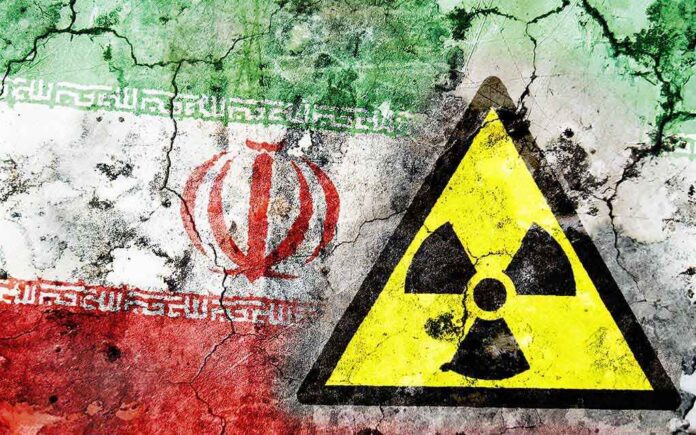
A California congressman just admitted Iran stockpiled enough enriched uranium to build 11 nuclear bombs under the Biden administration, yet still insists military strikes were the wrong move.
Story Snapshot
- Rep. Ro Khanna acknowledged Iran possessed uranium for approximately 11 nuclear weapons during a March 2026 Fox News interview
- The California Democrat opposed U.S. strikes despite the stockpile, arguing Iran lacked missiles capable of reaching American soil
- U.S. military operations against Iranian facilities resulted in 13 American deaths while degrading Tehran’s nuclear capabilities
- Khanna defended the failed 2015 nuclear deal as having successfully delayed weaponization, contradicting Iran’s actual enrichment trajectory
- The congressman’s position sparked accusations of prioritizing diplomatic ideology over threats to U.S. allies in Israel and the Gulf
The Uncomfortable Admission That Raises More Questions
Rep. Ro Khanna sat across from Fox News interviewers on March 16, 2026, and delivered a statement that should have stopped the conversation cold. Iran had enriched enough uranium for 11 nuclear bombs. Eleven. Not theoretical capacity or future potential, but actual stockpiled material ready for weaponization. Yet the progressive congressman from California’s 17th district pivoted immediately to why strikes against those facilities represented the real danger. His reasoning hinged on a technicality: Iran had not yet developed intercontinental ballistic missiles capable of striking the American homeland. This geographic distinction apparently made weapons-grade uranium an acceptable risk worth managing through diplomacy rather than destruction.
The position reveals a philosophical divide over what constitutes an imminent threat. Khanna’s calculus excludes U.S. allies from the equation, treating Israel, Saudi Arabia, and other Gulf states as somehow separate from American security interests. Iran does not need ICBMs to vaporize Tel Aviv or destabilize the Strait of Hormuz. The uranium Khanna acknowledges exists today could become functional weapons targeting American partners tomorrow, yet his framework dismisses this timeline as non-urgent. This is the same lawmaker who supports billions in military aid to Ukraine for deterrence purposes, creating an uncomfortable inconsistency in his foreign policy logic.
How a Cancelled Deal Created a Uranium Avalanche
The 2015 Joint Comprehensive Plan of Action represented the Obama administration’s signature diplomatic achievement with Iran. The agreement capped uranium enrichment at 3.67 percent, far below the 90 percent needed for weapons, and limited stockpiles to 300 kilograms. In exchange, Tehran received sanctions relief worth billions. Khanna points to this deal as proof that diplomacy works, citing its 12 to 15 year delay of weaponization. The problem with this narrative is what happened after President Trump withdrew in 2018. Iran did not merely resume previous enrichment levels. The regime accelerated dramatically, reaching 60 percent enrichment and stockpiling enough material for double-digit bomb quantities by 2026.
International Atomic Energy Agency reports confirmed Iran blocked inspector access to key facilities during this period, raising obvious questions about what activities required concealment. The deal Khanna champions did not prevent nuclear weapons development; it postponed detection while providing economic resources Iran redirected toward proxy forces across the Middle East. Hezbollah, Hamas, and Houthi rebels all received upgraded capabilities funded partly through sanctions relief. The JCPOA worked only if one defines success as kicking the problem down the road while enriching the regime’s capacity for regional aggression. By any measure focused on actual nonproliferation, the deal failed spectacularly.
The Strike Debate and Its Body Count
U.S. military operations against Iranian nuclear facilities in early 2026 achieved significant degradation of Tehran’s offensive capabilities according to initial assessments. The strikes also killed 13 American service members, a fact Khanna emphasized repeatedly in challenging the operation’s authorization. His argument centered on constitutional war powers, invoking James Madison’s warnings about executive overreach and demanding congressional approval for military action. This represents consistent positioning from Khanna, who introduced similar resolutions after the 2020 strike that killed Iranian General Qasem Soleimani. The congressman frames himself as a defender of constitutional limits against presidential adventurism.
Yet the war powers argument sidesteps the operational reality of targeting Iran’s nuclear program. Lengthy congressional debates broadcast American intentions, providing Iran time to disperse materials, harden facilities, and position human shields. The 13 deaths Khanna mourns occurred during strikes that required tactical surprise to minimize both American casualties and Iranian nuclear preservation efforts. His preferred alternative, building an international coalition for maximum pressure sanctions, assumes Tehran responds to economic incentives despite a decade of evidence showing the regime prioritizes nuclear capability over prosperity. The question becomes whether preventing those 13 deaths justifies accepting Iran’s path to weaponization.
What Allies Hear in the Silence
Khanna’s position that Iran posed no imminent threat because it lacked U.S.-reaching missiles plays very differently in Jerusalem and Riyadh than in Silicon Valley. Israeli defense planners operate under the assumption that Iran’s first functional nuclear weapon targets their nation, not California. Saudi Arabia watches Iranian proxies fire missiles at their oil infrastructure while American progressives debate whether Tehran’s nuclear program constitutes a real problem. The congressman’s framework treats allied security as a separate category from American interests, a distinction those allies find both alarming and clarifying about future U.S. commitments.
This dynamic extends beyond immediate military threats to broader regional stability. Iran’s pursuit of nuclear weapons drives Saudi Arabia and other Gulf states toward their own programs, creating a proliferation cascade that diplomacy has failed to prevent. Turkey, Egypt, and potentially others will reassess their nuclear posture if Iran achieves weaponization without consequence. Khanna’s emphasis on avoiding endless wars ignores how his preferred approach of accepting delayed proliferation makes wider conflict more likely as regional powers refuse to live under Iranian nuclear domination. The choice is not between war and peace, but between acting now or fighting later under worse conditions with more nuclear-armed participants.
Sources:
Ro Khanna Admits Iran Had Enough Uranium to Make Nuclear Weapons, Still Opposes Strikes
Rep. Khanna, Progressive Caucus Demand Congress Reclaim Its Power, Pass Iran War Powers Resolution
Rep. Ro Khanna: Congress Must Reclaim War Powers from an Out-of-Control Trump Over Iran