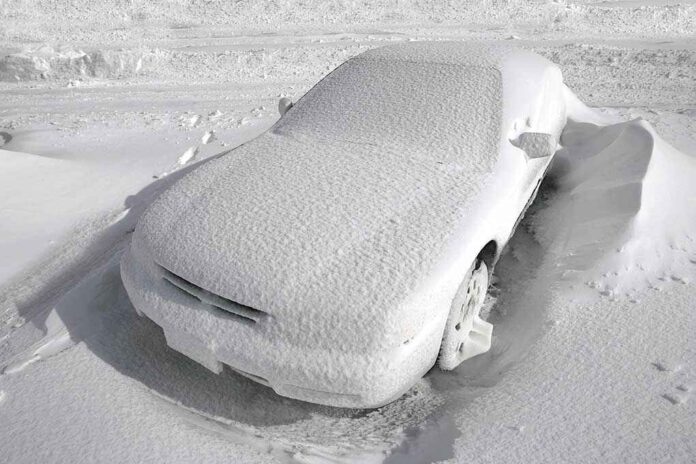
A rapidly deepening nor’easter threatens to bring the most extreme cold on Earth to the Northeast, just in time for Christmas.
Story Highlights
- The Northeast is expected to experience record-breaking cold temperatures due to a rapidly deepening nor’easter.
- Strong winds and heavy snow are anticipated, potentially causing hazardous travel conditions.
- Utility companies and emergency services brace for increased energy demand and potential outages.
- La Niña patterns contribute to the possibility of extreme weather events despite an overall warm seasonal outlook.
Nor’easter’s Impact on the Northeast
A nor’easter is forecast to rapidly deepen as it moves across the U.S. Northeast, bringing with it heavy snow and strong winds. This weather system is expected to result in what some predict as the “most extreme cold on Earth” before Christmas. Residents in the region are being urged to prepare for potentially hazardous conditions, including travel disruptions and increased energy demands.
The National Weather Service has issued warnings for the affected areas, highlighting the risk of power outages due to ice accumulation and high winds. Emergency management agencies are coordinating efforts to ensure public safety, and utility companies are on high alert to maintain service reliability during this critical period.
La Niña’s Role in Extreme Weather
NOAA’s Climate Prediction Center has indicated that La Niña conditions are expected to continue into the Northern Hemisphere winter of 2025-26. While the seasonal outlook generally favors above-normal temperatures across much of the East Coast, La Niña’s influence can lead to significant weather variability, including the possibility of extreme cold events like the one currently forecasted.
The North Atlantic Oscillation’s variability further adds to the potential for severe temperature anomalies. During periods dominated by one phase, abnormal weather patterns can extend across large areas, contributing to the current extreme cold narrative.
Preparing for Potential Impacts
As the Northeast braces for this historic cold event, several implications are being considered. The transportation sector is preparing for disruptions due to snow accumulation and strong winds. Additionally, the energy sector faces strain from increased heating demands and the risk of infrastructure stress. Public health agencies are also on alert to manage cold-related health emergencies, emphasizing the importance of preparation and resilience among affected communities.
While the broader seasonal trend suggests above-normal temperatures, this extreme cold event serves as a reminder of the unpredictability of weather patterns. It underscores the importance of being vigilant and prepared for sudden changes, especially during the winter months.
Sources:
Watchers.news: Nor’easter Forecast