
DFW Airport killed its plan for new Islamic ablution stations hours after Governor Greg Abbott threatened state grant reviews and federal referrals.
Story Snapshot
- DFW withdrew a proposal to add wudu stations in Terminal D restrooms after Abbott’s pushback.
- Abbott said government-owned airports cannot favor one religion and called the plan illegal.
- DFW already added two ablution stations near the Terminal D chapel in 2019.
- Airport leaders had described the plan as an internal service evaluation, not yet approved.
What DFW Planned And Why It Exploded
Dallas Fort Worth International Airport filed a project description with Texas regulators to add two ablution stations inside men’s and women’s restrooms in Terminal D. The filing and quick media coverage framed it as a $300,000 job that would finish after construction review. The airport said it had long offered an ablution option in the international terminal and was only evaluating an internal expansion, not a new concept or religious endorsement.
Airport leaders also noted the airport itself would fund any project if approved, contradicting early claims of private funding. They stressed it remained a proposal moving through internal review, not a green-lit build. The stated aim focused on safety and sanitation—reducing water on floors and counters from travelers performing ritual washing the regular way in standard sinks and stalls—while serving a visible share of international traffic.
The Governor’s Move That Stopped The Project
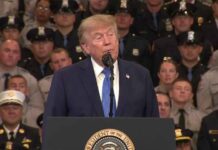
Governor Abbott posted that government-owned airports cannot favor one faith over others and said the DFW plan was illegal. He ordered a review of all state grants tied to DFW and Houston’s George Bush Intercontinental Airport and referred the airports to the United States Department of Transportation for investigation. Soon after, DFW said it would not move forward with the restroom ablution proposal. Cause and effect looked obvious in public view, even as the airport kept its 2019 chapel-adjacent stations in place.
Abbott’s case turns on equal treatment. A public facility cannot single out a religious group for special fixtures, he argued. That stance aligns with a core conservative view of neutral government and a single standard for all customers. He set a clear line: accommodate in ways that serve everyone or use multi-faith spaces, but do not install faith-specific hardware in common restrooms with tax-backed governance over the door.
The Often-Ignored Precedent Inside Terminal D
DFW’s own archive states that in 2019 the airport relocated the Terminal D chapel and added two ablution stations next to it for ritual purification. That precedent matters. It shows airports can house religious accommodation within a chapel ecosystem without sparking broad anger. The uproar rose when the airport shifted the setting from a defined interfaith zone to general restrooms, which felt to critics like government blessing of one faith in a shared space.
Dear Republicans,
Do not fall for the propaganda claiming there are no wudu stations already in Dallas or Houston airports.
That is simply untrue.
DFW Airport has had fully functional ablution (wudu) stations in its Terminal D interfaith chapel since 2019.
Houston’s Bush… https://t.co/6z2hv9xEl5 pic.twitter.com/Nl52PZpFhf
— Amy Mek (@AmyMek) August 15, 2026
Airports across the country run chapels and prayer rooms. Many serve diverse travelers with neutral design and flexible use. That approach has held up over time because it does not put religious signals into common areas where some see endorsement. The lesson is simple: keep faith-based features tied to neutral multi-faith spaces with equal access, and you meet needs without crossing a constitutional line or public trust.
What Comes Next For DFW And Other Hubs
Airport leaders now face a cleaner path. Maintain or improve the chapel-linked facilities that already exist. Keep restrooms secular and universal. If a hub must handle ritual washing, put it inside a staffed, multi-faith zone with clear rules and equal access for all faiths and none. That balances customer service, safety, and constitutional duty. It also avoids political flash points that burn time, damage trust, and risk state or federal scrutiny.
Conservatives should hold airports to two tests: does the feature serve everyone, and does it avoid endorsing a specific creed in public space? DFW’s course correction suggests those tests still shape policy in Texas. The airport can support travelers’ needs inside equal-access faith rooms. It should leave core restrooms to the shared standard that keeps the peace—and the floors—dry.
Sources:
townhall.com, foxnews.com, dfwairport.com, keranews.org, youtube.com
© conservativehub.com 2026. All rights reserved.