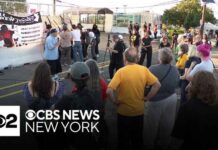

A viral moment at the Texas Capitol exposed how quickly legacy media can try to steer cameras away from pro-Trump reality.
Story Snapshot
- CBS Austin reporter Vinny Martorano was captured on live TV acknowledging he was told not to focus on a pro-strike, pro-Trump crowd—and he kept reporting anyway.
- The crowd included Iranian-Americans celebrating U.S.-Israel strikes on Iran that reportedly killed Supreme Leader Ayatollah Ali Khamenei.
- Martorano’s live shot also documented a smaller anti-war protest at the same location, showing a split reaction on the ground.
- CBS national coverage simultaneously aired segments featuring celebrations inside Iran and emotional reactions from Iranian-American journalist Masih Alinejad.
Live TV Moment: A Reporter Says the Quiet Part Out Loud
Vinny Martorano reported from the Texas Capitol in Austin on February 28, 2026, as Iranian-Americans and other supporters gathered after U.S.-Israel strikes on Iran. During the live segment, Martorano appeared to receive a directive via text telling him not to “focus” on the celebratory crowd. On air, he responded in real time—“Alright. Well, I am”—and continued describing what the crowd was doing and saying.
Martorano’s report highlighted chants of “Thank you Trump” and featured at least one on-camera celebrant, Sholeh Zendehdel, who said Iranians “inside and outside” were happy about what happened. He also documented the presence of anti-war demonstrators, including a participant identified as PJ Cornell of the American Communist Party of Texas, who argued the strikes ran against public desire for peace. The viral clip spread widely on March 1.
What Sparked the Celebrations: Strikes, Regime Shock, and Diaspora Relief
The rallies and broadcasts followed early-morning strikes on February 28 that multiple outlets reported killed Khamenei and others. CBS reporting described the operation as a U.S.-Israel action after weeks of failed diplomacy, with claims that intelligence indicated Iran was preparing missile attacks on U.S. allies. Public reaction was not limited to Americans; coverage described celebrations breaking out across Iran, with some people publicly crediting President Trump.
The emotional dimension matters because Iran’s ruling system has maintained power for decades through religious rule and repression, a theme raised repeatedly in televised discussions around the strikes. CBS contributor Masih Alinejad—an Iranian-American journalist who has said she survived assassination plots tied to the Iranian regime—spoke on air about “singing” and “screaming” while celebrating with people inside Iran. Her reaction mirrored what many exiles describe as relief, even amid fears of escalation.
CBS Coverage vs. the “Don’t Focus” Text: What Can Be Proven
The clearest verifiable fact is the video moment itself: Martorano stated on-air that “they don’t want us to focus” on the celebrants, then chose to keep covering them. That does not, by itself, prove a corporate conspiracy, but it does provide evidence of real-time editorial pressure at the field level—pressure that conservative audiences have long suspected exists whenever an event reflects positively on Trump or undermines preferred narratives.
At the same time, the broader record is more complicated than a one-note blackout. CBS aired multiple segments showing celebrations, including televised reporting about crowds in Iran and an interview with Alinejad celebrating the news. Another CBS segment framed the development as a historic opening after decades of repression, while also airing cautionary commentary describing the move as a major gamble and raising questions about congressional buy-in. The network’s output included both celebratory imagery and institutional skepticism.
Why the Viral Clip Resonates in 2026: Trust, Editing, and Public Memory
The clip struck a nerve because it put a familiar complaint into plain English: Americans see major outlets “curating” what they consider acceptable emotion—especially when gratitude toward Trump is involved. Conservative coverage praised Martorano for refusing to avert the camera from the chants and flags, framing it as a rare instance of a reporter choosing observable facts over message control. Critics, meanwhile, emphasized the risk of escalation and argued the strike narrative was being politicized.
HERO –> CBS Reporter Going ROGUE When Told Not to Share Iranians Celebrating Trump Is GLORIOUS (Watch)https://t.co/cxS4z3KCqu pic.twitter.com/WChXqBymjk
— Twitchy Team (@TwitchyTeam) March 2, 2026
For viewers already frustrated by years of ideological filtering—whether on border coverage, inflation blame-shifting, or cultural reporting—the Austin segment became a shorthand: if a crowd’s message doesn’t match the preferred storyline, someone tries to redirect the lens. The remaining open question is what consequences, if any, Martorano faced internally; no confirmed disciplinary action was reported in the available research. What is confirmed is that the public saw the attempt to steer coverage—and the refusal.
Sources:
MAGA-Coded CBS Anchor Tony Dokoupil Goes Full Trump on Iran War
WATCH: CBS Reporter DEFIES Orders Not to “Focus” on Crowd Celebrating
“I have been singing, screaming, celebrating with my people,” Iranian-American journalist says
Celebrations break out across Iran, some thanking Trump
WATCH: CBS Reporter Gets Word Not to Cover “Thank You Trump” Iranian Rally, Covers It Anyway
Iranian-American journalist calls Mamdani