
France’s prime minister kept the state of emergency on the table but ordered targeted curfews first.
Story Snapshot
- Prime Minister Sébastien Lecornu said a state of emergency could be declared “if needed.”
- Prefects were told to impose partial, very local curfews to protect order and businesses.
- Authorities reported nearly 2,400 arrests and close to 1,000 injured officers during the unrest.
- President Emmanuel Macron condemned “unbridled” violence but stopped short of an emergency.
Curfews First, Emergency Powers Kept in Reserve
Prime Minister Sébastien Lecornu moved to contain the violence by asking regional prefects to roll out partial, very localized curfews starting Monday evening. He framed the curfews as the right tool for now, while making clear that a state of emergency remained available if the situation demanded it. He dismissed the idea of a blanket Paris-wide curfew, calling it senseless, and pushed a targeted approach instead. The aim was to restore public order while letting normal life continue outside hot spots.
Lecornu gave the directive after an interministerial crisis meeting, signaling a shift from broad debate to concrete action. Partial curfews allow local commanders to focus on the blocks, transit hubs, and retail corridors that saw the worst attacks. They also give room to adjust by hour and neighborhood. That flexibility matters when looting moves fast and crowds scatter. The government’s message was simple: stop the chaos where it erupts, do not freeze the entire country.
What Drove the Shift: Arrests, Injuries, and Burned Town Halls
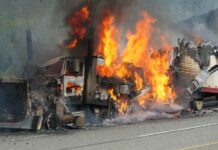
The Interior Ministry reported nearly 2,400 arrests during the latest wave, with close to 1,000 police and gendarmes injured, seven seriously. Those figures set the scale of the crisis and explain the push for curfews. Officials pointed to burned town halls and widespread looting, with hundreds of businesses hit. The government said the new curfews were meant to protect shops and public buildings at the hours when damage surged, rather than shut down whole cities around the clock.
President Emmanuel Macron condemned the “unbridled” violence and authorized local bans on certain rallies if needed, but he did not announce a nationwide curfew or a formal state of emergency. That stance lined up with Lecornu’s approach: act now in the trouble spots, keep stronger powers ready, and avoid sweeping limits that would punish quiet neighborhoods. This sequence tries to balance order with civil life, a line French leaders have walked many times before.
Why This Choice Matters in France’s Legal Tradition
France has a long legal toolbox for crises. The 1955 emergency law, born in the Algerian War, widened administrative power to set curfews, restrict movement, search homes, and limit assemblies. Courts later stressed that any such measures must be necessary, appropriate, and proportionate. That history makes the current choice more than tactical. Curfews under ordinary law carry less stigma and fewer blanket effects than a declared emergency, which signals a broader suspension of the usual guardrails.
Past crises show the trade-offs. In 2005, the state used emergency powers during suburban riots after extreme nightly arson counts. In 2015, leaders invoked emergency law after terror attacks. Those moments tightened control but also raised rights concerns and debates over how long “exceptional” rules should last. By starting with narrow curfews, the government appears to be testing a lower rung on the ladder of force before grabbing the top one. That aligns with common sense and conservative priorities: restore order, protect property, use calibrated tools.
Political Pressure, Clear Stakes, Measured Pace
The weekend unrest triggered strong pressure for tougher steps. Coverage highlighted the scale of violence and reported that officials in some cities said they had lost control. Some opposition voices urged faster and harsher moves, including an emergency declaration. Lecornu’s plan tries to answer that heat without overreaching. It sets a standard: targeted curfews now, escalation only if results fall short. That ordering respects both safety and the everyday freedoms that keep a society resilient.
🚨 🇫🇷 FRANCE MOVES CLOSER TO EMERGENCY POWERS AS RIOTS HIT MARKETS AND BUSINESS CONFIDENCE
PM Sébastien Lecornu said: “IF DECLARING A STATE OF EMERGENCY IS DEEMED NECESSARY, WE WOULD DO SO.” France has made about 2,400 arrests after its worst unrest in years, while 60,000… pic.twitter.com/bvksqQ8wnV
— Naeem Aslam (@NaeemAslam23) October 19, 2026
This strategy will be judged by results. If partial curfews cut looting, protect town halls, and reduce clashes, the choice to hold emergency powers in reserve will look prudent. If violence spreads despite the measures, public demand for broader powers will rise. For now, the government states its priority plainly: stop the damage, back the police, and keep daily life moving where it is safe. That is a firm line that many citizens and small business owners will welcome.
Sources:
insiderpaper.com, abcnews.com, haberintelifi.aa.com.tr, france24.com, nashaniva.com, dynamitenews.com, nbcnews.com, theweek.in, en.wikipedia.org, academic.oup.com, tandfonline.com
© conservativehub.com 2026. All rights reserved.