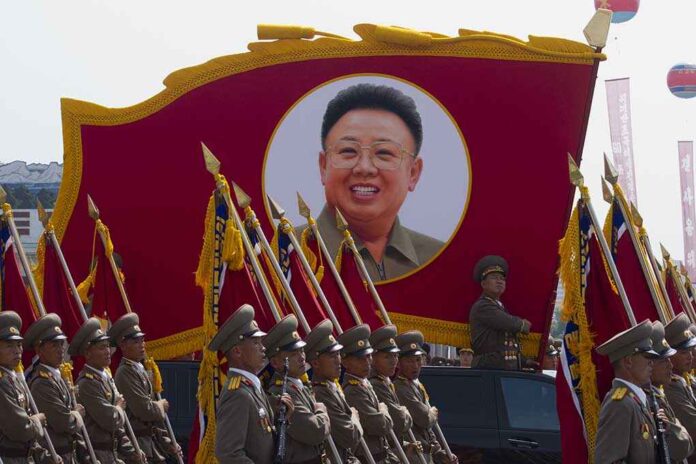
North Korea’s sharpened threats over U.S.–South Korea military drills expose persistent dangers to American security commitments and the fragile balance on the Korean Peninsula.
Story Highlights
- North Korea’s defense minister warned of “resolute counteraction” against upcoming U.S.–South Korea Ulchi Freedom Shield military drills.
- This year’s drills were scaled back due to severe weather but remain a point of contention, with Pyongyang denouncing them as military provocations.
- North Korea’s rhetoric, though less inflammatory than in previous years, signals ongoing tactical maneuvering and deepening ties with Russia.
- The U.S. and South Korea maintain the drills are essential for readiness and deterrence, despite regional tensions and recent diplomatic failures.
North Korea Renews Threats Amid Adjusted U.S.–South Korea Defense Drills
On August 11, 2025, North Korea’s defense minister issued a public warning, pledging “resolute counteraction” if it perceives provocations from the annual Ulchi Freedom Shield joint military exercises between the United States and South Korea. The drills, scheduled for August 18–28 across South Korea, have historically triggered aggressive responses from Pyongyang, which views them as rehearsals for invasion. Despite this year’s adjustments—about half of the planned field exercises postponed due to a record heatwave and flooding—North Korea denounced the exercises as a direct military provocation and a threat to regional stability.
North Korea’s warning this year was notably less inflammatory than in previous cycles, suggesting a possible tactical shift. Analysts describe the language as “carefully calibrated,” possibly to keep diplomatic options open while maintaining leverage. This restraint follows a pattern of evolving rhetoric but does not rule out the risk of escalation. In the days ahead of the exercise, North Korea conducted mortar drills, reinforcing its stance and reminding the world of its asymmetric military capabilities. The U.S. and South Korean leadership responded by emphasizing that the drills are defensive in nature and essential for alliance credibility, readiness, and deterrence against North Korean aggression.
Historical Tensions and Strategic Calculations
The Korean Peninsula remains technically at war since the 1953 armistice, and annual U.S.–South Korea joint military exercises have long been a central flashpoint. North Korea’s pattern is clear: it responds to allied drills with threats, weapons demonstrations, or missile launches, aiming to deter perceived threats and extract diplomatic or economic concessions. Recent years have seen a collapse of U.S.–North Korea denuclearization talks, a surge in North Korean missile development, and a tightening security dilemma. The 2025 Ulchi Freedom Shield exercise occurs under heightened regional tension, with North Korea’s leadership, now closer to Russia, seeking to maximize its leverage in a shifting geopolitical landscape.
Efforts to ease tensions—such as scaling back this year’s drills due to environmental factors—have not changed Pyongyang’s narrative. North Korea continues to frame the exercises as hostile, while the U.S. and South Korea assert that readiness and deterrence remain non-negotiable. Regional neighbors, including Japan and China, watch closely for potential spillover effects, recognizing that even restrained rhetoric from Pyongyang can precede provocative actions.
Security Implications and Conservative Concerns
This standoff has immediate and longer-term implications for American interests and those of our allies. In the short term, military alertness is heightened, with the risk of North Korean provocations such as missile tests or cyberattacks. For conservatives, these developments underscore persistent concerns about U.S. security commitments, the importance of military readiness, and the dangers of appeasement or diplomatic missteps. The drills also reinforce the need for a robust, constitutionally grounded defense posture amid global uncertainty and the rise of adversarial regimes.
Longer term, continued militarization of the peninsula and the erosion of trust between regional actors threaten to destabilize the Indo-Pacific. North Korea’s pivot toward Russia and ongoing efforts to undermine U.S. influence in the region demand vigilance. The credibility of America’s alliances—and by extension, the protection of our values and constitutional principles—rests on a clear-eyed recognition of these threats and a willingness to act decisively, without succumbing to the failed appeasement strategies or globalist distractions of previous administrations.
Expert Perspectives and the Road Ahead
Military and diplomatic experts note the necessity of these drills, especially as North Korea’s nuclear and missile capabilities evolve. Some analysts interpret Pyongyang’s calibrated rhetoric as a tactic to maintain flexibility amid internal and external constraints, such as economic pressures and its reliance on Russia. Others caution that even restrained North Korean statements can be a precursor to military demonstrations. The U.S. and its partners must continue to balance deterrence with measured responses, ensuring that constitutional values, alliance credibility, and national security are never compromised by wishful thinking or policy fatigue.
Sources:
SAN News (Aug 11, 2025): US and South Korea combined exercise rankles the North
Stars and Stripes (Aug 13, 2025): North Korea drills mortar units ahead of US-South Korea drills