

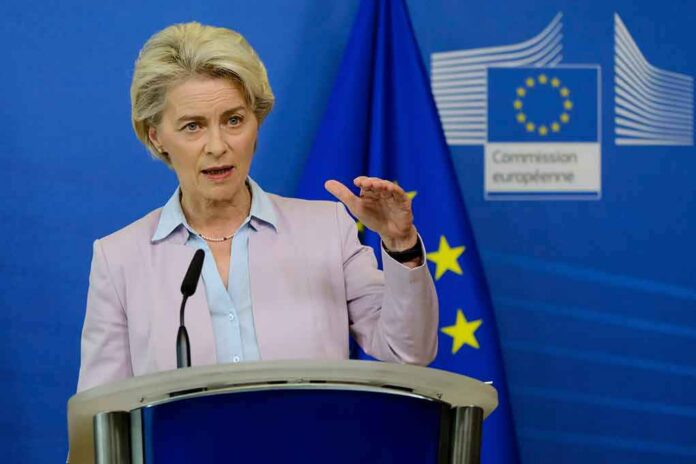
The European Union moved fast to back Poland with full-throated solidarity after a deadly missile blast near the Ukraine border.
Story Snapshot
- The European Union declared “unwavering unity, resolve and full solidarity” with Poland after the Przewodów blast.
- Two Polish citizens were killed when a Russian-made missile exploded in the village near Ukraine.
- The European Union tied the timing to Russia’s large missile strikes on Ukrainian cities that same day.
- Leaders expressed support while backing Poland’s investigation and close coordination with North Atlantic Treaty Organization partners.
What Happened In Przewodów And Why It Mattered
Poland reported that a Russian-made missile fell in the village of Przewodów on November 15, 2022, killing two citizens. The Polish Foreign Ministry gave the first clear on-the-ground details: the impact occurred at 3:40 p.m. local time and involved a Russian-made weapon. The incident happened as Russia launched a large wave of strikes against Ukraine’s power grid and cities, causing blackouts and damage. The location, only a few miles from the border, turned a local blast into a global test of resolve.
The European Union High Representative issued a formal statement the next day. It pledged “unwavering unity, resolve and full solidarity” with Poland and the Polish people. The statement linked the timing to Russia’s mass missile attacks on Ukraine the same day, which targeted civilians and infrastructure. That link mattered. It told the world that Europe saw the blast in the context of a wider Russian strike campaign, not as an isolated tragedy. It also anchored the message that allies stand together when war pressure spills over borders.
How Brussels Balanced Steel And Sense
European Commission President Ursula von der Leyen offered condolences and expressed support on November 15. She said European Union institutions were monitoring events and were in touch with Polish authorities and allied partners. The next day’s institutional statement kept the tone strong while staying careful on the facts. Brussels backed Poland’s investigation “to establish the facts on the ground” and kept close contact with North Atlantic Treaty Organization partners on next steps. That balance matched both common sense and conservative principles: show strength, verify details, and avoid rash escalation.
Poland’s early brief described the missile as Russian-made but did not claim where it was launched. President Joe Biden said preliminary information made it unlikely the missile was fired from inside Russia, even as leaders worked through the data. The European Union line held firm on unity, placed the incident within the wider Russian assault on Ukraine that day, and respected Poland’s lead on forensics. That is how alliances should work: act together, speak clearly, and let the country on the front line run the facts.
What Warsaw’s Loss Exposed About European Security
The blast underlined how thin the margin for error is along the North Atlantic Treaty Organization’s eastern flank. A single missile landing inside an allied state can force fast choices: comfort the victims, secure the site, sort the evidence, and send the right signal to deter more risk. Leaders must show resolve without stumbling into a misstep. NATO and European Union messaging did that by pairing solidarity with restraint and investigation, a posture many capitals echoed as initial assessments came in.
🚨🇵🇱🇺🇸🇪🇺 BREAKING: Poland plans to issue a formal request to NATO for enhanced Eastern Sentry support from the United States and the European Union following the Russian missile airspace violation incident.
Poland Defence Minister Kosiniak-Kamysz and Prime Minister Tusk called… pic.twitter.com/tIj8ttVoHX
— Bedouin Report (@BedouinReport) November 20, 2026
Context shaped the response. Russia’s large strike package against Ukraine formed the backdrop for the incident and informed the tone of allied statements. Poland’s account of a Russian-made missile gave a concrete basis for action, while not pre-judging the launch point. That left room for the technical teams to do their work. It also reminded Moscow that even accidents born of its strike tempo come with political cost. When a free nation loses two citizens to a cross-border blast, allies take notice and close ranks.
Why The European Union’s Message Landed
The European Union spoke with one voice and avoided legal traps. It did not claim more than known facts but still drew a bright line on unity with Poland. That is sound statecraft. It keeps pressure on the aggressor’s campaign without rushing to final blame for a single projectile. It comforts a grieving ally with public support and practical links to North Atlantic Treaty Organization coordination. It also reflects basic American conservative instincts: defend borders, support allies who pull their weight, and wait for evidence before you point a finger.
Sources:
independent.co.uk, nbcbayarea.com, audiovisual.ec.europa.eu, cnn.com
© conservativehub.com 2026. All rights reserved.