
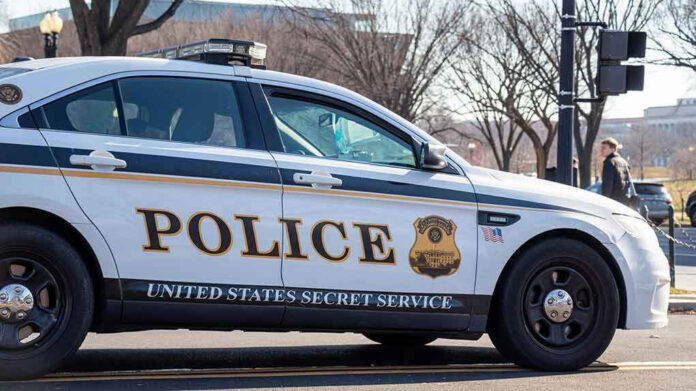
A split-second decision near the White House can start days earlier with a single phone call from a thousand miles away.
Quick Take
- Indiana police warned federal authorities about a potentially suicidal man traveling toward Washington, D.C.
- Secret Service agents found the man’s parked vehicle near the White House complex just after midnight Sunday.
- Agents confronted a person matching the description; he allegedly brandished a firearm and agents fired.
- The man went to a hospital with an unknown condition; no Secret Service personnel reported injuries.
- D.C. police took the lead on the use-of-force investigation after the incident.
The call that matters: interstate intelligence, not panic, set this in motion
Indiana officers flagged a troubling scenario before Washington ever saw it: a potentially suicidal individual reportedly headed to the nation’s most protected neighborhood. That kind of heads-up changes everything. It turns “random threat” into “known problem,” giving the Secret Service a chance to look for a vehicle, a description, and a pattern—then to make contact on their terms near the White House perimeter. The public rarely sees that preparatory work.
The location underscores why early notice matters. The encounter occurred near 17th and F Streets NW, close to the Eisenhower Executive Office Building, an area engineered for fast interdiction. Overnight hours also narrow the field: fewer pedestrians, less traffic noise, and fewer variables—yet the stakes rise because any unknown movement near the White House complex demands immediate clarity. Agents cannot “wait and see” when a firearm may enter the equation.
What “armed confrontation” signals in Secret Service language
Secret Service phrasing tends to be spare because every word can become evidence. The agency said officers approached, the individual brandished a firearm, an armed confrontation followed, and shots were fired by personnel. That sequence—approach, brandish, confrontation, shots—telegraphs a claim of imminent threat. Conservative common sense aligns here: if someone produces a gun during a law enforcement encounter, officers do not owe them additional risk to prove intent.
The most overlooked detail is what did not happen. Reports did not describe a broad evacuation or a long lockdown of the White House complex, and no agent injuries were reported. That suggests containment stayed tight and fast. When things go truly sideways, the public typically hears about extended closures, multiple agencies flooding streets, and large-scale perimeter actions. Here, the story reads like a localized confrontation resolved within minutes, then handed to investigators.
The president’s absence doesn’t reduce the seriousness—it clarifies the threat
Some readers instinctively ask, “Was the president targeted?” The reporting emphasized President Trump was not at the White House and was scheduled to return later Sunday. That matters operationally because protection levels shift with presidential presence, but it does not make the event trivial. It actually sharpens the picture: this looks less like an organized attempt to reach a specific protectee and more like a crisis spiraling near a symbolic target.
That distinction matters culturally and politically. Americans can reject both extremes at once: dismissing every incident as “nothing” erodes seriousness, while treating every lone encounter as a coordinated plot feeds paranoia. The more grounded interpretation—based on the available facts—is a mental health-driven threat scenario colliding with the most unforgiving security environment in the country. The White House area isn’t built for second chances when a weapon appears.
Why D.C. police leads the investigation and why that should reassure skeptics
Use-of-force reviews carry legitimacy when they aren’t self-graded. The Metropolitan Police Department leading the investigation fits that principle of accountable government: one agency acts, another examines. Skeptical citizens often worry about federal entities investigating themselves, and that concern isn’t “anti-cop”; it’s pro-standards. A clean system protects good officers and exposes misconduct when it occurs. Here, investigators will focus on timelines, commands, distance, and weapon presentation.
Key uncertainties remain: the person’s identity has not been publicly established in the research provided, the person’s medical condition has been unclear, and investigators have not released detailed findings. Those unknowns leave an open loop that matters for judgment. Conservative values emphasize due process and facts over vibes. The public can acknowledge the reasonableness of defensive gunfire after a brandished weapon while still insisting the investigation verify every step.
The 2016 precedent shows a recurring pattern: lone actors, mental distress, hard perimeters
The White House has seen similar confrontations before, including the 2016 shooting at a checkpoint near 17th and E Streets involving a man later described as having a mental health history. That event also ended with the suspect shot and no broader terrorism link established. The pattern is grim but instructive: high-profile perimeters attract people in personal crisis, and the protective posture around the White House forces encounters to resolve rapidly.
That doesn’t mean de-escalation is irrelevant; it means de-escalation has boundaries. When an armed person presents a gun, time compresses to seconds. Training, clear commands, and layered barriers can reduce risk, but they cannot erase the central reality: the Secret Service must keep firearms away from the White House footprint. The best policy debate focuses on upstream prevention—information sharing and intervention—before a person reaches that perimeter.
The most consequential lesson may be the least dramatic: inter-agency communication worked. Indiana police reportedly sent actionable information, agents located a vehicle near the White House, and a potentially catastrophic situation stayed contained. That’s the kind of government competence most people say they want—quiet, coordinated, and effective. The remaining question is whether the country treats the root issue—suicidal crisis meeting public spaces—as a real problem, not just tomorrow’s headline.
Sources:
Secret Service shoots man overnight armed confrontation near White House
Secret Service shoot armed man white house