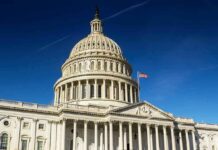
Congress just proved it would rather risk an intelligence blackout than keep writing blank checks for secret spying on its own citizens.
Story Snapshot
- House leaders tried a quick three-week “clean” extension of Section 702 – and lost.
- The failure exposes a deep split: protect foreign surveillance power or finally draw a hard line for Americans’ privacy.
- Trump and national security hawks warn of gaps that enemies like Iran and China will rush to exploit.
- Conservatives and civil libertarians say no more warrantless searches of Americans, no matter who sits in the Oval Office.
How A Routine Spy Vote Blew Up On The House Floor
The vote that failed looked boring on paper. It was only a three-week extension of Section 702 of the Foreign Intelligence Surveillance Act, brought up under special House rules that require a two‑thirds majority. The motion drew 198 votes in favor and 218 against, well short of even a simple majority. With 416 members voting, leaders needed 273 “yes” votes and could not get close, which means members in both parties balked at a “clean” delay that kept the status quo intact.
Section 702 is the legal engine that lets agencies like the National Security Agency and the Central Intelligence Agency collect emails, calls, and messages from foreign targets overseas without a warrant. When those targets talk to Americans, our messages ride along in the haul. Supporters call it the backbone of the president’s daily briefing and credit it with stopping terrorists and drug traffickers. Critics see the same database as a loaded gun pointed inward at Americans’ rights.
Why Trump’s Push Could Not Save 702 This Time
Former President Donald Trump backed an 18‑month, no‑changes renewal and pressed Republicans to fall in line. Senate Republicans like Tom Cotton and Chuck Grassley warned the White House that the authority was likely to lapse and publicly urged planning for “a significant gap in foreign intelligence collection.” Their message was simple: in a world of Iranian drones, Chinese hackers, and fentanyl cartels, shutting off a key spy tool looks reckless. From a national security and conservative perspective, that concern is common sense.
Yet many conservatives in the House no longer trust the security state to police itself. The Federal Bureau of Investigation searched Section 702 databases for information on members of Congress, campaign donors, protesters, and even a local official who complained about civil rights abuses.[7] A secret court described federal bureau violations as “persistent and widespread.” For Republicans who remember the Russia probe and see cultural bias inside federal agencies, “just trust us” is not a serious answer. They want warrants, tight limits, or a shutdown.
The Tool That Protects America And Threatens Its Privacy
National security officials insist the country is safer with Section 702 than without it. The Privacy and Civil Liberties Oversight Board, an independent watchdog, found that 702 data helps identify terrorists, track foreign spies, and disrupt cyberattacks, and that the United States “is safer with the Section 702 program than without it.”[2][3] The Office of the Director of National Intelligence reports that Congress itself just reauthorized these powers in 2024 for two years through the Reforming Intelligence and Securing America Act.[4]
But the same oversight board warned that 702 “presents serious risks to privacy and civil liberties,” especially when officials query the database using identifiers tied to Americans.[2][3] Civil libertarian groups point to warrantless searches for Black Lives Matter protesters, journalists, and political donors as proof that guardrails failed.[7] From a conservative, constitutional view, the problem is plain: the Fourth Amendment does not include a national security exception. Either the government gets a warrant to read Americans’ private messages, or it stays out.
Why This Fight Keeps Coming Back – And What Happens Now
Section 702 has always come with an expiration date, forcing Congress to revisit the tradeoff between safety and liberty every few years. In 2024, lawmakers squeezed through a two‑year renewal with some reforms to Federal Bureau of Investigation searches, mandatory audits, and training, but they narrowly rejected a full warrant requirement for American queries. That razor‑thin margin guaranteed that the next round, now underway, would be even more explosive. The failed House vote is the bill coming due.
SCOOP — Sens. Cotton & Grassley ask Rubio to “plan for a potential significant gap in foreign intelligence collection” as Senate Dems block FISA 702 extension over Pulte appointment as acting DNI. Deadline is next Friday. pic.twitter.com/MPW42YfyGp
— Andrew Desiderio (@AndrewDesiderio) June 6, 2026
Even with the statute set to lapse, surveillance does not shut off overnight. If the Foreign Intelligence Surveillance Court has already approved annual certifications, agencies can keep collecting under those orders until they expire, likely into 2027. That legal buffer explains why some reformers are willing to play hardball. Supporters warn that any gap or legal uncertainty invites foreign enemies to test our blind spots. Civil liberties advocates say sunset pressure is the only way to force real change from a bureaucracy that prefers minor tweaks and new talking points.
Sources:
[2] Web – The Truth Behind Section 702 Query Statistics
[3] Web – report on the surveillance program operated pursuant to …
[4] Web – [PDF] report on the surveillance program operated pursuant to section …
[7] Web – Annual Statistical Transparency Report
© conservativehub.com 2026. All rights reserved.