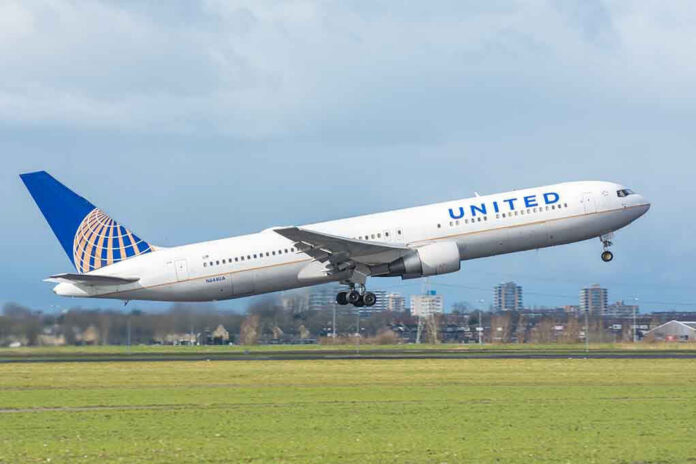
A Boeing 737 slicing through San Diego airspace at 3,000 feet collided with something small, red, and shiny that the pilot couldn’t positively identify—but suspected was a drone operating nearly eight times higher than federal regulations permit.
Story Snapshot
- United Airlines Flight 1980 from San Francisco reportedly struck an unidentified object at 3,000 feet during descent into San Diego on a Wednesday afternoon
- Pilot described the object as small, red, and shiny, possibly a drone, in viral ATC audio captured after landing
- No injuries or visible aircraft damage occurred, but the incident remains unconfirmed by FAA or United Airlines officials
- The collision altitude sits well above the 400-foot ceiling for recreational drones, raising questions about illegal operations or misidentification
What Actually Happened Over San Diego
United Airlines Flight 1980 completed its routine descent from San Francisco to San Diego International Airport when the cockpit crew felt or saw an impact with a foreign object. After touching down on runway 27, the pilot radioed ground control with a description that raised immediate concerns: a small, shiny, red object struck the aircraft at approximately 3,000 feet. The pilot’s hesitation in the audio—”It was so small, I couldn’t tell”—captured the uncertainty surrounding what many aviation observers immediately labeled a drone strike. The Boeing 737 taxied to the gate without incident, and post-flight inspection revealed no apparent damage to the aircraft or injuries to the 150-plus souls aboard.
United Airlines flight reportedly hits drone at 3,000 feet over San Diegohttps://t.co/6UHJ8JSaU3
— Bodoxstocks (@bodoxstocks) April 29, 2026
The Altitude Problem That Doesn’t Add Up
Federal Aviation Administration regulations restrict recreational drone operations to a maximum altitude of 400 feet above ground level without special waivers. Commercial operators face similar restrictions unless they receive explicit authorization for higher-altitude work. San Diego International Airport operates within Class B airspace, one of the most restrictive categories in American aviation, where unauthorized drone activity carries severe penalties. The 3,000-foot collision altitude represents a massive violation if the object was indeed a recreational or commercial drone. This discrepancy feeds two competing theories: either someone flagrantly ignored federal law with sophisticated equipment capable of reaching that height, or the pilot encountered something else entirely—a weather balloon, large bird, or other aerial debris.
The Growing Threat Nobody Can Seem to Stop
Drone incidents near airports and aircraft have multiplied since 2021, according to global tracking databases that monitor unauthorized operations and near-misses. The proliferation of affordable, high-performance drones has outpaced enforcement capabilities, leaving the FAA struggling to police millions of recreational users and thousands of commercial operators. Remote identification technology—essentially license plates for drones—remains partially implemented, creating blind spots where violators operate with impunity. The San Diego incident fits an uncomfortable pattern where drone technology advances faster than the regulatory framework designed to contain it. Previous airport shutdowns, including the infamous 2018 Gatwick incident in the United Kingdom, demonstrated how a single rogue drone operator can paralyze commercial aviation.
Why Official Silence Speaks Volumes
Neither the FAA, United Airlines, nor San Diego International Airport has issued official statements confirming or denying the drone strike. This bureaucratic silence follows standard protocol for unverified incidents but feeds public speculation amplified by viral social media posts. The only evidence remains the ATC audio recording circulating through aviation enthusiast channels and general news feeds. Without physical debris, aircraft damage, or official investigation findings, authorities likely categorize this as an unconfirmed foreign object strike rather than a definitive drone collision. The pilot’s own uncertainty—unable to positively identify the object despite close proximity—complicates any official determination. This ambiguity protects airlines and regulators from premature conclusions but leaves the flying public wondering whether their safety depends on luck rather than effective airspace management.
What This Means for American Airspace Security
The reported collision underscores fundamental tensions between technological access and public safety. Drones deliver packages, inspect infrastructure, and capture stunning aerial footage, but they also penetrate restricted airspace with alarming frequency. If this incident involved an actual drone at 3,000 feet near a major airport, it represents either criminal negligence or deliberate malice—neither acceptable in a functioning regulatory system. Conservative principles favor individual freedom and minimal government interference, but common sense demands protection of commercial aviation carrying millions of passengers annually. The challenge lies in enforcement mechanisms that punish bad actors without burdening responsible operators or creating surveillance overreach. Remote ID mandates, geofencing technology, and criminal penalties for violations offer partial solutions, but they require resources and political will currently absent from federal aviation policy.
Sources:
United Airlines flight 1980 reportedly hit by drone above San Diego
D-Fend Solutions Drone Incident Tracker