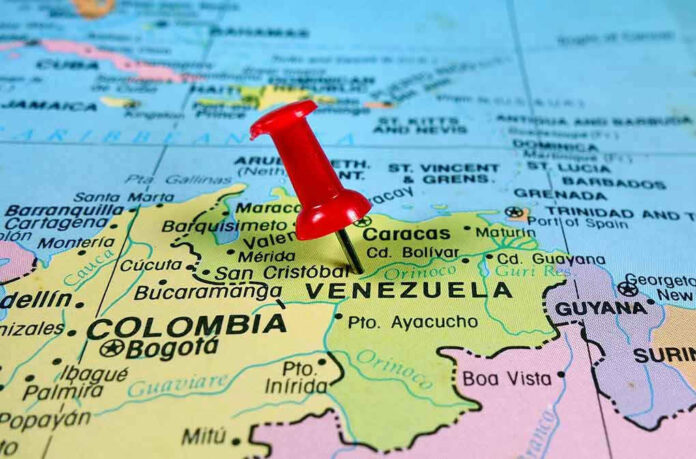
The appointment of Delcy Rodríguez as acting president of Venezuela following Nicolás Maduro’s capture by the U.S. marks a pivotal moment in the country’s political crisis.
Quick Take
- Delcy Rodríguez, former Vice President, steps in as Venezuela’s acting president after U.S. captures Maduro.
- The move is seen as a significant U.S. intervention in Venezuelan politics.
- Rodríguez’s role prompts questions about Venezuela’s future direction and U.S. relations under the Trump administration.
- The Supreme Tribunal of Justice facilitated her appointment to ensure continuity.
Delcy Rodríguez Steps into Leadership
On January 3, 2026, the U.S. captured Venezuelan President Nicolás Maduro, marking a rare external intervention in the country’s leadership. In response, the Supreme Tribunal of Justice swiftly appointed Delcy Rodríguez as acting president, ensuring administrative continuity and national defense. This sudden shift highlights Rodríguez’s position as Maduro’s designated successor, showcasing her as a pivotal figure in Venezuela’s ongoing political turmoil, especially given her background as the head of the Bolivarian Intelligence Service (SEBIN).
Rodríguez, deeply entrenched in Venezuela’s Chavista roots, has a long history within the government, having served under both Hugo Chávez and Nicolás Maduro. Her ascent has been marked by key roles, including Vice President, Minister of Economy and Finance, and Minister of Petroleum, positioning her as a mainstay in the administration. Her new role as acting president places her at the forefront of addressing the country’s economic collapse and international isolation.
Implications for U.S.-Venezuela Relations
Rodríguez’s appointment raises significant questions about the future of U.S.-Venezuela relations. The capture of Maduro by the U.S., under the Trump administration, represents a bold move to counter socialism and potentially negotiate a new direction for Venezuela. Rodríguez’s diplomatic skills and loyalty to Chavismo will be tested as she navigates these international tensions, possibly seeking relief from economic sanctions that have crippled Venezuela’s economy.
Her intelligence and diplomatic background may offer her unique leverage in any potential negotiations with the U.S., as she balances internal power dynamics and the expectations of the international community. However, her tenure may also be marked by internal unrest, with opposition groups potentially challenging her authority.
Chavismo’s Continuity and Challenges Ahead
As acting president, Rodríguez’s immediate focus will likely be on consolidating power and maintaining stability within Venezuela. Her appointment underscores the judiciary’s alignment with the executive branch, reflecting a continuation of Chavismo’s influence despite potential internal and external pressures. The Venezuelan populace, already burdened by hyperinflation and economic hardship, faces an uncertain future under Rodríguez’s interim leadership.
The broader geopolitical implications of this power shift are significant, as it strains Venezuela’s relationships within Latin America and highlights the ongoing U.S. interest in the region’s political landscape. Rodríguez’s ability to navigate these challenges will be crucial in either sustaining the current regime or paving the way for a new political era.
Sources:
Jerusalem Post – International
Modern Diplomacy – Who is Delcy Rodríguez?