
Two CIA agents plunged to their deaths in a Mexican ravine, exposing a rogue U.S. raid that defied Mexico’s sovereignty and ignited a federal-state firestorm.
Story Snapshot
- CIA agents joined Chihuahua’s meth lab raid without Mexico City’s approval, dressed in state uniforms.
- Predawn crash killed two agents and two Mexican officers in a convoy of five vehicles.
- President Sheinbaum blasts violation, eyes sanctions on state while state calls agents mere instructors.
- Third such CIA-Chihuahua op in 2026 reveals deepening U.S. embeds amid cartel wars.
- Federal probe strains U.S.-Mexico ties, questions aid and cooperation protocols.
The Fatal Raid in Chihuahua Mountains
Four CIA agents embedded with Chihuahua state forces targeted one of Mexico’s largest meth labs in remote northern mountains. The two-day operation drew 80 personnel, including state officers and federal soldiers from the Mexican army. Agents wore Chihuahua Investigative Agency uniforms to blend in. Federal officials in Mexico City remained unaware, despite army involvement. This marked the third CIA collaboration with Chihuahua in 2026, escalating from training to direct action.
Predawn Crash Claims Four Lives
Early Sunday, April 20, a five-vehicle convoy returned from the raid on treacherous mountain roads. One vehicle carrying two CIA agents and Mexican officers Pedro Román Oseguera Cervantes and Manuel Genaro Méndez Montes veered into a ravine. The car exploded on impact, killing all four instantly. Two other CIA agents in separate vehicles survived. U.S. sources confirmed the agents’ raid participation to outlets like AP and Washington Post on April 21.
Contradicting Accounts Emerge
Chihuahua Attorney General César Jáuregui Moreno claimed the agents served as U.S. Embassy instructors conducting drone training six hours away in Polanco. Officers allegedly picked them up at 2 a.m. en route back, not as raid participants. President Claudia Sheinbaum rejected this on April 22, labeling it a sovereignty breach under national security laws. She considered sanctions against Chihuahua Governor María Eugenia Campos’ administration for bypassing federal protocols.
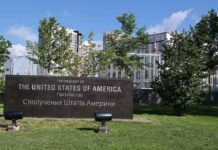
Security Secretary Omar García Harfuch reinforced federal stance: no foreign agents operate in Mexican fields per binational agreements. Mexico’s Security Ministry reviewed the case with the U.S. Embassy by April 25, confirming agents entered as a visitor and diplomat without operational clearance. Chihuahua defended local autonomy against cartels like Sinaloa and Juárez, bordering Texas hotspots.
Mexico says 2 CIA agents killed in crash weren't authorized to participate in local raid – CBS News https://t.co/njGUpyzqVV
— Shane Worth @[email protected] (@tatzanx) April 26, 2026
Historical Tensions Resurface
U.S.-Mexico anti-drug ties trace to the 2008 Mérida Initiative, funneling aid for security while barring foreign field ops to guard sovereignty. Trump-era pressures amplified U.S. cartel hunts, spurring state-level training. Past incidents, like 2020 intel-sharing disputes, mirror current rifts. Sheinbaum’s presidency since October 2024 centralizes control, clashing with states’ urgent needs amid cartel violence.
Implications for U.S.-Mexico Relations
Short-term, federal probes risk Chihuahua sanctions and protocol overhauls. Long-term, state collaborations may halt, curbing U.S. aid like equipment and training. Families grieve amid reputational damage to Chihuahua enforcers; northern communities face unchecked cartels. Sheinbaum seeks U.S. details via ambassador to dodge Trump friction, prioritizing sovereignty. Common sense aligns with federal outrage—unapproved embeds erode trust, even against mutual foes.
Sources:
Mexico says 2 U.S. federal agents who died were unauthorized
The mystery of two CIA agents’ deaths in Mexico
Mexico military unaware CIA agents killed crash drug lab raid Sheinbaum