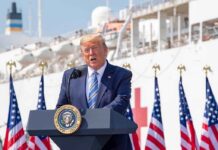

The Trump administration weighs a financial bailout for a sovereign nation that has funneled billions into the president’s family businesses while American taxpayers bear the cost of a widening war.
Story Snapshot
- White House considers currency swap or financial relief for UAE amid war-driven economic strain from Iran conflict
- UAE entities invested $3.7 billion in Trump family ventures including Kushner’s Affinity Partners and sons’ crypto firm
- Treasury Secretary meets UAE Central Bank Governor as National Economic Council Director pledges assistance publicly
- Critics flag unprecedented bailout talks for nation simultaneously backing family businesses during wartime
When Allies Become Investors
The United Arab Emirates has positioned itself as a critical Middle Eastern ally in America’s latest confrontation with Iran. Yet the relationship extends far beyond traditional diplomacy. UAE sovereign wealth funds poured $200 million into Jared Kushner’s Affinity Partners in 2023, followed by $1.5 billion from Abu Dhabi-based Lunate and Qatari investors in 2024. The Trump sons’ cryptocurrency venture World Liberty Financial secured $2 billion in UAE backing last year, coinciding with the administration lifting chip export restrictions. The Trump Organization simultaneously develops a luxury Dubai hotel.
These financial entanglements now collide with geopolitical crisis. The ongoing U.S. war with Iran has throttled the Strait of Hormuz, the narrow waterway through which UAE oil exports flow. UAE officials acknowledge current financial stability but warn of vulnerability if the closure persists. Enter Treasury Secretary Scott Bessent, who met last week with UAE Central Bank Governor Khaled Mohamed Balama to discuss potential American intervention. The Wall Street Journal broke the story Sunday, revealing high-level talks about currency swaps or direct financial support.
The Price Tag of Alliance
National Economic Council Director Kevin Hassett framed the potential bailout in purely strategic terms during a Monday CNBC appearance. He called the UAE an incredibly valuable ally and pledged the Treasury Secretary would make every effort to help. The statement sidestepped any mention of the billions flowing from UAE coffers into Trump family enterprises. The timing raises uncomfortable questions about whether American taxpayer resources serve national interests or function as implicit returns on private investments that happened to benefit the president’s relatives.
No precedent exists for the United States bailing out a wealthy sovereign ally that simultaneously bankrolls the sitting president’s family businesses. Traditional alliance frameworks involve military aid, intelligence sharing, and diplomatic coordination. Direct financial rescue of a Gulf petrostate with massive sovereign wealth funds enters uncharted territory. The arrangement appears even more unusual given the UAE’s status as one of the world’s wealthiest nations per capita, flush with oil revenue despite current disruptions.
Follow the Money Trail
The investment timeline reveals a pattern. Kushner’s Affinity Partners received its initial $200 million UAE investment in 2023, after Trump left office but as political comeback plans took shape. The $1.5 billion infusion arrived in 2024, an election year. World Liberty Financial’s $2 billion UAE investment landed precisely when the administration reversed export restrictions that benefited Gulf technology ambitions. Each transaction occurred outside formal government channels, yet the family members involved maintain significant influence over policy decisions affecting their benefactors.
The conflict of interest runs deeper than simple appearances. Treasury Secretary Bessent directly negotiates potential relief with the same UAE officials whose government entities invested in his boss’s family ventures. The National Economic Council Director publicly commits to assistance. The president ultimately decides whether American resources flow to a nation that enriched his children and son-in-law. The arrangement creates mutual dependency where financial and diplomatic interests become inseparable, with no clear firewall protecting taxpayer interests from private gain.
Taxpayers on the Hook
American citizens fund the war straining UAE finances while simultaneously watching their government consider rescuing the strained ally. The proposed currency swap or financial support would commit U.S. resources during wartime when domestic priorities compete for limited dollars. Setting a precedent for bailing out investor nations risks establishing a troubling framework where wealthy allies leverage financial relationships with presidential families to secure favorable treatment. The long-term fiscal implications extend beyond immediate dollar amounts to fundamental questions about how America conducts foreign policy when private interests intersect with public obligations.
Trump Considers Bailing Out UAE as It Invests in His Family’s Ventures https://t.co/QAfHVgfc67
— The New Republic (@newrepublic) April 20, 2026
UAE officials maintain their current financial position remains stable, suggesting the bailout discussions function more as contingency planning than immediate crisis response. This revelation makes the talks even more suspect, indicating preemptive accommodation rather than emergency intervention. The administration’s willingness to publicly discuss assistance before actual need arises suggests priority treatment that traditional allies without family business connections might not receive under similar circumstances.
Sources:
Trump Considers Bailing Out His Family’s Major Business Partner