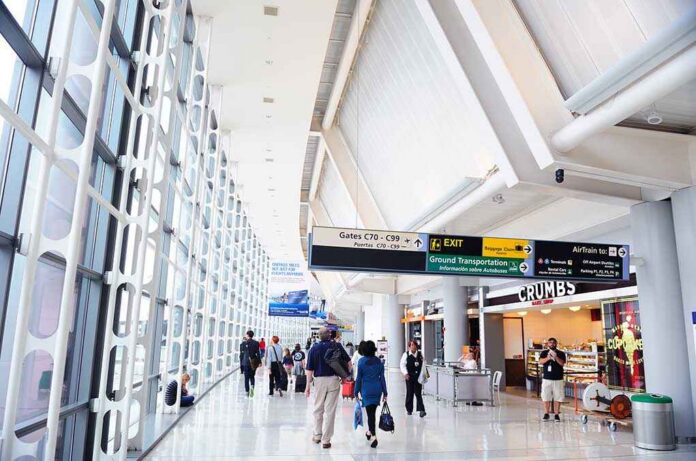
A man at Sacramento International Airport allegedly tried to board a plane with a live improvised explosive tucked in his carry-on, and the paper trail shows prosecutors think it was no accident [3].
Story Snapshot
- Federal prosecutors filed a criminal complaint alleging a viable explosive was found in a traveler’s carry-on at Sacramento International Airport [3].
- The government’s narrative dominates early reporting; the defense posture in public is limited and not yet technical [1].
- Officials say screening uncovered an M-type device and other suspicious items; later testing reportedly found it functional [2][3][5].
- The case highlights how airport bomb allegations hinge on possession, functionality, and intent well before trial [3][5].
Federal Complaint Alleges A Live Device And A Coherent Toolkit
Federal prosecutors say Transportation Security Administration screening around May 30, 2026, detected an M-type improvised explosive device in the carry-on bag of 49-year-old Kimani Osayande Jones, also known as Jackson, leading to his arrest and a criminal complaint for unlawfully possessing explosive material in an airport [3]. Local coverage describes the device as accompanied by items that escalate suspicion, including a lighter and multiple phones, a combination investigators often read as a toolkit rather than coincidence [2][5]. The formal filing plants the flag: charge first, litigate later [3].
Reporters cite investigators who say the powder and fuse tested as viable, a critical threshold for moving the allegation beyond scary props to functional capability [2][5]. The United States Attorney’s Office summarized the case in its press release, which functions as the first official public account and shapes how the facts land with the public and potential jurors [3]. Regional outlets amplified those details with airport timing, item descriptions, and references to digital devices that, taken together, present a story of planning, not accident [1][2][5].
Public Record Gaps: A One-Sided Chorus, For Now
The available record shows no detailed defense-side counter yet: no affidavit, no expert report, no independent lab test disputing the device’s design or performance [1][2]. That silence does not equal guilt, but it cedes the narrative high ground to prosecutors who already offered a tidy chain—checkpoint detection, item seizure, functionality testing, and an arrest rooted in a federal statute aimed precisely at this setting [3]. From a common-sense, conservative vantage, airports are not venues for ambiguity; if government agents present credible tests and chain-of-custody, the burden shifts to the defense to puncture specifics promptly.
Caution still matters. Early press releases often present the government’s strongest version, while technical nuance emerges later through discovery. Without access to the full complaint exhibits, lab notes, or device photos, outsiders should resist overconfidence. Yet the allegation of a working M-type device is not trivial wordplay; it suggests a purpose-built explosive rather than fireworks residue or an inert dummy, which weighs heavily in both public safety calculus and charging decisions [3][5].
How Prosecutors Build Intent Without A Confession
Airport explosive cases are built on three pillars: possession, functionality, and intent. Possession turns on who controlled the bag and the checkpoint sequence. Functionality hinges on explosives technician testing, fuse analysis, and energetic material confirmation. Intent, usually the hardest element, gets inferred from context—timers, phones, messages, lighters, knives, and the setting of a secured airport checkpoint [3][5]. Prosecutors rarely wait for a confession because the circumstantial lattice, if tight, convinces judges and juries more reliably than dramatic admissions.
The federal system’s gravity also shapes outcomes. Complaints are the opening salvo; indictments and plea negotiations often follow before a jury is ever seated. That procedural current means the first story can become the only story the public hears. If the defense plans to challenge functionality or knowledge, they will need an explosives engineer, digital forensics on the phones, and a timeline reconstruction from checkpoint video—fast. Until then, the viable-device claim remains the anchor, and the airport backdrop makes the stakes unmistakable [3][1][2][5].
Sources:
[1] Web – Man nabbed with bomb in California airport
[2] Web – Sacramento man facing explosives charge after SMF arrest
[3] Web – Sacramento man found with explosive during airport security check …
[5] YouTube – Sacramento man charged with bringing explosive to …
© conservativehub.com 2026. All rights reserved.