
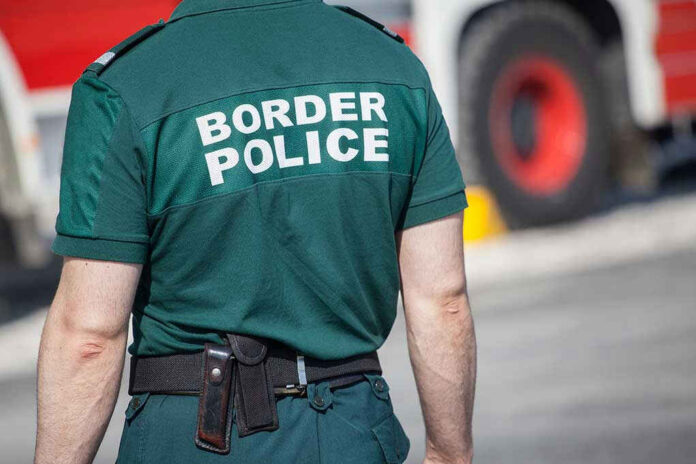
When a gunman in tactical gear brazenly ambushed Border Patrol agents outside their own office in McAllen, Texas, the chaos that followed was not just another “isolated incident”—it’s the latest symbol of a nation under siege by madness and political neglect.
At a Glance
- A heavily armed attacker opened fire on Border Patrol agents at the McAllen, Texas, annex, wounding officers before being killed.
- The shooter, Ryan Louis Mosqueda, traveled from Michigan and targeted a federal facility at a time of heightened border and immigration tensions.
- McAllen International Airport was shut down, reminding citizens how quickly public safety can be shattered.
- Authorities remain in the dark about the shooter’s motive, with an investigation underway as security fears spike in the region.
Brazen Attack at the Border Patrol Annex Shocks Texans
Just after sunrise on July 7, McAllen, Texas—a city already worn thin by years of political posturing and border crises—was thrust into the national spotlight for all the wrong reasons. A lone gunman, decked out in tactical gear and wielding an assault rifle, stormed the Border Patrol annex at McAllen International Airport. This wasn’t some Hollywood script. This was a real attack on hard-working law enforcement right at their workplace, the kind of nightmare scenario that should be unthinkable in a country that claims to value its protectors. The assailant, identified as 27-year-old Ryan Louis Mosqueda, came all the way from Michigan, turning up missing from a Weslaco, Texas, address earlier that morning—another sign that chaos knows no boundaries in today’s America.
As agents and police responded, bullets tore through the early morning calm. One McAllen police officer, Ismael Garcia, was shot in the knee and rushed to the hospital. Mosqueda was stopped only by the swift, courageous return fire from Border Patrol and local police. He never made it inside the building. Still, the message was clear: even those tasked with enforcing the law are now targets in a society where respect for law and order is under constant assault.
Airport Lockdown and the Ripple Effect: When Security Takes a Backseat
The attack forced an immediate shutdown of McAllen International Airport. Flights were delayed, travel plans scrapped, and the region’s vital infrastructure ground to a halt. This kind of disruption might be brushed off by bureaucrats in Washington as just another blip, but for the people on the ground—families, workers, business owners—it’s a stark reminder that political negligence and policy failures have real, painful consequences. The airport, a hub for both commerce and connection in the Rio Grande Valley, became a crime scene, cordoned off from the very public it serves. The ripple effects of that lockdown, both economic and emotional, will be felt long after the headlines fade.
Inside Mosqueda’s Michigan-plated vehicle, authorities found more weapons and ammunition. Spray-painted writing adorned the car, but investigators have yet to decipher its meaning. The motive for the attack remains a mystery, as does the question of how an out-of-state assailant could gear up, cross state lines, and launch a premeditated assault on federal agents without raising so much as an eyebrow from the powers that be. It’s almost as if the focus on “border security” has become more about photo ops and less about genuine safety for American citizens—especially those on the front lines.
Political Theater vs. Real Security: Who’s Really Paying the Price?
In the aftermath, the usual parade of officials took the stage. McAllen Police Chief Victor Rodriguez stressed the importance of vigilance and interagency cooperation in his public statements. The Department of Homeland Security and the FBI have launched investigations, but for the people of Texas—and for every Border Patrol family—reassurances ring hollow when the root causes remain unaddressed.
The border debate has become a political football, tossed back and forth by politicians eager to score points rather than solve problems. Billions are thrown at border barriers and state-run enforcement programs, as recent legislation shows, but when the rubber meets the road, it’s federal agents and local police who risk their lives while D.C. dithers. The attack in McAllen is a symptom of a deeper rot—a government more interested in funding endless bureaucracy than actually defending its own people.
The impact of this attack will linger. Heightened security measures and more barriers might come, but at what cost? Local families are left with anxiety and distrust. Law enforcement must carry on, knowing they’re public enemy number one in a political climate that has lost its moral compass. And as the investigation drags on, the rest of us are left to wonder: How many more “isolated incidents” will it take before common sense and constitutional values finally prevail over the chaos?