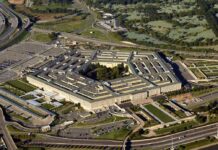
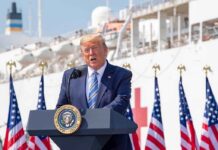
conservativehub.com — The Department of Homeland Security is weighing whether to choke off international arrivals at airports in sanctuary cities—and the leverage is the customs booth, not the runway.
Story Snapshot
- DHS leadership says plans are being drafted to restrict international processing at airports in sanctuary jurisdictions, not yet implemented [1][2].
- The stated goal is coercive leverage: deny international processing to cities that refuse cooperation on immigration enforcement [1][2].
- Major hubs named in coverage suggest real operational pressure points with national ripple effects [1][3].
- Travel and airline voices warn of significant disruption, and legal fights appear likely [1][3].
The proposal: turn customs into a pressure valve
Homeland Security Secretary Markwayne Mullin said the administration is drawing up plans to restrict international arrivals into sanctuary cities that do not cooperate with federal immigration enforcement, clarifying that no rollout has begun [1][2]. The mechanism described in reporting is not a blanket flight ban but the removal or suspension of Customs and Border Protection processing at targeted airports, which would effectively block international traffic from clearing the border there [1][3]. That distinction matters because control of border processing sits squarely with the federal government.
Coverage ties the plan to named jurisdictions with large international gateways, including New York City, Newark, Los Angeles, Chicago, Boston, Philadelphia, Seattle, Denver, and San Francisco, reflecting that officials identified leverage where it would bite hardest [1]. Reporting also says senior officials met with airline and travel executives and floated redeploying Customs and Border Protection officers away from these airports, signaling the idea progressed beyond rhetoric into preliminary operations discussions [1]. Those conversations validate that aviation impacts were considered early.
Power, federalism, and the sanctuary standoff
The stated rationale is straightforward: if cities refuse to help enforce federal immigration laws, the federal government will not facilitate their international traffic flow [1][2]. That argument aligns with a recurring federal strategy—conditioning access to federal capabilities to induce cooperation. From a conservative lens, the logic tracks with national sovereignty and the primacy of federal border control. The gap is the legal brief; public reporting does not cite the specific authorities that would justify selectively suspending processing as a punitive measure rather than as a resource allocation choice [1][3]. Courts will ask for that foundation.
The record highlights practical ambiguity that lawyers and logisticians will have to resolve. Reports alternate among “blocking flights,” “pulling Customs and Border Protection officers,” and “suspending customs and immigration processing,” which are not operationally identical [1][2][3]. Airlines can reroute aircraft; passengers and cargo cannot clear a border without federal processing. If Customs and Border Protection staffing is pulled, international service dries up by default, but that still requires careful sequencing with carriers, airport authorities, and foreign partners. The muddled language invites both overreaction and mischaracterization.
Economic shock potential and industry resistance
Travel-industry and airline voices warn of major disruption to passengers, cargo, and tourism if international processing is curtailed at key hubs [1][3]. That warning reflects basic network math; choke a few top-tier airports and you reroute planes, crews, belly cargo, and connecting itineraries across the system. Critics frame the move as collective punishment of residents and businesses for city policies, a messaging lane that often dominates headlines. The administration’s counter would stress that federal border operations are not an entitlement when local officials obstruct lawful enforcement priorities [1][2].
What success requires—and where the plan could fail
The plan’s leverage depends on three things: a clear legal hook for redistributing or suspending federal processing, an implementation design that isolates targeted airports without crashing the network, and a political argument that convinces the public the inconvenience is justified by improved enforcement outcomes. The reporting provides progress on stakeholder outreach and target selection but not the legal memorandum or a detailed operations playbook [1][3]. Without those, injunctions, airline schedule chaos, and diplomatic blowback could outpace any gains in local cooperation.
DHS is drawing up a plan to block international flights into sanctuary cities that are not allowing local authorities to do their job.
There are 18 designated sanctuary cities in America. pic.twitter.com/ekbzyM6GFH— Katie Liane (@TheKaterPotater) May 28, 2026
A narrower, more defensible version could prioritize temporary Customs and Border Protection redeployments triggered by specific noncooperation metrics, paired with diversion corridors at nearby non-sanctuary airports. That approach would move this from threat posture to a rules-based policy that courts may view as resource allocation rather than punishment. Until the department publishes its authority analysis and procedures, the public record supports a cautious conclusion: the administration is testing a hard-power lever with real teeth, but the case is still on the drafting table, not the runway [1][2][3].
Sources:
[1] Web – DHS Secretary Drawing Up Plans to Block International Flights Into …
[2] Web – DHS considers blocking international travel through sanctuary cities
[3] YouTube – DHS Plans to BAN International Flights to Sanctuary Cities
© conservativehub.com 2026. All rights reserved.