When federal agents arrest a journalist nearly two weeks after a protest, the real target isn’t a person—it’s the boundary line between law enforcement and the First Amendment.
Quick Take
- Federal agents arrested former CNN anchor Don Lemon in Los Angeles on Jan. 29-30, 2026, tied to a Jan. 18 protest disruption at Cities Church in St. Paul, Minnesota.
- Prosecutors reportedly pivoted after a federal magistrate judge rejected an earlier charging effort, then moved forward through a grand jury process.
- Authorities have referenced civil-rights interference theories and the FACE Act, a law better known for clinic access cases but also applicable to houses of worship.
- The case spotlights a high-stakes conflict: protecting religious worshippers’ access versus punishing media presence at politically charged events.
The Timeline That Makes This Case Different
Federal agents took Don Lemon into custody in Los Angeles while he was in town for Grammy-related coverage, according to reporting from major outlets. Investigators tied the arrest to a Jan. 18 incident in St. Paul, where anti-ICE protesters disrupted a service at Cities Church. That time gap matters. Police typically arrest on-scene if they believe a reporter crossed the line into participation; delayed arrests usually signal paperwork, strategy, and a desire to set an example.
The backstory adds friction: a federal magistrate judge reportedly rejected an earlier attempt to proceed on a criminal complaint, yet the case did not die. A grand jury was empaneled on Jan. 29, and the arrest followed. That sequence reads like escalation, not routine enforcement. When government lawyers retool a case after an initial judicial “no,” they may be pursuing a legitimate theory—or they may be trying to find any theory that sticks.
What Happened at Cities Church, and Why It Pulled in ICE Politics
The protest targeted Cities Church after activists identified a pastor as the acting field director of the St. Paul ICE field office. That detail turned a local church into a flashpoint for national immigration arguments. Churches occupy a special place in American civic life: they are private spaces open to the public, with worship protected by law and custom. Protesters know that disrupting a service triggers community outrage faster than picketing a government building.
From a conservative, common-sense perspective, worship should not become collateral damage in political theater. People in pews didn’t sign up to be extras in someone else’s immigration protest. The unanswered question is whether the government can protect congregants’ access without criminalizing observation and documentation by the press. If authorities claim a journalist became part of a disruption conspiracy, they need specific conduct—more than being present with a camera and a notebook.
The FACE Act and Civil-Rights Theories: Powerful Tools, Risky Application
Prosecutors reportedly explored charges tied to interfering with civil rights and referenced the Freedom of Access to Clinic Entrances Act, which also covers houses of worship. That’s legally plausible on paper: the statute’s scope reaches beyond clinics. The concern is practical and constitutional. Laws written to stop blockades and intimidation can morph into multipurpose weapons when officials apply them to contested public events. That makes standards and evidence everything.
Conservatives generally support law and order, and statutes exist for a reason: protect citizens from harassment and coercion while they exercise basic rights, including worship. Still, law and order also demands restraint. Prosecutors should not “stretch” a law to punish politically annoying coverage. The justice system loses credibility when enforcement looks selective, personal, or timed for maximum public humiliation. Equal justice means the rules stay stable, even when the headline name changes.
Why a Journalist Arrest Is a Chilling Message to Everyone Else
Criminally charging journalists for work around protests is rare in modern American practice, and that rarity functions like an informal guardrail. It tells police and prosecutors: arrest the lawbreakers, not the people recording the lawbreakers. Lemon’s attorney framed this case as an unprecedented attack on the First Amendment. That argument will rise or fall on facts: what exactly did Lemon do inside the church, and how will prosecutors prove intent?
The case also snared another journalist, Georgia Fort, who said authorities arrested her for filming the church protest. That detail matters because it weakens any simple narrative that this is only about one famous TV personality. A pattern involving multiple journalists starts to look less like a one-off misunderstanding and more like a policy choice. Americans can support protecting churches and still reject the notion that filming equals criminal complicity.
The Political Overlay: When Leaders Talk, Prosecutors Get Pressured
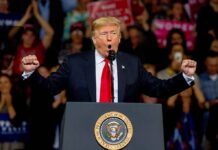
President Trump publicly criticized Lemon and appeared to approve of the idea of arrest over the church incident, according to reports. Attorney General Pam Bondi announced arrests on social media and described the disruption as a “coordinated attack,” saying arrests occurred “at my direction.” Those statements might energize supporters, but they also inject politics into a space that should stay clinical: evidence, elements of crimes, and due process.
Common sense says this: if the government has strong evidence that a journalist helped organize or execute a disruption, present it and let courts work. If the evidence shows only presence and documentation, the prosecution risks setting a precedent that punishes newsgathering. The real test for conservatives who value constitutional order is consistency—defend rights you like and rights you don’t. That’s how the Bill of Rights survives political seasons.
The Don Lemon arrest isn’t about Don Lemon. The facts point to something far more concerning. https://t.co/MpM6NTa2sl
— Colby Hall (@colbyhall) January 30, 2026
The immediate outcome may hinge on narrow legal questions—probable cause, intent, conspiracy, and the scope of a statute. The long-term consequence is broader: whether future administrations of either party feel emboldened to arrest reporters first and argue constitutional boundaries later. This case isn’t about Don Lemon as a celebrity or a partisan symbol. It’s about whether Americans keep a workable separation between punishing disruption and punishing scrutiny.
Sources:
Don Lemon arrested in connection with Minnesota protest: Sources
Don Lemon in custody, former CNN anchor, sources say
Don Lemon arrest Minnesota protest