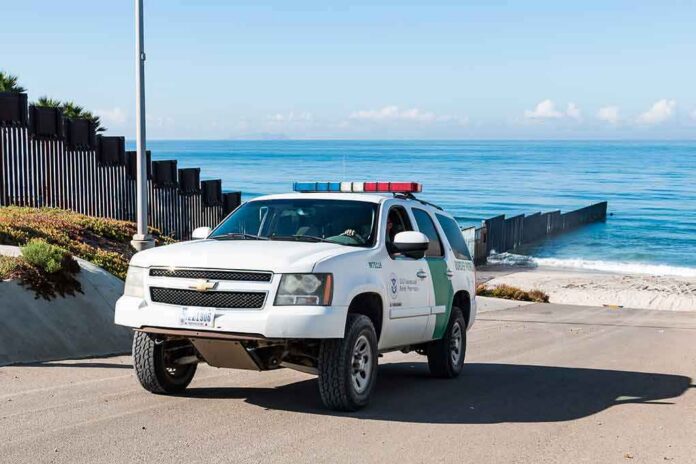
A jet ski from Canada dropped two men on a Michigan shore, and minutes later five people were in handcuffs.
Story Snapshot
- U.S. agents tracked a jet ski from Canada to Port Huron, Michigan, and made arrests.
- Four Brazilian nationals and an American driver were taken into custody.
- The quick stop happened near the Blue Water Bridge on the St. Clair River.
- Agents used air support, road stops, and coordination to break up the smuggling plan.
Jet ski drop-off near Blue Water Bridge ends in swift arrests
U.S. Customs and Border Protection said an aircraft crew saw a jet ski leave Canada on August 20 and cross the international border near the Blue Water Bridge at Port Huron, Michigan. The jet ski carried three people, stopped along the U.S. shoreline, and let two disembark. The watercraft then turned back toward Canada. Ground units tracked a pickup vehicle and stopped it, arresting a U.S. driver and two Brazilian nationals who admitted to entering illegally, according to the agency’s release.
Agents later located two more Brazilian nationals tied to the crossing, bringing the total in custody to four foreign nationals and one American driver. Local and national outlets reported the interdiction details that matched the agency account, including the time window, the use of air patrol, and the traffic stop that followed the shoreline drop-off. The location and method fit known smuggling tactics along busy water corridors that offer quick in-and-out options for small craft.
What the case shows about northern border smuggling
Smugglers test gaps, not just fences. The St. Clair River sits under regular watch, but it also sees heavy commercial and recreational traffic. A small jet ski can blend for a few minutes, then dash to a quiet shoreline. That speed is the point. Air and Marine Operations platforms, license plate readers, and quick coordination with road units close the window. This case showed that toolset working in real time, from the overhead sighting to the roadside arrest.
Smuggling across the United States–Canada line is not one-size-fits-all. Some sectors spike for months, then go quiet. Facilitators shift routes, vehicles, and times to probe where attention fades. Academic and government assessments describe a long-running cat-and-mouse game on this border, with local networks taking advantage of familiar waterways, marinas, and access roads. Enforcement cooperation has grown in response, and that cooperation produced this fast interdiction near Port Huron.
Charges, consequences, and the deterrence signal
Border authorities reported that the Brazilian nationals admitted to crossing illegally and that the U.S. driver was arrested on suspicion of human smuggling. Actual charges proceed through federal channels after arrest. The initial message, though, is plain: a quick water drop and a waiting getaway car will not beat layered surveillance. That is a deterrent Americans expect, and it aligns with common sense policing—catch the facilitator, interrupt the method, and diminish the lure for copycats.
Border Patrol probably didn't have jet ski interdiction on their bingo card this morning
— just_b_real (@Sillygurl8613) September 29, 2026
Some commentators call a single jet ski bust small. That misses the lesson. The northern border spans lakes, rivers, forests, bridges, and ports. You do not secure it with one wall or one camera. You secure it by making fast, local attempts feel risky and unprofitable. When agents routinely turn ten-minute rides into arrests, the word spreads. That is how you shrink the market for smugglers while upholding fair, legal pathways for those who follow the rules.
Why precision policing beats spectacle on the water
High-speed chases make good video, but precision makes good policy. The Port Huron case relied on watch, wait, and intercept, not on risky pursuit across a busy river. That approach protects agents, bystanders, and suspects while still defending the line. It also respects the reality that most northern crossings are lawful and peaceful. The goal is not to turn lakes into war zones; it is to hold smugglers to account and keep communities safe without drama.
Sources:
redstate.com, cbc.ca, cbp.gov, globalnews.ca, fox2detroit.com
© conservativehub.com 2026. All rights reserved.