
Fifty-three people died at a Ukrainian aid site after two waves of Russian bombs turned a school and its shelter into rubble.
Story Snapshot
- Officials raised the death toll to 53 after days of rescue work.
- The strikes hit an aid distribution point and then a shelter in Komyshuvakha.
- Local authorities say civilians were gathering for help when the bombs fell.
- United Nations monitors say wide-area explosive weapons drive many civilian deaths.
Two Blows In One Place: Aid Point, Then The Shelter
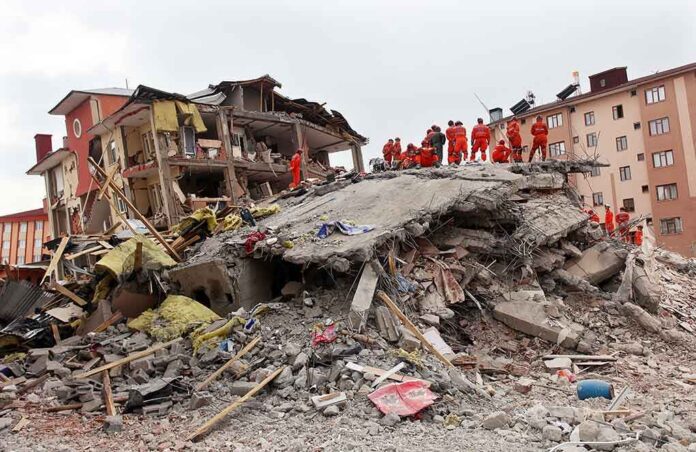
Rescuers in Komyshuvakha spent five long days cutting through concrete, dust, and twisted pipes. They searched a school building used to hand out food and supplies. They searched the shelter below it. Officials said Russian forces hit the aid site first and then struck the place where people hid. That sequence left families crushed in line and underground. The scene matched what locals described: a place for help that became a trap in seconds.
Acting regional governor Mykhailo Semikin said the toll climbed as crews reached deeper pockets of debris. He announced the rise to 53 in a public statement and said teams kept working through risk of more strikes. Reporters on the ground tracked the count as it rose with each recovery. The number moved from dozens to the current figure as bodies were found and identified. That pattern fits large building collapses with many civilians inside.
What We Know About The Day And The Target
The town sits in Ukraine’s southeastern Zaporizhzhia region. The school building served two roles during the war: a shelter and a hub for aid. People lined up for food, medicine, and warmth. The attack punched through those functions in minutes. Photos and video showed floors pancaked and walls blasted out. Local authorities called the site civilian. They described victims who came for help, not a fight. No agency has released a list of military targets at that address.
President Volodymyr Zelensky said multiple bombs fell on the complex. He described a first hit on the aid center, then another on the shelter. Various reports counted at least nine bombs or more than ten glide bombs. The exact number may differ by how crews recorded impacts and fragments, but the human result is clear. A place built for children and classes became a crush of concrete and rebar, with aid boxes buried under rubble.
Why The Count Rose Over Several Days
Rescue teams faced a maze of broken rooms and blocked stairwells. They found survivors early, then fewer signs of life as hours passed. The count rose from the 20s into the 40s, then to 53, as crews reached basements and interior halls. This is common in mass-casualty blasts where heavy roofs collapse onto crowded rooms. Forensic teams had to match remains to names. Families waited with photos, hoping for news that did not come.
Russian Strike Turns Humanitarian Hub Into Mass Grave—The death toll from Russia’s bombing of an aid distribution point in Komyshuvakha has risen to 53, acting Zaporizhzhia regional governor Mykhailo Semikin said on November 6, as search and rescue operations entered their fifth… pic.twitter.com/ui9Biw8SnR
— JP Lindsley | Journalist (@JPLindsley) November 6, 2026
United Nations monitors have warned for years about explosive weapons in cities. Bombs and missiles that spread force over a wide area kill most when used where people live, work, and line up for aid. Their recent reporting tied a large share of civilian deaths in Ukraine to such wide-area weapons. The math is cruel and simple: big blasts in dense places mean high tolls, even when a single building takes the hit.
What This Means For Civilians And The Law
International rules of war demand a clear line between civilians and combatants. Aid sites and shelters should be off-limits unless used for combat. Even then, any strike must weigh the military gain against likely harm to civilians. That standard reflects common sense and American conservative values: protect the innocent, punish the guilty, and keep force precise. Hitting an aid queue and then a shelter tears at that line and shocks the conscience.
This case will draw close review by investigators and human-rights bodies. They will look at weapon types, flight paths, and the sequence of blasts. They will examine whether the site had any military role. They will ask who ordered what and when. For now, local officials, global media, and the United Nations describe a deadly outcome for people who came for help, not war. The names and stories of the lost will define the true weight of this strike.
Sources:
zmina.info, reuters.com, kesq.com, dw.com, transcripts.un.org, ohchr.org, ukraine.ohchr.org
© conservativehub.com 2026. All rights reserved.