
Two commercial helicopters tried to land on the same Everest-region helipad at the same time—and one traveler never walked away.
Story Snapshot
- Two helicopters collided while landing at the Pheriche helipad near Everest around 8:12 a.m. local time
- Operators identified as Fishtail Air and Air Dynasty by police and aviation authorities
- One passenger, identified as India’s Vasant Kumar Balramudu, died at the scene
- Officials reported multiple injuries among the pilots and a passenger
Collision On A Busy Mountain Helipad
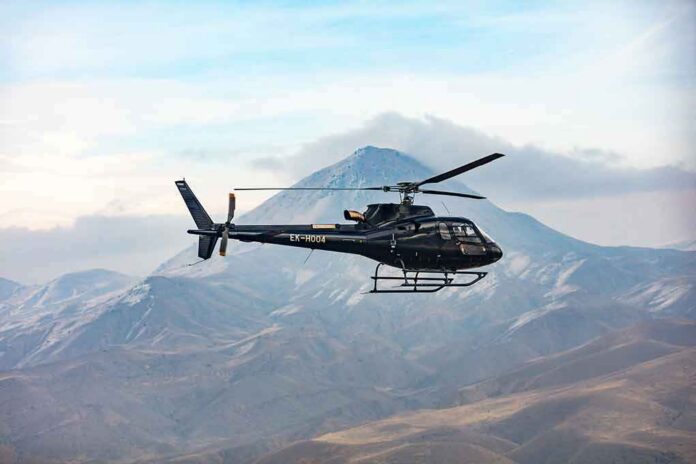
Nepal Police and the Civil Aviation Authority of Nepal reported a landing collision at the Pheriche helipad in Solukhumbu just after 8:11 a.m. on November 3, 2026. The helicopters belonged to Fishtail Air and Air Dynasty, both active operators in the Everest corridor. Officials described rotor contact as the trigger, which can turn a routine set-down into disaster in a heartbeat. The setting—thin air, tight space, and steady traffic—left little room to correct once blades met.
Authorities confirmed one death at the site. News outlets citing Nepal Police named the deceased as 47-year-old Indian national Vasant Kumar Balramudu from Chennai, Tamil Nadu. Police and security officials also reported injuries among those aboard, including pilots and at least one passenger, as initial counts evolved during the morning. Early tallies often change as responders move the wounded from remote pads to clinics, then to better-equipped hospitals down valley.
What Officials Say About How It Happened
The Civil Aviation Authority’s information office said both helicopters were attempting to land when their rotors struck. A district police inspector added that both pilots appeared to aim for the same helipad, which can become hard to judge when snow masks boundaries and blowing grit cuts depth cues. These statements match the most visible pattern in such events: converging approaches, tight margins, and a few seconds where radio calls and sightlines matter most. Formal investigations typically confirm the exact sequence later.
Reports from the region placed the crash on the main trekking artery toward Everest, where Pheriche serves guides, trekkers, and cargo flights all season. The helipad sits at high altitude, where engines and rotor systems have less performance headroom. That physics narrows options if a pilot must wave off late. When two ships commit at once, the overlap can be fatal because rotor arcs are unforgiving and the pad’s escape routes are short.
The Human Toll And The Names Behind The Numbers
Indian and Nepalese outlets named the victim and noted continuing care for the injured, including pilots listed among those hurt. An Armed Police Force officer first briefed reporters on the fatality of a foreign national and at least one injured person; later updates accounted for three injured people as medics assessed patients. That pattern tracks remote incidents worldwide. First responders prioritize evacuation over paperwork, then reconcile manifests, crew rosters, and medical notes as the day goes on.
🚨 Nepal Helicopter Collision Near Everest: Indian Tourist Killed
A tragic helicopter collision at Pheriche helipad, Nepal, on November 3, 2026, has killed a 47-year-old Indian tourist from Chennai and injured three others.
✈️ Fishtail Air (9N-AJR) and Air Dynasty (9N-AOD)… pic.twitter.com/TMNbVT0fjT
— AirMedia24 (@AirMedia24) November 3, 2026
Families and tour partners now face stark logistics: repatriation of remains, insurance notifications, and company support for survivors. These steps unfold behind the scenes, but they decide how quickly loved ones get answers. Authorities said they were gathering details and proceeding with the inquiry, steps that should also clarify final injury counts and the full roster of those on board. Compassion and transparency are the least the industry owes after a clear loss of life.
Why This Pad, This Morning, This Outcome
Mountain flying in Nepal blends tight terrain, active tourism, and weather that changes in minutes. Government safety records and aviation reviews show repeated helicopter accidents in high valleys over decades, with multiple fatal events in Solukhumbu and nearby ranges. Analysts and aviation officials have long flagged a simple truth: short hops to small pads leave little slack for error, misread radio calls, or a late sight of traffic on the spot you planned to use. Good procedures help, but physics and geography still press pilots.
None of that absolves anyone from discipline in the circuit. Conservative values favor clear rules, personal responsibility, and consequences when procedures fail. Operators must prove that dispatch, radio coordination, and helipad control work even on the busiest mornings. Regulators must enforce lane-keeping in the sky the same way we expect on a highway. Tourists stepping into a helicopter deserve the same confidence they expect from a bus on a mountain road: one vehicle on the pad, the next in the queue.
What To Watch Next
Investigators will map approach paths, match radio logs, and review company procedures. Expect clarity on whether both pilots had the same landing brief, who held the pad, and what either crew saw in the final seconds. Look for guidance on helipad traffic flow at Pheriche and nearby stops. The crucial fix is simple to state and hard to miss: one aircraft owns the pad until skids or wheels are secure and clear. Everest’s skies are busy; the margin for guesswork is not.
Sources:
facebook.com, ianslive.in, thehimalayantimes.com, ddnews.gov.in, thelogicalindian.com, airlive.net, english.onlinekhabar.com
© conservativehub.com 2026. All rights reserved.