

A sitting Republican U.S. senator just endorsed a Democrat for governor—again—and it could shape Alaska’s race in the final stretch.
Story Snapshot
- Senator Lisa Murkowski endorsed Democrat Jonathan Kreiss-Tomkins for Alaska governor on October 27, 2026.
- She praised his bipartisan approach and youth, and issued a campaign statement to back it up.
- Three former governors also lined up behind Kreiss-Tomkins the same day, adding institutional heft.
- Alaska’s candidate-first culture and ranked-choice voting make cross-party picks less rare—and hard to predict.
Murkowski’s Cross-Party Pick Lands With Days To Go
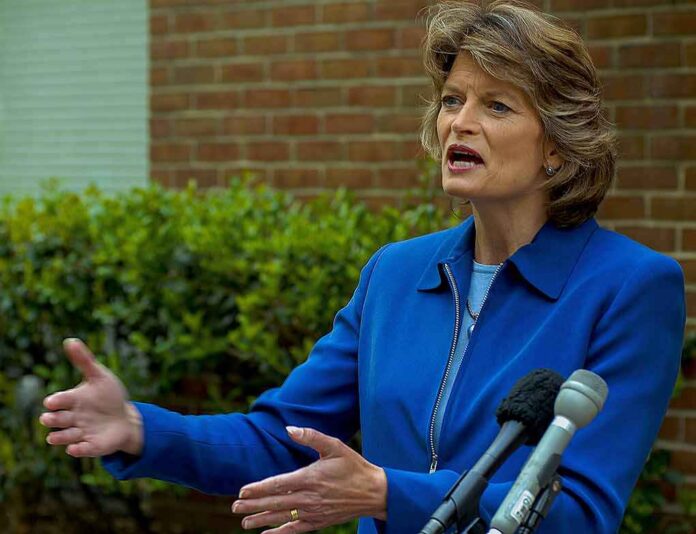
Senator Lisa Murkowski endorsed Democrat Jonathan Kreiss-Tomkins for governor, telling Alaska’s News Source, “I am announcing my endorsement of Jonathan Kreiss-Tomkins,” and calling him a young Alaskan with a needed perspective. Her quote appeared on air and in a written statement from the Kreiss-Tomkins campaign. The move came as ballots were set and early voting ramped up. The timing gives the Democrat a late media burst and validation from the most known political name in the state.
The senator framed her choice as a push for bipartisan problem-solving. The campaign’s release highlighted her view that Alaska’s future should not be stuck in partisan fights. That line tracks with her record. She has crossed party lines on endorsements before, including support for Democrat Mary Peltola in 2024, while also backing Republican Senator Dan Sullivan the same year. The pattern shows a candidate-first instinct more than a party switch.
A Rare Coalition: Ex-Governors Join The Effort
Three former Alaska governors—Democrat Tony Knowles, Republican Frank Murkowski, and Independent Bill Walker—also endorsed Kreiss-Tomkins the same day, forming a wide establishment bloc behind him. That roster gives the Democrat credibility with moderates and older voters who prize steadiness and local ties. It also offers a contrast with a crowded Republican field. Voters see a single, organized lane for a challenger built by familiar Alaska figures.
Republicans still dominate many Alaska races, but endorsements like these punch above their weight in a ranked-choice system. Voters list candidates in order. Second and third choices can decide a winner. A cross-party nod can move those lower rankings, even if first-choice loyalties hold. That dynamic turns trust and personal reputation into real vote math. It is not about party purity. It is about who a voter feels safe to mark second or third.
What This Means In Alaska’s Ranked-Choice Reality
Ranked-choice voting changes campaign strategy. Candidates hunt for broad acceptability and try to avoid being a voter’s last pick. Murkowski’s backing signals that Kreiss-Tomkins is a safe option for moderates and some Republicans who value pragmatism over party heat. Prior Alaska contests showed that many voters do rank beyond their favorite, and that those transfers matter when no one clears a majority on the first count.
Lisa Murkowski is Alaska's senior senator and a Republican. On Tuesday she endorsed the Democrat for governor, Jonathan Kreiss-Tomkins, a former state representative from Sitka. Her words: "Our future is too important to be hamstrung by partisan divisions."
President Trump… pic.twitter.com/5Hltdz3gCE
— Jewels Jones ® (@JewelsJonesLive) October 28, 2026
Endorsements do not always persuade. Research on political cues shows they can help with aligned audiences, but can also trigger backlash among opponents. That means Murkowski’s support could lift Kreiss-Tomkins with her admirers while hardening resistance among strong partisans. The net effect will depend on who trusts Murkowski today and who controls the late narrative. In Alaska’s small media market, a credible, named voice tends to carry farther than a flood of generic ads.
The Conservative Read: Principles, Pragmatism, And Alaska First
Some conservatives will call this a bridge too far. Others will see a conservative principle at work: pick the person who will protect resource jobs, honor the state’s unique needs, and resist federal overreach, no matter the label. Murkowski’s pitch rests on competence and coalition-building, which can be a common-sense value in a state where energy, fishing, and defense require steady hands more than slogans. Voters will judge whether that method, not just a party tag, earns their second-choice mark.
Sources:
yahoo.com, alaskapublic.org, alaskasnewssource.com, thehill.com, juneauindependent.com
© conservativehub.com 2026. All rights reserved.