
The jetway arrest that delayed a Los Angeles-bound flight was not random chaos; it was a planned immigration operation that met a wall of public fury.
Story Snapshot
- Immigration officers arrested a man on a Seattle jetway during boarding after a targeted operation.
- Officers said a second passenger threw hot coffee and also overstayed a visa; she was detained.
- Airport and state officials condemned the tactics and said they were not told in advance.
- The clash spotlights growing airport-based enforcement and the demand for clear rules.
What Officers Say Happened On The Jetway
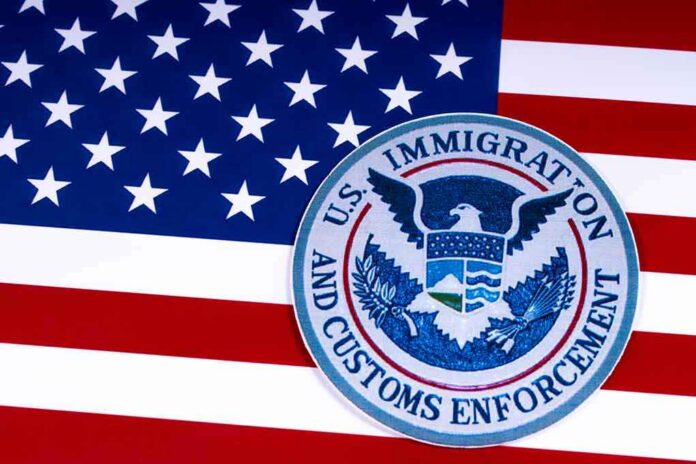
Immigration officers moved on a crowded Alaska Airlines jetway at Seattle–Tacoma International Airport to arrest Ricardo Larrondo Mendoza. The agency called it a targeted enforcement operation and said Mendoza overstayed his visa, which violates federal immigration law. Officers said the encounter escalated when some travelers interfered and assaulted them during the arrest. That official account frames the scene as a lawful operation that met resistance, not a fishing expedition or chance encounter.
Agents said a second traveler, Sofia Hernandez Mejia, hurled hot coffee at officers and also had overstayed a visa. They detained her and said she could face a charge for assaulting a federal officer. Reporters noted that the public video clips circulating do not confirm the coffee claim on their own. The agency’s assertions provide the operational rationale. Independent proof, such as charging papers or full surveillance, had not been shared in public reports at the time.
Why Leaders Erupted After The Flight Delay
Washington officials blasted the scene and the look of it. They pointed to masked officers with limited visible identification, the physical struggle on a narrow jet bridge, and the resulting flight disruption. The Port of Seattle, which runs the airport, said it had no advance notice and opened a review of whether federal agents followed airport protocols. That complaint is institutional. It focuses on coordination, clear identification, and passenger safety, not on the basic authority of federal immigration arrests.
Governor Bob Ferguson called the video horrific, said the tactics were un-American, and urged tough changes. He pressed Alaska Airlines to push for immigration agents to leave airports altogether. That is a sweeping political claim, not a legal finding. The facts in record still show officers arrested a named overstay target and confronted interference on a federal enforcement action. Demands to ban agents from airports run into federal authority over immigration and the limits on local power to restrict it.
The Legal Ground Under An Airport Arrest
Immigration officers rely on administrative arrest powers under the Immigration and Nationality Act to detain people they believe to be removable. Those arrest documents are signed by agency supervisors, not judges, and are distinct from criminal warrants. Civil liberties groups dislike that structure, but experts widely agree it permits officers to operate in public and semi-public areas, including airports. Airlines and airports cannot void federal powers in those zones.
Airports have become more active enforcement space. A data-sharing pact between Transportation Security Administration systems and immigration authorities increased the value of passenger data for targeting. That is one reason these scenes now happen near gates and on jetways, where arrests pose bigger safety and optics risks for airlines and travelers. The policy choice is stark: either plan arrests in controlled back rooms with coordination, or accept viral videos from crowded choke points when agents act without local heads-up.
Sorting Claims, Proof, And Common Sense
The clearest established facts come from named reporting of the agency’s statement: officers targeted Mendoza for a visa overstay, detained Hernandez Mejia, and alleged she threw hot coffee. Reporters also noted the lack of public records that would settle the overstay dates, warrant type, or full force review. That gap leaves room for loud talk, but it does not erase the agency’s core claim about the legal basis for the stops. A court, not social media, will test those details.
**Masked federal agents dragged two visa overstays off a Sea-Tac jet bridge during boarding on November 21, prompting Washington’s Democratic governor to label the operation “chilling” and demand ICE leave the state’s airports.**[[1]](https://t.co/scYAB677m3)
[Take 7/15 · D-2]…
— GrumpyNews, emotionally clean news. (@GrumpyNews_) November 22, 2026
Conservative common sense says two things can be true. First, the country needs firm, fair immigration enforcement. People who overstay visas or assault officers should expect arrest and charges. Second, officers should plan operations to reduce risk to bystanders and to show their badges clearly in public places. A better standard is simple: targeted arrests, visible identification, clear coordination with the airport, and body-worn video to close the proof gap the next time this happens.
Sources:
facebook.com, apnews.com, the-independent.com, congress.gov, uk.news.yahoo.com
© conservativehub.com 2026. All rights reserved.