
The fight to impeach Defense Secretary Pete Hegseth is now a live-fire test of who gets to start a war and who must say yes first.
Story Snapshot
- Rep. Thomas Massie filed eight impeachment articles against Hegseth over Iran and other actions.
- The charges center on war powers, alleging hostilities began without Congress’s approval.
- Top Democrat Hakeem Jeffries backs impeachment and blasts the Iran campaign as reckless.
- Hegseth calls the move a political spectacle while the House readies a quick vote.
What Congress Put On Paper, And Why It Matters
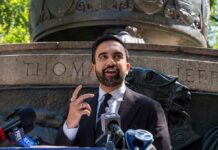
Representative Thomas Massie introduced formal impeachment articles on November 9, 2026, giving critics a concrete bill of particulars and giving Hegseth a clear target to rebut. The core claim says Hegseth “knowingly executed and implemented unlawful orders” and helped start hostilities against Iran without a specific green light from Congress or a qualifying emergency under the War Powers framework. This is not a policy gripe. It is an allegation that the executive branch cut Congress out of a constitutional role.
The resolution goes wider than Iran. It alleges unlawful strikes in Yemen and claims Hegseth replaced maritime law enforcement with lethal military targeting of suspected drug traffickers, with hundreds of deaths asserted by the sponsor’s materials. It even includes claims about retaliation against Senator Mark Kelly and the seizure of former Venezuelan leader Nicolás Maduro, which, if proven, would widen the stakes well past one theater of war. The House is poised to move within days, compressing time for a detailed defense.
The Hard Question: Who Decides When War Starts?
Since Vietnam, Congress has tried to claw back its say through the War Powers Resolution, which limits unilateral action to narrow emergencies and sets reporting rules and clocks for withdrawal if Congress does not authorize force. Presidents push the other way, citing Article II as commander in chief. That tug-of-war is the real backdrop here, and Massie framed his charges to force that clash into the open with a name, a date, and a decision point.
Hegseth’s defenders can argue he acted under presidential orders and within established executive readings of Article II. That goes to chain of command and civilian control, which conservatives value because it sets clear lines of duty. But the articles try to pierce that shield by saying the orders were unlawful at the start, so obedience does not cure the defect. That is the knife’s edge where constitutional theory meets accountability and common sense.
The Iran Piece: Necessity, Authority, And Proof
The most explosive charge says the February 28, 2026 hostilities began without a specific authorization from Congress and outside any immediate self-defense need. A senior national security official, Joe Kent, resigned and said Iran posed no imminent threat to the United States. Massie cites that to attack the necessity claim the administration might make. That letter is not a court ruling, but it gives skeptics a named insider and a date-stamped dissent.
Defense Secretary Pete Hegseth used his 8:00 a.m. EST Pentagon briefing—his first in over six months—to forcefully defend his record ahead of a looming House impeachment vote.
Slamming the Impeachment Effort: Hegseth dismissed Rep. Thomas Massie’s eight articles of impeachment…— ABBA! (@shilow1) November 10, 2026
What is missing in public view is the administration’s full legal memo and declassified threat basis. If a White House counsel or Department of Defense analysis shows a tight Article II case tethered to concrete threats, the political ground shifts. If it does not, the House will read the silence as telling. Conservatives should want the memo out. Sunlight protects lawful power and punishes overreach. It also spares troops from bearing the blame for choices made above their pay grade.
Speed, Politics, And The Belknap Shadow
House Minority Leader Hakeem Jeffries already endorsed impeachment and denounced the Iran war as reckless and costly, signaling a coalition with reasons beyond legal theory to vote yes. That adds heat but not proof. The only cabinet impeachment precedent, William Belknap in 1876, shows the Senate can try a cabinet officer and weigh facts, even amid political noise. That history reminds today’s Congress that process and evidence still matter when tempers run hot.
Hegseth calls the impeachment a political spectacle. The House paperwork says it is a constitutional test. Both can be true in Washington. The cleanest path forward is also the toughest: put the authorizations, intelligence, and legal opinions on the table before the vote. If the case is strong, votes will follow. If it is weak, America should not set a fresh precedent that war can start first and explanations can wait.
Sources:
cnn.com, npr.org, nytimes.com, houstonpublicmedia.org, axios.com, usatoday.com, massie.house.gov
© conservativehub.com 2026. All rights reserved.