

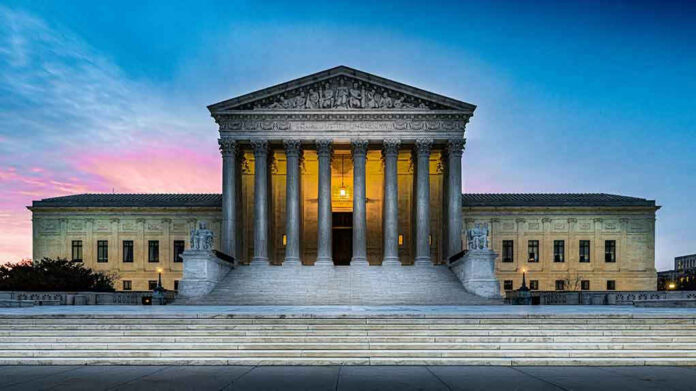
One retirement rumor—true or not—can reshape the Supreme Court for a generation, and Trump is already auditioning names.
Quick Take
- Trump publicly floated Sen. Ted Cruz as a Supreme Court nominee on Jan. 28, 2026, casting it as a nomination both parties might “like” for opposite reasons.
- No justice has announced plans to retire as of Feb. 18, 2026, but speculation centers on the Court’s older members and the political calendar.
- Republicans’ 53–47 Senate edge creates a narrow confirmation window before the 2026 midterms, when control could flip.
- Trump’s broader judicial record—267 Article III confirmations as of Feb. 14, 2026—shows he treats courts as a legacy project, not a side quest.
Trump’s Cruz Tease Wasn’t Small Talk; It Was a Timing Signal
Donald Trump raised Ted Cruz’s name in public at a Washington summit tied to a “Trump Accounts” initiative for children, and he did it the Trump way: as a political dare. Cruz, Trump said, would be confirmed unanimously, with Democrats and Republicans alike relieved to see him leave the Senate. That framing matters because it turns a nomination into a transaction: fewer Senate headaches now, a long-term seat on the Court later.
Washington treated the comment as a trial balloon because it landed in the one window that counts: before the 2026 midterms. A Supreme Court nomination is not a normal personnel decision; it’s a race against the calendar, Senate math, and human biology. Trump doesn’t need a vacancy to start shaping the field. He needs the idea of inevitability—so that if a retirement comes, the party is already mentally halfway to “yes.”
No Vacancy Yet, But the Court’s Age Profile Keeps the Drumbeat Alive
No sitting justice has publicly announced retirement plans as of mid-February 2026. That fact should cool the temperature, yet it rarely does, because the Court encourages rumor by design. Justices control their timing, and Washington reads every speech, trip, and workload clue like tea leaves. Clarence Thomas, at 77, draws routine speculation because he is both the oldest justice and the longest-serving, a combination that invites constant guessing.
Samuel Alito also sits in the category of “people talk,” especially when the political environment looks friendly to a preferred successor. That’s not scandal; it’s strategy. Retirements often land when the White House and Senate align ideologically, because justices care about the direction of the law they spent decades shaping. A potential 2026 retirement would trigger the fastest, most brutal kind of political sprint: one fought in committee rooms, cable studios, and donor calls.
The Senate Is the Real Gatekeeper, and 53–47 Is a Tight Margin
Republicans’ current 53–47 majority reads comfortable until you count noses the way nomination whips do. Every controversial pick becomes a test of party discipline, personal relationships, and the patience of senators who don’t want their final term defined by procedural trench warfare. Analysts have also pointed to a subtle risk for Trump: his influence remains strong, but some GOP senators act more independently, especially as retirements and leadership changes reshape incentives.
Democrats, meanwhile, view the 2026 midterms as a plausible path to capturing the chamber, and they have little reason to hide their intent: a Senate majority is the veto pen on judicial confirmations. If Democrats take control, a new Trump nominee faces a barricade rather than a runway. Conservative voters should see the obvious lesson: elections decide judges, and judges decide what bureaucracies can do to you without your consent.
Why Cruz Fits Trump’s Template, and Why “Confirmable” Is the Hidden Word
Ted Cruz checks the boxes that matter in confirmation combat. He clerked for Chief Justice William Rehnquist and served as Texas solicitor general, which gives him elite legal credentials without the “unknown judge” problem. He also brings movement-conservative credibility, a talent for constitutional argument, and a national profile that makes him hard to caricature as a lightweight. Those traits matter because Senate hearings punish ambiguity and reward tight reasoning.
Still, “confirmable” does not mean “unopposed.” Cruz has made enemies, and senators vote with their relationships as much as their ideology. Trump’s claim of a unanimous vote sounded more like theater than whip-count reality. Conservatives should prefer a nominee who can win quickly and cleanly, because every day of delay becomes a day for pressure campaigns and side deals. A slim Senate margin punishes drama and rewards precision.
A Fourth Trump Justice Would Lock In Policy Consequences, Not Just Bragging Rights
Trump already has three confirmed Supreme Court justices: Neil Gorsuch, Brett Kavanaugh, and Amy Coney Barrett. Observers tracking their voting patterns describe different institutional instincts, with Kavanaugh and Barrett more likely than Gorsuch to join the liberal bloc in a meaningful minority of cases. That nuance matters because the next appointment wouldn’t just “add another conservative.” It could change how reliably the Court limits the administrative state.
On legacy, Trump is reportedly motivated by the historical scoreboard: he sits tied with a cluster of presidents on total appointments, and more picks would move him toward rarer company. That may sound like ego, but ego can align with outcomes voters care about. From a conservative, common-sense view, the prize is not a record book; it’s constitutional stability—rules that don’t lurch every time a new agency memo appears.
The Most Honest Answer: Trump Can’t Get a Fourth Without a Vacancy, But He’s Preparing the Battlefield
Trump can’t nominate anyone unless a justice retires or dies, and no such vacancy exists today. That’s the limiting fact many hot takes dodge. The smarter read is that Trump is acting like a politician who expects a moment to open—and wants the Senate and the base psychologically committed before that moment arrives. If a retirement hits before the midterms, confirmation becomes a high-speed exercise in party unity.
If the vacancy doesn’t come, the entire Cruz episode becomes a preview of Trump’s second-term approach to the Court: public pressure, strategic name-dropping, and relentless focus on the Senate calendar. Conservatives who value checks and balances should treat the chatter less as gossip and more as a warning: the next Supreme Court fight could start on a random weekday—because the groundwork is already being laid in public.
Sources:
https://www.scotusblog.com/2026/02/scotustoday-for-tuesday-february-17/
https://www.tpr.org/government-politics/2026-01-28/trump-floats-cruz-for-supreme-court
https://brucemehlman.substack.com/p/six-chart-sunday-courting-controversy
https://www.scotusblog.com/2026/02/which-of-trumps-supreme-court-nominees-is-the-weakest-link/
https://en.wikipedia.org/wiki/List_of_federal_judges_appointed_by_Donald_Trump
https://www.brookings.edu/articles/paucity-of-vacancies-slows-trumps-effort-to-reshape-courts/
https://www.aol.com/articles/trump-fourth-supreme-court-justice-230515309.html
https://www.supremecourt.gov/about/biographies.aspx