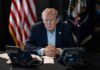
President Trump’s warning to Netflix to dump Susan Rice “or pay the consequences” is colliding head-on with an $83 billion Hollywood merger that could reshape what Americans watch—and who controls the cultural megaphone.
Quick Take
- Trump publicly urged Netflix to remove board member Susan Rice after her comments about Democrats pursuing “accountability” for companies that align with Trump.
- Netflix has not announced any board change, and reporting indicates no confirmed on-the-record response from co-CEO Ted Sarandos despite viral headlines.
- The clash comes as Netflix seeks to buy Warner Bros. Discovery for about $83 billion while facing Justice Department antitrust scrutiny.
- The situation highlights a growing political risk for major corporations as elections, regulation, and corporate speech collide in public.
Trump’s Demand Targets a Familiar Face From the Obama-Biden Era
President Donald Trump used Truth Social to demand that Netflix remove Susan Rice from its board, calling her a “racist” and “Trump deranged” political figure and warning the company to comply or “pay the consequences.” The call followed Rice’s appearance on the “Stay Tuned with Preet” podcast, where she discussed Democrats pursuing an “accountability” agenda toward firms perceived as accommodating Trump. Netflix has not publicly indicated any board action in response.
Rice is not a random corporate director pulled into partisan crossfire. She served as U.S. ambassador to the United Nations and later as national security advisor under President Barack Obama, then held a senior White House role during the Biden years. Netflix first appointed Rice to its board in 2018, praising her judgment and global policy experience, and she later returned to the board in 2023 as the streaming business became more international and politically exposed.
Netflix’s Silence Leaves the “Sarandos Brush-Off” Claim Unproven
Headlines circulating online suggest Netflix co-CEO Ted Sarandos “brushed off” Trump’s demand, but the underlying reporting available in the research set does not include a direct Sarandos quote addressing Trump’s post. That distinction matters because it changes what can be verified versus what is interpretation. The most concrete development is that Netflix, as a company, has not announced a change to Rice’s role or any formal response, even as the story spreads across entertainment and political media.
Corporate boards typically avoid turning governance decisions into political theater, especially during sensitive transactions. Netflix’s board and leadership face competing pressures: a president issuing a very public ultimatum, investors who want stability, and regulators reviewing a megadeal. In practice, board membership decisions follow internal governance processes, not social media demands. Still, Trump’s post adds reputational and regulatory uncertainty at the exact moment Netflix needs calm, predictable review conditions for its acquisition strategy.
An $83 Billion Merger Puts Antitrust Power—and Politics—In the Spotlight
The dispute lands during Netflix’s push to acquire Warner Bros. Discovery in a deal valued around $83 billion, with the Justice Department reviewing antitrust implications. At the same time, another major bid—reported as a $108 billion Paramount Skydance rival package—has moved through earlier antitrust stages, intensifying the competitive stakes. Even without proof of direct White House interference, any suggestion that corporate leadership must conform politically can rattle confidence in neutral, rules-based regulation.
From a conservative perspective, the core concern is not whether Hollywood executives feel comfortable; it is whether powerful institutions can use “accountability” language as a substitute for viewpoint discrimination. Rice’s podcast comments were described as general warnings, not Netflix-specific directives. But her message—paired with her role inside a major cultural gatekeeper—underscores why voters distrust elite networks that rotate between government power and corporate influence. The facts show the collision; motives beyond that remain unproven in the cited material.
What This Episode Signals for Corporate Speech, Governance, and Voters
This story exposes how quickly corporate governance becomes national politics when former top officials sit on boards and comment publicly about punishing political alignment. Trump’s demand tests boundaries in the opposite direction: how far a president can go in pressuring a private company’s board decisions while regulatory agencies review its deals. The available reporting does not establish any action by Netflix against Rice, nor does it confirm any direct regulatory threat beyond Trump’s stated warning.
For Americans frustrated by years of corporate “wokeness,” the public sees two competing impulses at once: Democrats discussing “accountability” for companies that “take a knee,” and Republicans demanding the removal of a prominent Democrat from a board during a major merger fight. The constitutional and free-market ideal is simple: companies should not be coerced by government, and government power should not be used to punish speech. The facts here show escalating pressure, but not yet a resolved outcome.
Sources:
Leadership and directors: Person details
Ambassador Susan E. Rice Appointed to Netflix Board of Directors