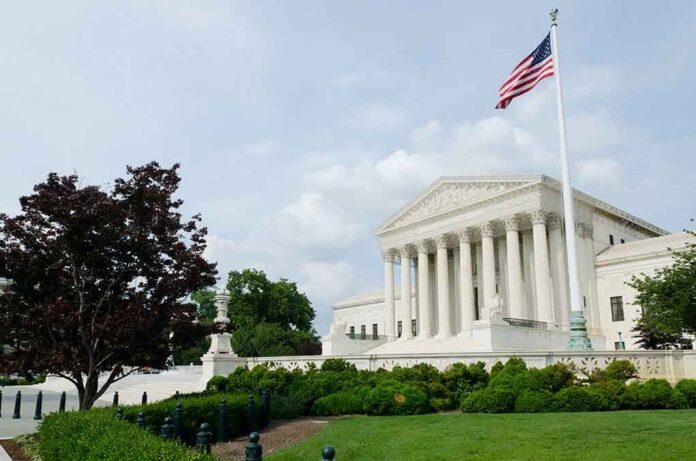
The Supreme Court’s decision to deny Ghislaine Maxwell’s appeal reinforces a significant victory against sex trafficking, affirming justice over privilege.
Story Highlights
- Supreme Court denies Ghislaine Maxwell’s appeal, affirming her conviction.
- Maxwell sentenced for sex trafficking in connection with Jeffrey Epstein.
- High-profile case underscores the importance of accountability for powerful figures.
- Victims’ testimonies upheld, supporting justice for survivors.
Supreme Court Affirms Maxwell’s Conviction
On September 29, 2025, the U.S. Supreme Court declined to hear Ghislaine Maxwell’s appeal, effectively upholding her 2021 conviction for sex trafficking and related crimes. This decision marks the end of Maxwell’s legal avenues in the United States. Convicted for her role in recruiting and grooming underage girls for the late financier Jeffrey Epstein, Maxwell was sentenced to 20 years in prison, a ruling that stands as a testament to the pursuit of justice in high-profile cases.
Maxwell’s appeal was denied after a series of legal maneuvers, including filings and amicus briefs, that argued procedural errors and issues of jury impartiality. The Supreme Court’s refusal to grant certiorari confirms the decisions of lower courts, which had previously affirmed her conviction. This closure provides a sense of justice and validation to the victims, who bravely testified against Maxwell.
Victims’ Voices and Legal Precedents
The case against Maxwell was built on the testimonies of several victims who detailed the grooming and exploitation they endured. The court’s decision to uphold the conviction not only reinforces the validity of these testimonies but also sets a precedent for future cases involving powerful individuals implicated in similar crimes. The implications of this ruling extend beyond Maxwell, signaling a robust legal stance against enablers of sex trafficking.
Maxwell’s conviction and the Supreme Court’s decision highlight the ongoing struggle to hold those in positions of power accountable for their actions. As public awareness of sexual abuse and trafficking continues to rise, legal systems are increasingly scrutinizing the actions of influential figures, emphasizing that wealth and status do not exempt individuals from justice.
Implications for Future Legal Proceedings
The denial of Maxwell’s appeal is seen by legal experts as a reaffirmation of the judicial process in cases involving serious crimes. While defense advocates have raised concerns about media influence on jury impartiality, the appellate courts found no reversible error. This outcome serves as a deterrent to others who might engage in or facilitate such egregious offenses, reinforcing the message that the justice system will pursue accountability, irrespective of the notoriety of the parties involved.
The Maxwell case has also sparked discussions on the necessity of due process and impartiality in high-profile trials. While victims and advocates view the decision as a victory, civil liberties groups emphasize the importance of safeguarding defendants’ rights. The broader implications of this case continue to influence legal practices and societal perspectives on handling sex trafficking cases involving prominent figures.
Sources:
Supreme Court of the United States, Docket for Ghislaine Maxwell v. United States, No. 24-1073