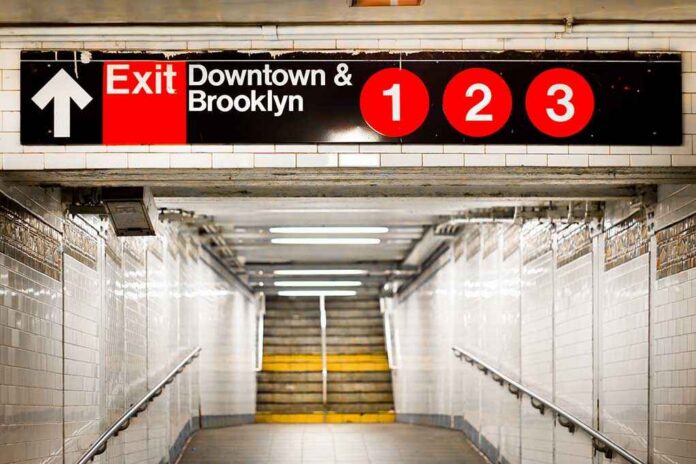
A rush-hour argument on a Bronx 2 train turned into a fatal stabbing before most riders knew it started.
Story Snapshot
- Police say a verbal dispute on a northbound 2 train ended with a man stabbed in the chest
- The 33-year-old victim died at Lincoln Hospital; a 36-year-old suspect was taken into custody
- Investigators shut down the 149th Street–Third Avenue station to secure evidence
- Transit assaults have climbed in recent years, even as officials tout selective declines
What Police Confirmed About The Bronx Train Killing
New York City police described a fast escalation. Two men argued on a northbound 2 train in the Bronx. One man stabbed the other in the chest. Medics rushed the 33-year-old to Lincoln Hospital, where he died. Officers arrested a 36-year-old suspect soon after. Detectives closed the 149th Street–Third Avenue station to search for evidence and gather video. Police have not released what sparked the fight, whether the men knew each other, or if they recovered the knife.
Other recent Bronx footage shows how fast words turn to blades. Surveillance video from Mount Eden captured a heated exchange that exploded into a brawl and a stabbing, leaving a man hospitalized. That case, like many, began with shouting and ended in blood. These clips do not speak to the subway case directly, but they show a pattern: tempers spike, groups swarm, and a weapon comes out before anyone can step in.
Why This Fits A Growing Pattern In New York Transit
City data and federal analysis show more assaults in the subway since before the pandemic. One review found felony assaults now occur about once every 2.3 million rides. That makes attacks rare by the numbers, but each one is public, graphic, and hard to forget. Since 2019, felony assaults on the subway rose by more than half, driven more by personal conflicts than robberies or planned crimes. Riders feel that shift when arguments seem to tip faster into violence.
Officials highlight good months, and some periods do bring declines. A summer report from the governor said major crimes in transit fell compared to 2019, with felony assaults down from the prior year. Both sets of facts can be true. Big systems swing month to month, yet the multi-year arc shows higher assault levels than in the late 2010s. Common sense says riders care less about framing and more about whether a late-night ride ends without a fight.
Open Questions Investigators Still Need To Answer
Detectives still have core gaps to close. They have not said if the men knew each other or if the dispute started on the platform or the train. They have not confirmed recovery of the knife or results from lab testing. The full story likely sits on surveillance hard drives and in rider phones. Witness interviews and medical examiner findings will lock in the timeline, the cause of death, and whether the fatal strike matched the suspected weapon.
Public release of more video could calm rumors and confirm the sequence. Freedom of Information requests can surface wider camera angles from the station. Prosecutors can file lab results that tie DNA to a blade or clothing. These steps matter in court and in public trust. When agencies show the receipts, people accept hard truths faster, even if they do not like what they see. Justice needs sunlight, and subways have cameras at every turn.
What This Means For Riders And Policy
Most riders will never see violence on a train. The math says so. But that truth does not erase fear when a single fight ends a life in front of commuters. Policy should meet both facts and feelings. Flood platforms with visible patrols at peak hours. Remove repeat violent offenders fast and keep them off the system. Enforce rules without excuses. Post real-time stats at stations so riders see progress, not press releases. Safety you can see beats spin every time.
Leaders should keep free speech broad and criminal intent narrow. Heated words should not be crimes. Threats with weapons must bring swift action. Families who ride daily want order, not theater. The Bronx case shows how a small spark can burn hot in seconds. Clear rules, firm enforcement, and honest data can cool those sparks. That is not politics. That is basic duty to the public that pays the fare and expects to get home.
Sources:
thegatewaypundit.com, abc7ny.com, youtube.com, facebook.com, transit.dot.gov
© conservativehub.com 2026. All rights reserved.