A Pennsylvania state trooper is dead, a Haitian national sits in jail, and the gap between America’s immigration promises and its enforcement reality just crashed into full view on Interstate 81.
Story Snapshot
- A Pennsylvania State Police trooper was killed while doing a roadside truck inspection on Interstate 81.
- The truck driver, Haitian national Michael Bon, is charged with homicide by vehicle and related felonies.
- Bon reportedly remained in the country after his humanitarian parole ended, raising hard questions about federal policy.
- The case exposes a clash between mass parole programs, weak enforcement, and state licensing systems that treat immigration status as someone else’s problem.
A trooper’s death on a Pennsylvania highway
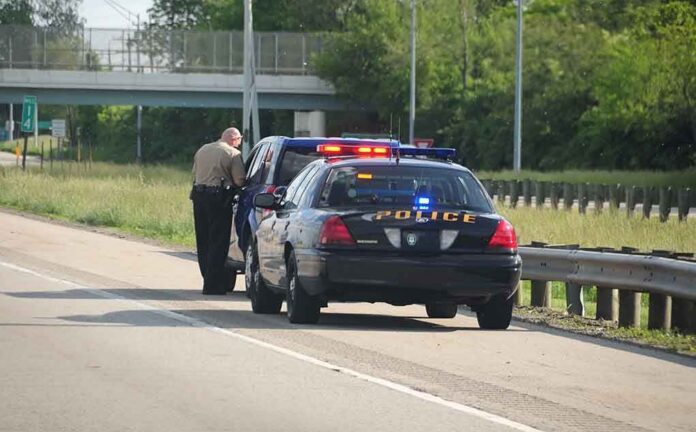
Trooper Michael Pahira Jr. was doing what many drivers barely notice: a roadside truck inspection on Interstate 81 in Schuylkill County. He was out of his vehicle, focused on safety, when a tractor-trailer driven by 33-year-old Massachusetts trucker Michael Bon veered off the roadway. The truck struck Pahira and another tractor-trailer, killing the trooper and injuring others. Court filings describe the crash as sudden, with the exact reason Bon left the highway still officially “undetermined.” That single word leaves a wide space for politics to rush in.
Prosecutors charged Bon with homicide by vehicle, aggravated assault by vehicle, and related felonies. Those are serious crimes, but they are familiar ones in highway tragedies. What makes this case explode beyond a traffic docket is who Bon is and why he was in the United States at all. According to a widely shared Facebook post and social commentary, Bon is a Haitian national whose humanitarian parole ended in 2025, yet he reportedly stayed and worked as a truck driver in Massachusetts. If true, that points straight at the federal government’s handling of parole and enforcement.
The parole pipeline that changed the rules of entry
The Biden administration’s country-based parole initiative for Cubans, Haitians, Nicaraguans, and Venezuelans, often called the Cuba-Haiti-Nicaragua-Venezuela program, created a fast track into the United States for nationals of those countries. Under this system, people could request advance authorization to travel and then be considered for parole at a port of entry if they had a U.S. sponsor and passed vetting. Humanitarian parole itself is not new. The Immigration and Nationality Act allows parole case by case for “urgent humanitarian reasons” or “significant public benefit.” The break with past practice comes from scale and design: using parole as a broad doorway for hundreds of thousands at once.
Testimony to Congress estimates that about 2.8 million otherwise inadmissible foreign nationals were paroled into the country between fiscal years 2022 and 2024. That number matters more than slogans about “orderly migration.” Every large system produces edge cases and failures. When one of those failures drives a truck over a state trooper, people want names, dates, and accountability, not talking points about compassion. Conservative critics argue that this mass use of parole, without clear approval from Congress, effectively created a shadow immigration program that bypasses normal checks. They see Bon’s case as the human cost.
From terminated parole to a commercial driver’s license
Social media posts and advocacy commentary claim Bon entered under a Biden-era parole and that his parole status was terminated in 2025, making his continued presence illegal. Yet there is a key problem for anyone who cares about facts: no publicly released Department of Homeland Security record has yet confirmed how Bon entered, when his parole started, or why it was ended. That silence from federal agencies leaves citizens stuck between speculation and spin. The same posts say Bon had a Massachusetts commercial driver’s license while allegedly out of status. If he did, it exposes how fragmented our system really is.
State motor vehicle agencies exist to test driving skill and basic identity documents. They do not run immigration checks unless lawmakers force them to. Research on states that grant licenses to undocumented drivers shows that, overall, total fatalities barely move, even though some studies detect a slight rise in fatal crashes and a drop in hit-and-run deaths. The idea is simple: more licensed, insured drivers makes roads safer. But that logic assumes the federal government is doing its part on who stays in the country and under what rules. When Washington expands parole by millions, then shrugs at post-termination tracking, it hands state licensing agencies a blindfold.
Responsibility, values, and the politics of blaming the wrong link
Immigration advocacy groups defend the parole system as lawful, targeted, and humane. They stress that parole grants legal presence during its term and does not automatically make someone “illegal” the day it ends. They also highlight that the Supreme Court confirmed the Department of Homeland Security can terminate parole for large groups, showing that tools exist to tighten enforcement when needed. From that angle, the real failure in this tragedy is Massachusetts licensing and the trucking company that put Bon behind the wheel, not the federal program that once let him in.
🚨 BREAKING NEWS: DHS CONFIRMS ILLEGAL IMMIGRANT TRUCK DRIVER CHARGED IN FATAL PENNSYLVANIA STATE TROOPER CRASH
A severe highway tragedy on Interstate 81 has sparked intense debate over border enforcement and commercial licensing policies. The Department of Homeland Security… pic.twitter.com/KLFeUkL1nN
— De Emiratez (@officialkpalaps) July 6, 2026
Many Americans who lean conservative see that argument as backwards. They view the federal government as the senior partner in border control, not a bystander who simply “sets options” for states. Common sense says you do not parole millions of foreign nationals into the country, scale back detention, and then act surprised when some slip into illegal status and cause harm. Yet responsible criticism must stick to what is known. No crash report says immigration status caused the wreck. No publicly cited record shows federal officers ignored a specific order to remove Bon once his parole ended.
What we know, what we don’t, and what comes next
We know a trooper died in the line of duty. We know a Haitian national, living at least at one point in Massachusetts, faces serious felony charges in that death. We know the Biden administration leaned hard on humanitarian parole, bringing in millions who would otherwise be inadmissible. We know that mass use of emergency tools almost always outpaces the government’s ability to monitor every case. What we do not know yet is the crucial chain in Bon’s story: when federal protection began, when it ended, and what, if anything, officials did afterward.
Until those basic facts are released, blaming this death entirely on the parole program overshoots the evidence. Pretending there is no policy lesson in it ignores reality. Serious border policy should match American conservative values in two ways at once: respect the law as written by Congress and protect citizens from avoidable harm. That means using parole sparingly, tracking it carefully, and making sure that when Washington opens the gate, it stays accountable for who walks through and who never leaves.
Sources:
americanprogress.org, youtube.com, cis.org, facebook.com, americanimmigrationcouncil.org, scotusblog.com, law.ucla.edu
© conservativehub.com 2026. All rights reserved.