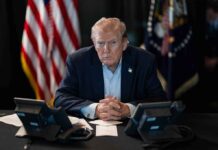
Trump told South Carolina voters to “pretend I’m on the ballot” and warned they could “lose everything” if Darline Graham loses.
Story Snapshot
- Trump cast the Senate runoff as a proxy vote on his presidency.
- He tied Graham’s win to border security and tax cuts.
- Top South Carolina Republicans rallied behind Graham after Trump’s nod.
- Critics questioned whether one seat alone decides national policy.
Trump Makes The Runoff A Referendum On His Agenda
President Trump told supporters in South Carolina that a loss by Senator Darline Graham would put border security and tax cuts at risk. He urged voters to “pretend I’m on the ballot,” framing the runoff as a direct test of his presidency and plans. He had already called Graham’s appointment a “fabulous tribute” to her late brother and promised his “Complete and Total Endorsement” for a full term, placing his brand squarely on her candidacy.
Trump’s involvement did not come late or light. He asked Graham to run “for the Good of our Nation,” and the White House amplified that message, presenting her as an ally who would help carry his policies in the Senate. That pitch links the race to national stakes while keeping the choice simple for primary voters: back the president’s preferred partner or risk policy slippage. The message fits Republican primary dynamics, where presidential alignment often matters most.
South Carolina GOP Falls In Line Behind Graham
Key Republicans in South Carolina lined up after Trump weighed in. Senator Tim Scott endorsed Graham and urged others to follow his lead, tightening elite support around her bid. Representative Russell Fry, after losing in the primary, endorsed Graham and said the Senate needs “fighters and allies” for Trump, highlighting how party figures translated Trump’s appeal into a unified front. That consolidation boosted Graham’s momentum before the runoff window closed.
The endorsement also shaped the race’s narrative and mechanics. National and state outlets described the runoff as a practical test of Trump’s influence over Republican voters, not only a choice between two conservatives. Bloomberg and National Public Radio reported Graham advanced as the Trump-backed candidate from a crowded field, reinforcing the idea that her path depended on harnessing his base and the party structure around him.
Policy Stakes Framed As Border And Taxes—But One Seat Rarely Decides Everything
Trump said the consequences of a Graham loss could include losing gains on border enforcement and tax policy. That warning speaks to clear conservative priorities: safe communities, a secure border, and keeping more of what families earn. The claim motivates turnout. But a single Senate seat does not usually make or break federal policy on its own, absent a razor-thin chamber and specific vote counts. The reporting here shows strong rhetoric, not a whip-sheet proof of policy collapse.
Common sense says margins matter in Washington. A reliable vote helps move bills, staff committees, and back a president’s nominees. Still, the evidence available ties Graham’s role to Trump’s broader agenda by endorsement and messaging rather than a demonstrated, seat-specific mechanism that guarantees the fate of border and tax measures. Voters should treat Trump’s warning as a political signal of stakes, not a mathematical forecast of policy demise.
Resistance, Debate Stumbles, And The Test Of Trump’s Hold
Opposition inside the party kept the race tight. Representative Ralph Norman pressed a case that experience and conservative edge should decide the seat, not just Trump’s blessing. The press labeled the runoff a test of Trump’s hold in a state where he runs strong. Graham also took heat for a debate moment where she said national security was not her thing, which raised doubts among some voters and gave her opponent an opening.
That is foolishness. South Carolina has rejected his endorsement for the second time. The opposition was so great against his endorsement of PamelaEverette that he ended up endorsing our choice, Alan Wilson, to avoid embarrassment and keep his personal endorsement score of…
— LindaWilcox (@Linda29461) August 21, 2026
Trump’s allies argue loyalty and alignment beat on-the-job learning curves in a friendly seat, because the key votes will track the president’s program. Skeptics counter that alignment without specifics invites risk and that endorsements alone cannot fix weak performances. Both points can be true. The most credible through-line in the record is this: Trump’s push unified party elites behind Graham and turned the race into a referendum on him. The runoff verdict will reveal how much that matters now.
Sources:
politico.com, apnews.com, nytimes.com, thehill.com, npr.org, nypost.com, newsmax.com, bloomberg.com
© conservativehub.com 2026. All rights reserved.