
Baghdad said the last U.S. troops were out by September 30, and the gates at Victory base finally swung shut.
Story Snapshot
- Iraq declared Victory base near Baghdad Airport clear of U.S. personnel by late September.
- Officials said the coalition handed over all bases and would end combat and training roles.
- Reporting tied the drawdown to a September 30, 2021 deadline set by Washington and Baghdad.
- Remaining U.S. personnel repositioned to regional locations as the Iraq mission wound down.
Victory Base Closure Marked the Visible Finish Line
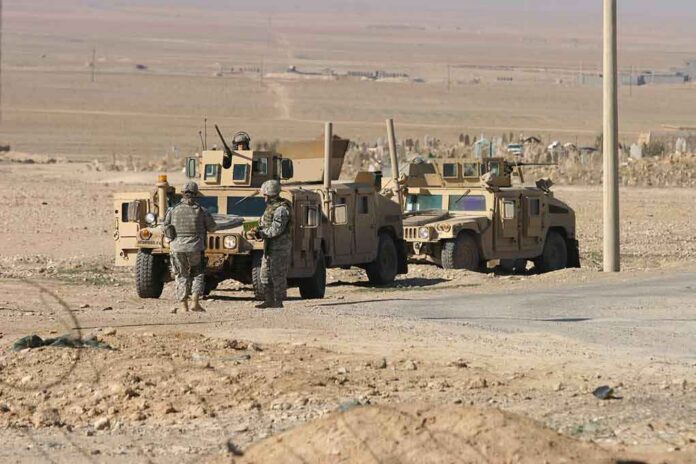
Iraqi commanders said the Victory base near Baghdad International Airport was cleared of U.S. personnel as the calendar closed on September. Lt. Gen. Abdul Amir Al-Shammari and government spokesman Sabah al-Numan described the site as fully vacated and on schedule with the deadline. Victory became the symbol of a larger handover that moved control back to Iraqi forces and marked a clean end point for the coalition’s presence at that hub.
Security media chief Lt. Gen. Saad Maan stated the coalition had handed over all bases and headquarters to Iraqi authorities. He added that no coalition combat or training forces would remain after the end of the month. That message aligned with the transition the United States had mapped out in its talks with Baghdad, which had shifted focus from combat to advising in previous months.
The Deadline and the Mission Shift
Coverage tied the September 30 target to the U.S.-Iraq understandings reached in 2021. Those talks followed years of drawdowns, base consolidations, and a move to a low-profile advisory role. The result was a mission that no longer resembled the surge years or the heavy campaign against the Islamic State group. The United States announced the end of its combat mission and left remaining roles focused on advising, intelligence sharing, and support to Iraqi forces.
Reporters cited a U.S. military official who said the withdrawal would be completed by September 30, and that remaining troops in northern Iraq would move to Jordan and nearby countries. That regional repositioning is common-sense force management. It supports deterrence, lets allies call for help fast, and respects Iraq’s sovereignty. It also reflects a conservative approach to risk: keep pressure on terrorists while avoiding open-ended boots-on-the-ground commitments.
Why This Exit Mattered After Two Decades
The date carried weight because it bookended a long arc. U.S. troops first left Iraq in 2011, then returned in 2014 at Baghdad’s request to help beat back the Islamic State group. The 2021 exit stood as a distinct milestone in that cycle. It closed the combat chapter that followed the terror group’s rise. It also put Iraq’s elected government back at the center of day-to-day security decisions—an outcome that respects national self-rule and sets fair expectations for U.S. involvement.
The coverage also pointed to a final contingent leaving Ain al-Asad Air Base in Anbar province. That detail gave the drawdown a concrete last step on the western edge of Iraq’s security map. In a country where symbolism rivals logistics, naming the exit point matters. It signals that the handover had both a public face in Baghdad and an operational bookend in Anbar, where U.S. forces had fought and trained alongside Iraqis for years.
What Comes Next for Iraq, the Region, and the U.S.
The coalition’s departure returns the burden of security to Iraqi forces and leaders. That is the right constitutional order, but it also requires discipline: bring all weapons under state control, curb militia freelancing, and keep borders tight. American strategy now leans on regional basing, faster intelligence sharing, and targeted support if Iraq asks. That posture protects U.S. interests, deters threats, and avoids another costly open-ended ground mission.
The US and UK just pulled their last troops out of Iraq. Operation Inherent Resolve, the anti-ISIS mission that started in 2014, is over.
The last planes left Erbil Air Base today under a 2024 deal with Baghdad. Iraqi forces take the lead now, and coalition counter-ISIS work…— Flash River (@RealFlashRiver) September 30, 2026
For Americans who value clarity and accountability, the standard is simple: define the mission, meet the goal, and come home when the job is done. The September timeline did that for the Iraq phase tied to beating the Islamic State group’s hold on territory. If Iraq’s government sustains control and keeps terror cells in check, the win sticks. If new threats surge, the United States can still project power from over the horizon—without living on Iraqi bases to prove resolve.
Sources:
youtube.com, newarab.com, usnews.com, en.wikipedia.org, latestly.com, al-monitor.com, spokesman.com, unb.com.bd
© conservativehub.com 2026. All rights reserved.