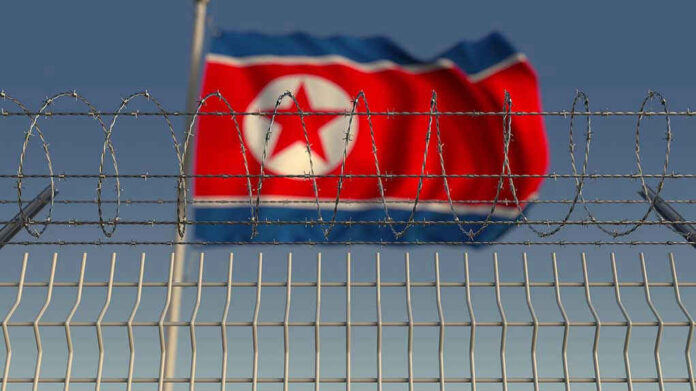
President Trump’s willingness to extend his Asia trip to meet North Korea’s Kim Jong Un could reshape diplomatic norms.
Story Overview
- Trump is prepared to extend his Asia trip to meet with Kim Jong Un.
- Such a meeting breaks traditional diplomatic protocols.
- This move signifies a potential shift in U.S. foreign policy under Trump.
- Implications for U.S.-North Korea relations and regional stability are significant.
Trump’s Unconventional Diplomatic Approach
Donald Trump’s diplomatic style has always been marked by his willingness to engage directly with adversarial leaders, a strategy he employed during his previous presidency. His openness to meet North Korean leader Kim Jong Un during an Asia trip highlights his ongoing commitment to this approach. Such direct diplomacy aims to bypass traditional protocols, potentially accelerating dialogue but also risking undermining established diplomatic frameworks.
Trump’s strategy of direct engagement previously led to historic summits with Kim Jong Un in 2018 and 2019. These meetings were the first between a sitting U.S. president and a North Korean leader, emphasizing personal rapport over extensive preconditions. While these summits did not achieve full denuclearization, they marked a significant shift from past U.S. policies of isolation and sanctions.
Potential Policy Shifts Under Trump’s Leadership
The potential extension of Trump’s Asia trip to accommodate a meeting with Kim Jong Un signals a possible shift in U.S. foreign policy, particularly in how it deals with North Korea. This approach may contrast sharply with the previous administration’s strategy, which emphasized working-level negotiations and alliance strengthening. Trump’s willingness to alter diplomatic itineraries reflects his focus on direct leadership diplomacy, which could either pave the way for breakthroughs or risk legitimizing North Korea’s nuclear status without concrete agreements.
The implications of such a meeting are profound. It could impact regional security dynamics, especially in South Korea and Japan, both of which are directly affected by North Korea’s military capabilities. Additionally, China’s role as North Korea’s primary ally could be influenced by Trump’s diplomatic maneuvers, affecting the broader geopolitical landscape in East Asia.
Challenges and Opportunities in North Korea Relations
Engaging with North Korea directly presents both challenges and opportunities. On one hand, it offers a chance to reduce tensions and foster dialogue. On the other, it risks legitimizing Kim Jong Un’s regime without securing tangible commitments toward denuclearization. Critics argue that such direct diplomacy might prioritize spectacle over substance, potentially weakening allied coordination.
However, supporters of this approach argue that traditional methods have failed to curb North Korea’s nuclear ambitions and that a fresh strategy is necessary. The opportunity to open North Korea to economic engagement and reduce its isolation could appeal to both sides, provided security guarantees and phased sanctions relief are part of the negotiations.
Sources:
Fox News: Trump Indicates Willingness to Extend his Asia Trip
Washington Times: Donald Trump Willing to Meet Kim Jong Un in East Asia
Kyodo News: Trump Would Meet North Korean Leader if Kim Agrees
Anadolu Agency: Trump Reiterates Willingness to Meet North Korea’s Kim