

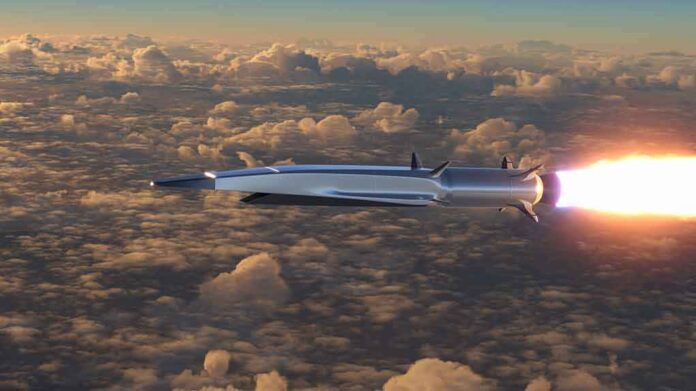
The U.S. Air Force has ordered its first hypersonic missile into production with a $694 million contract, pushing the AGM-183A ARRW from test range to factory floor.
Story Snapshot
- The Air Force awarded Lockheed Martin $694 million to produce and field ARRW.
- The deal marks the formal shift from prototyping and flight tests to production.
- ARRW is a boost-glide hypersonic weapon designed to exceed Mach 5.
- The missile is intended for standoff strikes against defended, high-value targets.
What The Contract Does Right Now
The Department of the Air Force said it signed the production-and-fielding contract with Lockheed Martin on September 29 and announced it October 26. The service framed this as the formal transition of the Air-Launched Rapid Response Weapon, or ARRW, out of the lab and into production lines. The contract value is $694 million. The Air Force did not release missile quantities or delivery dates, citing operational security, but the move establishes ARRW as a program the service plans to field.
The contract follows years of work and multiple tests. Reporting notes hypersonic flight activity since 2019 and procurement funding in the fiscal 2026 budget, with a follow-on request for fiscal 2027. Those steps fit the typical march from test events to funded buys, even if pacing and quantities remain shielded from public view for now. Congress had ARRW lined up for procurement dollars, which helps explain why production could start at this point in the cycle.
What ARRW Is Built To Do
ARRW is a conventional, air-launched, boost-glide weapon. A rocket booster accelerates the glide body to hypersonic speed, after which the vehicle can maneuver and descend on a distant target. The design aims to exceed Mach 5. The Air Force says the missile provides a credible, high-speed strike option that can penetrate advanced anti-access and area-denial defenses. The service links ARRW to attacks on time-sensitive, heavily defended, high-value targets from standoff ranges.
That mission focus matters for crews flying into contested airspace. A standoff hypersonic shot can compress enemy reaction time and reduce exposure of bombers and their escorts. The concept pairs well with the B-52 fleet, which can carry large external loads over long distances. If ARRW performs as planned, commanders get a tool to hit critical nodes fast—radars, command posts, or mobile launchers—before they move or tighten their air defenses.
How We Got From Mixed Tests To A Green Light
Government Accountability Office reporting described a mixed test record on ARRW, including a successful late-2022 flight that gathered limited data, followed by a failure in early 2023 tied to shroud and heat-shield issues. Additional flight activity in 2023 and 2024 informed decisions on the program’s future. The latest production move aligns with a pathway where testing feeds procurement, even if every milestone was not smooth.
🇺🇸 Lockheed Martin has been awarded a $694 million contract by the U.S. Department of the Air Force for the production and fielding of the AGM-183A Air-Launched Rapid Response Weapon (ARRW). @LockheedMartin @usairforce
The contract, awarded on Sept. 29, was executed under the… pic.twitter.com/VPA0Rfyh7m
— DefPost (@defpostmedia) October 27, 2026
Coverage also noted an earlier Air Force plan to end ARRW without production. That plan changed as the service advanced hypersonic options and secured procurement funding. From a common-sense, conservative lens, the key test is whether the fielded missile delivers real combat value for dollars spent. The production award signals the Air Force believes the design has matured enough to build. A brief caveat: the Air Force has not publicly released quantities or delivery timelines.
Why This Matters For Deterrence And Budget Reality
Rivals are investing in speed, reach, and air defense networks. A credible hypersonic standoff weapon raises the cost of aggression by threatening critical assets deep inside defended zones. That supports peace through strength, a bedrock American approach. The contract, however, lives inside budget politics. Reporting says the fiscal 2027 request faced delays under a continuing resolution. Future buys, integration work, and training all depend on steady funding to turn a production line into a fielded force.
What To Watch Next
Watch for integration steps with bomber units, acceptance events, and any public statements on delivery starts. Look for contracts that cover spares, tooling, and training. Track whether the Air Force fields ARRW alongside other hypersonic efforts to spread risk. If the missile reaches squadrons on schedule and performs as advertised, the $694 million decision will look like a smart bet. If budget friction slows rollout, the line between “in production” and “on the ramp” will stay in focus.
Sources:
realcleardefense.com, airandspaceforces.com, twz.com, defence-blog.com, forbes.com
© conservativehub.com 2026. All rights reserved.