
New York City just split protest policing from counterterrorism, and the ripple effects will reach every street, parade, and press pen.
At a Glance
- Mayor Zohran Mamdani moves to disband the NYPD Strategic Response Group’s protest role.
- Plan separates counterterrorism from First Amendment response, with a civilian-led model floated.
- Civil-liberties groups push the CURB Act to ban kettling, tear gas, and abusive tactics.
- Police and supporters warn about losing a specialized unit needed on the city’s worst days.
The Decision That Redraws New York’s Safety Map
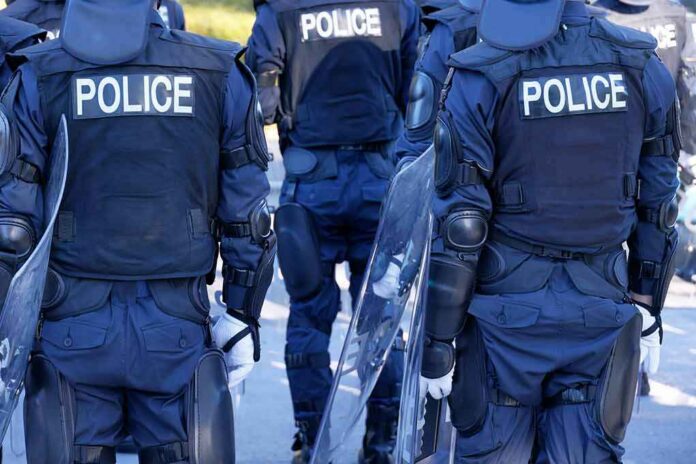
Mayor Zohran Mamdani is moving to end the Strategic Response Group’s role at protests and decouple it from counterterrorism duties, after years of criticism over tactics at demonstrations. Reporting describes a shift toward a civilian-led protest response, with police nearby if needed, though final structure and rules are not yet public. The logic is blunt: do not send a counterterror team to manage free speech. That line, once blurred by routine deployments, now gets a bright border.
Backers cite a record of lawsuits and court limits after the 2020 protests, including the Payne settlement that put guardrails on Strategic Response Group deployment at demonstrations. They argue New York can protect speech and keep order without riot-style formations becoming the default. A city can be tough on those who break the law and still draw firm lines to protect peaceful crowds. That balance is not soft; it is constitutional and practical when most protests stay peaceful.
The CURB Act: Turning Policy Into Law
The Communities United to Reject Brutality Act aims to bar Strategic Response Group presence at protests and prohibit kettling, tear gas, indiscriminate pepper spray, and bicycle charges. It also requires public reporting on deployments and complaints. The New York Civil Liberties Union says a majority of the City Council has signed on, giving the bill real traction and a backstop against simple rebranding of the unit later. Law locks in what executive orders can only sketch, and it forces sunlight on tactics.
Supporters stress concrete harms, not slogans: racial bias claims, aggressive crowd tactics, and injuries over roughly a decade. That case is moral and operational. The federal research base points the same way: most protests need calm communication and targeted enforcement, not heavy formations. A national study by the RAND Corporation found about 95% of protests were peaceful, with few arrests or injuries. If rare violence is the exception, planning the average day like a riot is poor risk management.
The Security Pushback and the Real Tradeoff
Police leaders and supporters answer with a hard question: who shows up when things go bad? They describe the Strategic Response Group as a roughly 500-officer, highly trained force built for riots, mass shootings, major events, and terrorist threats. Police Commissioner Jessica Tisch reports the unit stood by at under 6% of protests and made arrests at only 1%, arguing it is not a routine hammer looking for nails. That message lands with voters who value readiness when danger spikes.
New York City's CURB Act now has 27 sponsors in a 51-member Council… a majority. Yet Council leadership hasn't even allowed a hearing.
Here's why that matters.
Mamdani is dissolving the NYPD's Strategic Response Group, but its protest-policing functions are being transferred… https://t.co/98CWjxroI4
— Christopher Rixman (@ChristoRixman) November 16, 2026
The mass-casualty worry is not theater. The argument frames Strategic Response Group abolition as a risk to the city’s worst-day muscle, even if the same officers could be reassigned under another name. News coverage underscores this fear with a plain question: if Strategic Response Group goes, who responds to mass shootings? A plan that moves fast on protests but slow on counterterrorism replacements invites critics to define the change as unsafe before details arrive.
What Success Must Look Like Now
The mayor’s team needs a clear operations chart that citizens can read at a glance. Publish who handles protests, who commands the scene, what triggers police handoff, and how arrests and force are reviewed. Set public metrics on response times, injuries, arrests, and complaints, and report them quarterly. Show, with data, that a civilian-first model reduces force without slowing help for victims or businesses. Tie counterterrorism and mass-shooter response to named units with training and gear intact.
American conservative values prize order, clear authority, and accountability. On the facts, police claims about specialized training align with those values, but so does a clean wall between counterterror missions and free speech. The durable fix blends both: keep the city’s sharp edge for threats, while putting protest management in skilled hands that start with de-escalation and only bring in police when lawbreaking is real and specific. If City Hall delivers that clarity, New York can have both safety and freedom—without the fog.
Sources:
fox23.com, nyclu.org, nydailynews.com, politico.com, cityandstateny.com
© conservativehub.com 2026. All rights reserved.