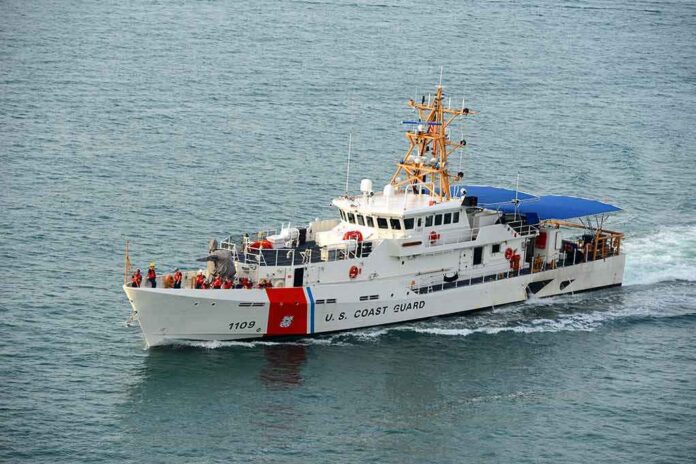
Coast Guard crews found debris from a Boston-bound medical jet off Nantucket and combed the Atlantic across day and night for any sign of the six people aboard.
Story Snapshot
- Coast Guard confirmed debris from the missing Gulfstream G100 medical jet off Nantucket.
- Six people were aboard on a flight from Bermuda to Boston, including four Canadians and two Bermudians, according to reports citing the Coast Guard.
- Searchers covered about 1,644 square miles over roughly 27 hours.
- The Federal Aviation Administration (FAA) and Coast Guard coordinated search and rescue after loss of contact.
Debris Confirmed, Search Pressed Through Night And Day
The United States Coast Guard said crews located a debris field in the waters off Nantucket and confirmed it came from the missing medical transport aircraft. The find triggered an expanded air and sea search for survivors. The aircraft was a Gulfstream G100 air ambulance flying from Bermuda to Boston with six people on board, according to multiple reports citing the Coast Guard. Officials kept ships and aircraft on scene through the night as weather and daylight shifted over the Atlantic.
The Coast Guard reported next of kin notifications as the operation intensified. Outlets citing the agency said the people aboard included four Canadians and two Bermudians. Search planners ran patterned sweeps shaped by winds, currents, and drift models. This method helps crews place aircraft and cutters where floating debris and life rafts would most likely move. The approach is standard in overwater emergencies and aims to buy time when minutes can decide outcomes.
A Sudden Emergency On A Medical Flight
The jet departed Bermuda for Boston as a medical transport mission. Reporters, citing the Coast Guard and the Federal Aviation Administration, said contact with the aircraft was lost in the overnight hours, setting off an immediate alert and a coordinated search and rescue response. One local outlet reported the pilot had declared electrical issues before the disappearance, a detail investigators will examine as they work toward a technical timeline of the flight.
Medical transport flights carry unique risk factors. They often fly to tight schedules with patient needs in mind. Routes can force long legs over open water with few diversion options. Even a manageable technical issue can become urgent when redundancy falls away. Rescuers plan for that. The Coast Guard moves fast because survival odds drop with time and cold water. That urgency guided the decision to keep aircraft and cutters on scene despite darkness.
Scale And Method Of The Rescue Effort
Search planners reported a coverage area of about 1,644 square miles across roughly 27 hours. That footprint points to a large, layered response with aircraft scanning wide swaths and surface vessels checking debris lanes up close. The Federal Aviation Administration issued a search and rescue notice and worked with the Coast Guard and the Rescue Coordination Center to align airspace and resources. This interagency model is how the United States treats a credible loss-of-contact over water.
Coast Guard Rear Adm. Matt Lake briefs media on the search for 6 missing after a medical plane vanished off Nantucket. Debris field confirmed; ~2,840 sq mi searched over 53+ hours; search continues. Video: U.S. Coast Guard https://t.co/Q2xcA8q6Nf
— Zark News (@ZarkNewsHQ) October 4, 2026
Rescuers balance speed with safety. Aircraft crews fly tight search patterns at low altitudes. Cutter crews recover debris while keeping small boats ready for any person in the water. Every find—foam, paneling, medical gear—gets tagged and logged. That chain of custody matters for the later investigation. For families, the only metric that matters is time to rescue. For investigators, every minute and every latitude-longitude pin helps explain what failed and how to prevent a repeat.
What The Facts Support Right Now
Reports agree on core facts. The Coast Guard confirmed debris from the missing Gulfstream G100. Six people were aboard on a Bermuda-to-Boston medical mission. The search spanned more than a thousand square miles and ran through the night. The Federal Aviation Administration coordinated with the Coast Guard after contact dropped. One local report cited an emergency call for electrical problems. Officials have not released a cause. That step comes only after evidence is gathered and analyzed.
Why This Matters For Safety And Policy
Americans expect fast, disciplined rescue and clear answers. This case shows both parts at work. The Coast Guard surged assets quickly and kept families informed. The aviation system treated the loss of contact as urgent, not routine. That is the right call. When a medical flight vanishes over cold water, hoping is not a plan. Searching is. The lesson for operators is simple: redundancy, maintenance discipline, and conservative go/no-go choices save lives when the margin gets thin.
Sources:
abcnews.com, people.com, boston25news.com, timesnownews.com, cfpublic.org
© conservativehub.com 2026. All rights reserved.