

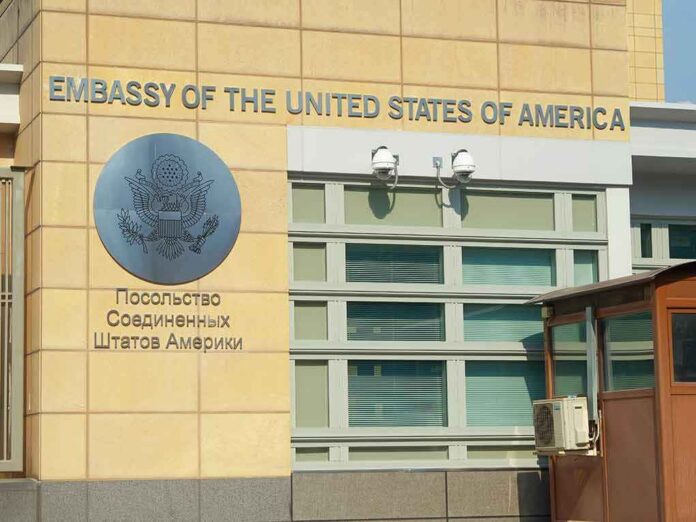
One day after President Trump publicly asked Vladimir Putin to free Stephen Hubbard, Russia put the American on a plane home.
Story Snapshot
- Trump said he asked Putin to release Hubbard; Russia freed him the next day.
- U.S. envoy Steve Witkoff met Putin in St. Petersburg and confirmed the release.
- Russian state media attributed the decision to Putin and said Hubbard was at the airport.
- Reports described the move as unilateral, with no prisoner exchange identified.
What Happened And When
President Trump, speaking in the Oval Office on October 20, said he had been “talking to President Putin” about Stephen Hubbard and had asked for his release. Reporters carried that quote widely and on the record. On October 21, Russian state media said Putin had released Hubbard, who was preparing to leave the country. Coverage from multiple outlets tied the announcement to a meeting in St. Petersburg between Putin and U.S. special envoy Steve Witkoff.
Witkoff confirmed the outcome and thanked Putin face to face. He said, “Because of you, he’s going home to his family,” underscoring a direct line between the Kremlin’s decision and Hubbard’s travel home. That timeline matters. A public ask from the American president on one day, a release announcement the next, and live validation from the envoy on the ground form a clear sequence of events that readers can follow without guesswork.
Who Is Hubbard And Why Was He Held
Stephen Hubbard is a retired American teacher from Michigan who spent years in Russian custody. The United States had already labeled him “wrongfully detained,” which placed his case on a formal priority track at the State Department. That classification signals that the government believes politics, not normal criminal law, drove the case. Under two administrations, officials worked the file, but the final push and public appeal came from Trump shortly before the release.
Reports vary on Hubbard’s exact age and detention length due to fast-moving coverage, but they align on the core facts: he was held for years and is now free. That is the headline and the stake. Families of detainees count days, not footnotes. Readers should weigh that human truth first. The essential point is that an American walked out of a Russian cell and onto a flight home after top-level contact and a targeted diplomatic visit.
How The Release Unfolded
The chain ran through a tight channel. Trump set a public marker. Witkoff flew to Russia and met Putin. Russian state media then announced the release. Outlets in the United States and abroad matched those reports with on-the-record lines from the envoy. The New York Times reported Putin told Witkoff that Hubbard was at the airport, a concrete detail that fits the simple story arc from ask to action to departure.
Coverage described the release as unilateral. No swapped prisoner or named concession appeared in any of the cited stories. That does not make the move costless; it means no public trade was identified. For conservatives who value strength without giveaways, that distinction matters. Bringing an American home without freeing a high-value criminal or spy on the other side is a cleaner win than a lopsided swap, and it lowers the risk of encouraging more hostage-taking.
Why The Timing Matters Now
The release landed as Witkoff’s agenda also touched Ukraine and wider U.S.-Russia ties. That suggests Moscow saw strategic value in the gesture. Diplomacy is rarely one-note. Yet the simplest read holds: a president asked; his envoy engaged; Putin acted; an American went home. That direct chain will resonate with voters who prefer clear goals, direct calls, and tangible outcomes over drawn-out process talk that leaves citizens in limbo.
🚨🇺🇸🇷🇺 BREAKING: AMERICAN TEACHER FREED AFTER FOUR YEARS IN RUSSIAN CAPTIVITY!
Stephen Hubbard, 74, is finally heading home after spending more than four years in Russian detention.
The retired Michigan teacher was arrested in Ukraine in 2022 and sentenced to nearly seven years…
— XPRESS (@Xpress_24_7) October 21, 2026
The State Department’s earlier “wrongfully detained” label under the prior administration shows this was not a brand-new case pulled from nowhere. It was a long fight that needed a final shove. Give credit across the arc for sustained pressure, then recognize the closing move. Results matter. When a president uses his voice, sends a closer, and brings an American back without a visible trade, that matches basic common sense and the national interest: protect our people and do not reward bad behavior.
Sources:
facebook.com, abc7.com, edition.cnn.com, nytimes.com, bostonglobe.com, cnn.com, cbsnews.com, themoscowtimes.com, hawaiipublicradio.org, foxnews.com
© conservativehub.com 2026. All rights reserved.