
A ballistic missile from Yemen roared toward Riyadh’s main airport, and both sides said the target was King Khalid International Airport.
Story Snapshot
- Houthi-controlled authorities said they launched a Burkan-2H missile at King Khalid International Airport.
- Saudi officials confirmed a missile fired from Yemen and debris near the airport area.
- Flights and facilities at the airport continued with no reported damage.
- Rights groups later labeled the airport strike likely a war crime due to its civilian target.
What Both Sides Agreed Happened
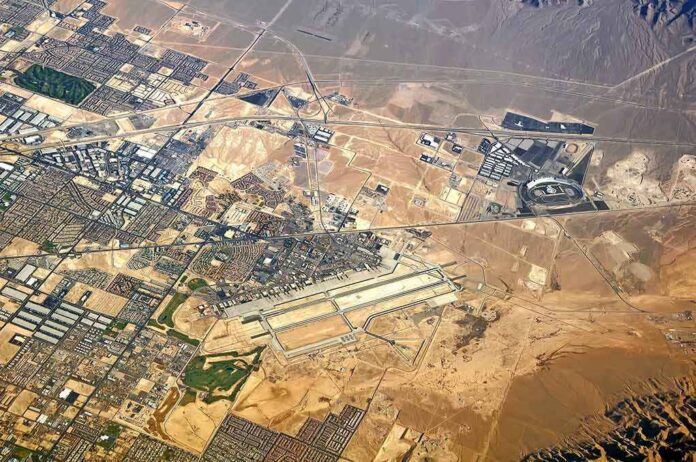
On November 4, 2017, a ballistic missile fired from Yemen headed toward Riyadh. Houthi-controlled authorities said they launched a Yemeni-made Burkan-2H and aimed it at King Khalid International Airport. Saudi officials said their defenses engaged the missile and that debris fell in an uninhabited area near the airport. The time was about 8:07 p.m. local. Airports do not shrug off long-range missiles, yet Saudi aviation reported no airport damage or flight disruption.
Major outlets carried the same spine of facts within hours. Reports from the British Broadcasting Corporation, Cable News Network, and Voice of America said a missile launched from Yemen targeted the airport area. The Saudi military’s spokesman named the site and confirmed debris near it. Conflict trackers later cataloged the launch as a long-range attempt on the capital’s gateway. This alignment across media and monitoring groups anchors the core record of the event.
The Target: An International Civilian Airport
Houthi-controlled authorities did not describe a broad strike on “Riyadh.” They named the airport. Saudi officials also framed the missile as headed toward a civilian site. That detail matters for law and for common sense. A civilian airport handles families, pilgrims, and workers. Firing a ballistic missile at such a location crosses a bright line between military and civilian space. That is why human-rights investigators later called it likely a war crime.
American conservative values stress both strength and restraint. You defend your cities. You also draw a hard line against those who target civilians. Saudi Arabia has the right to intercept threats and protect its airspace. Holding attackers to account for choosing a civilian site is not politics; it is basic order. Civilians are not shields or targets—ever. That standard protects everyone, no matter the flag they live under.
Capabilities On Display And What They Prove
The launch showed Houthi forces could fire a long-range, Scud-style missile toward the capital. The Burkan-2H label came from Houthi-controlled channels and later appeared in research on the war’s missile use. That capacity is strategic, even if accuracy is weak. Analysts have long noted that such weapons struggle to hit precise points, but they still create fear, force costly defenses, and test alliances. That effect alone can shift choices in a regional conflict.
MORE 🧵(1/3): Saudi Arabia announced on October 10 and 11 that unidentified projectiles struck near King Fahd International Airport in Dammam and a terminal at King Khalid International Airport in Riyadh, respectively. The attack on King Khalid Airport sparked a fire. The Houthis… https://t.co/jAWdXFCvTh pic.twitter.com/oJLQDMdW4i
— Institute for the Study of War (@TheStudyofWar) October 12, 2026
Saudi officials said air defenses intercepted the missile. Later technical reviewers summarized an alternate view that the warhead may have separated as designed. That debate is technical and does not change two key facts: the missile flew toward a named civilian airport, and the airport reported no damage and no halted flights at that time. One sentence of caution belongs here: arrests or claims are not verdicts, but the launch and target identification are not in dispute.
Why This One Night Still Matters
The strike fit a pattern in the Yemen war: launch, claim, intercept, and limited physical effect—yet major political shock. The attackers showcased reach. The defenders showcased resilience. Travelers read headlines and wondered if the next trip would be safe. Airlines watched debris risk and defense activations and weighed routes. Governments studied radar tracks and asked what the next salvo might include. The night became a template for the years that followed.
Sources:
cbsnews.com, cnn.com, abcnews.com, bbc.co.uk, hrw.org, sanaacenter.org
© conservativehub.com 2026. All rights reserved.