

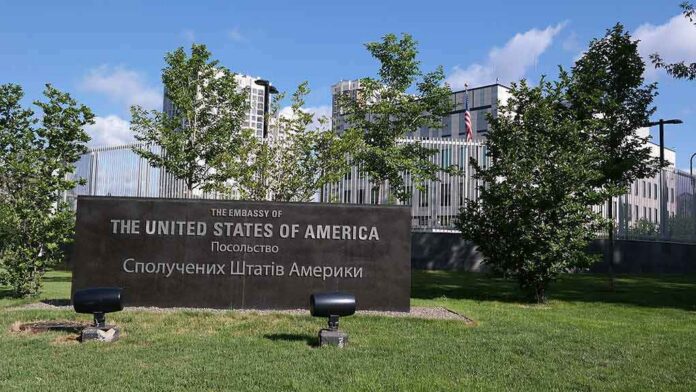
Eleven U.S. embassies warned Americans across the Middle East to brace for fast, unexpected escalation and possible flight shutdowns.
Story Snapshot
- Embassies used near-identical alerts across multiple Middle East capitals.
- Messages warned about flight cancellations, airspace closures, and travel delays.
- State Department framed the risk as region-wide amid rising tensions.
- Standardized wording aimed to move people to act without naming a single threat.
What The Alerts Said And Where They Landed
U.S. embassies in Israel, Saudi Arabia, Qatar, Lebanon, Iraq, Jordan, Bahrain, the United Arab Emirates, Kuwait, and Oman posted security alerts that used the same core lines. The language said the security environment was complex and could escalate without warning. It urged Americans to stay alert and prepare for flight cancellations, airspace closures, and travel disruptions. Embassy pages in Jordan and the United Arab Emirates, and social posts from Doha, Beirut, and Riyadh, show matching text.
Coverage summarized the move as a region-wide push, not a country-by-country outlier. Reports listed at least 11 posts issuing warnings that tracked the same template. That framing matches the State Department practice of mirroring alerts when risk is broad, fast-moving, and not tied to a single city block or single actor. Outlets that compiled the list reinforced the view that this was a coordinated caution across the map, not a one-off note in a single capital.
Why The Wording Looked The Same
Diplomatic security teams use pre-cleared language when time is short and details are sensitive. The alerts avoided naming a single plot or group and instead focused on what Americans could control: vigilance, travel readiness, and exit plans. That approach protects sources and keeps options open while nudging smart behavior. Embassy pages and official social channels carried the same travel-impact lines, which signals a deliberate choice to warn about airspace and airline disruptions, not only street-level risks.
Context around the region explained the caution. Reporting linked the alerts to broader tensions, including clashes and military signaling that could spill over borders or air routes. Network updates framed the concern as the kind that can change aviation rules in hours, not days. That matches the alerts’ focus on cancellations and closures, the exact pain points that strand families and drain savings when people ignore early warnings and wait too long to move.
What Americans Were Asked To Do Next
Americans in the Middle East were told to monitor official channels, enroll in the Smart Traveler Enrollment Program, keep documents ready, and plan for quick departures if needed. They were told to expect sudden airspace changes and airline cuts that can ripple beyond one country. The wording did not ask people to panic. It did ask them to think two steps ahead. Embassy alerts in Amman and Abu Dhabi made that point plain with the travel-disruption language in bold terms.
Common sense says heed the government when it points to the sky and the airport. Airlines follow risk, not sentiment. If air corridors close or carriers pause routes, options shrink and prices jump. From a conservative, practical view, the alerts fit a duty-of-care mindset: warn citizens early, protect freedom of movement, and avoid messy emergency rescues later. The consistent wording across posts shows a system working the way it should when the region heats up.
Sources:
njsr.com.ng, yahoo.com, avapress.com, ground.news, x.com
© conservativehub.com 2026. All rights reserved.