
Gunfire in Saravan forced Iran’s rulers to admit a fight they could not ignore.
Story Snapshot
- Iran’s Islamic Revolutionary Guard Corps (IRGC) reports it killed four “terrorists” in Saravan and seized weapons and gear.
- A Baloch group calling itself the People’s Fighters Front says the dead were its members, killed in clashes with Iranian forces.
- Local and regional outlets reported security force casualties, with counts ranging from one to three killed.
- The clash fits a long pattern of Baloch insurgency and regime crackdowns in Sistan and Baluchestan.
What Happened In Saravan And Why It Matters
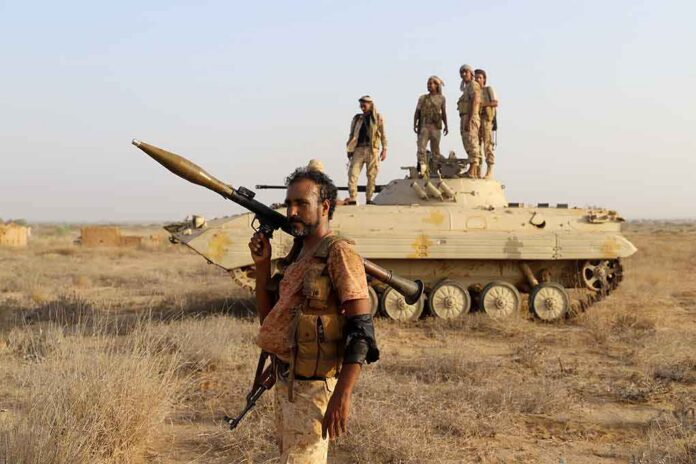
Iran’s Islamic Revolutionary Guard Corps said its ground forces stopped a “terrorist team” near Saravan, close to Pakistan. The statement claimed four infiltrators were killed and one security member died. It also said forces seized weapons, ammunition, and other equipment. Hours later, a Baloch group calling itself the People’s Fighters Front said the four dead were its members. The group said they died in direct clashes with Iranian military and security forces in Saravan County.
Two storylines emerged fast. State outlets pushed a counter-terror raid tied to foreign enemies, with references to seized gear and a joint operation. Non-state and regional coverage highlighted heavy fighting and more security force deaths, citing three killed in some reports. These accounts collide on motive but agree on the basics: armed men fought the state, people died, and the fight burned in Saravan’s Bakhshan area.
Claims, Counterclaims, And The Evidence We Have
Iran’s official line framed the group as a professional terror cell that crossed the border to attack, and said units from the Islamic Revolutionary Guard Corps, intelligence, and police took part. The People’s Fighters Front, by contrast, cast its dead as fighters in an anti-regime unit under assault by the state. Rudaw, citing Baloch sources, echoed that the group operates in Sistan and Baluchestan and faced an attack in Bakhshan. The core fact stands: a real shootout occurred; who fired first and why remains contested.
State media also raised a familiar theme: foreign backing. Iranian outlets often tie border violence to outside powers, which helps the regime justify harsh responses. Xinhua relayed the Islamic Revolutionary Guard Corps numbers and seizure claims, but did not verify them independently. On balance, the People’s Fighters Front claim names the dead as their own and places them in a specific unit. That self-attribution gives the anti-regime frame more weight than rumor, even as it does not prove popular backing or command depth.
How Saravan Fits A Larger Pattern
Saravan sits on a fault line where smuggling routes, tribal ties, and state power grind against each other. The area has seen repeated attacks and raids involving Baloch militants and Iranian forces for more than a decade. The militant group Jaish al-Adl claimed deadly attacks on Iranian forces in and near Saravan as far back as 2013, showing the region’s long-running insurgency cycle. Each clash draws competing labels—terrorism, resistance, separatism—but the cycle is the constant.
https://twitter.com/TheLoneAlphaW/status/2098889458238021738
American conservatives will recognize the pattern at once. A central government demands obedience, labels dissent as foreign-made, and uses that label to expand force. Locals answer with rifles, not ballots, because the ballot never mattered there. The clearest takeaway for U.S. readers is caution. Do not buy the regime’s simple story, and do not mistake one gun battle for a broad uprising. Treat the People’s Fighters Front as one actor in a wider, grinding fight whose end state is unclear.
What To Watch Next
Watch three threads. First, casualty clarity. If follow-up reports settle on higher security force deaths, it would suggest the armed unit had planning and support. Rudaw’s three-dead figure points that way but needs firmer sourcing. Second, group identity and reach. If the People’s Fighters Front continues to claim named fighters and areas of operation, it looks less like a one-off cell and more like a standing network. Third, state reprisals. Joint raids and mass arrests would show the regime treats Bakhshan as live insurgent ground.
Sources:
thegatewaypundit.com, ncr-iran.org, iranintl.com, presstv.co.uk, sundayguardianlive.com
© conservativehub.com 2026. All rights reserved.