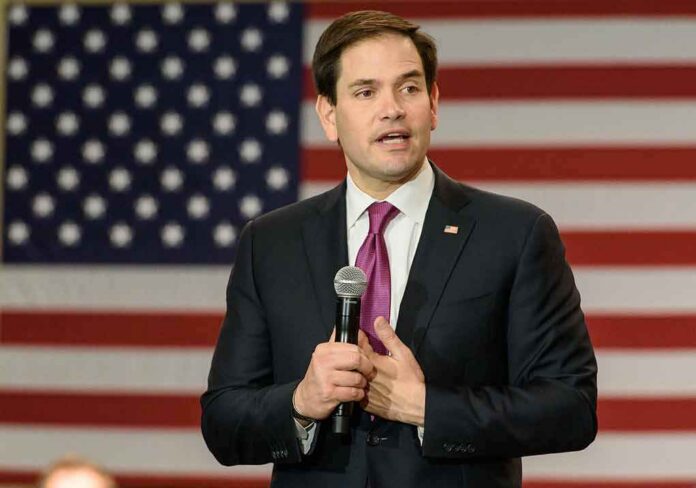
Marco Rubio walked onto morning TV and turned a media firestorm into a civics lesson with teeth.
Story Snapshot
- Rubio argued Trump’s media policy limits special access, not free speech, and said “We’re not closing CNN.”
- The White House barred CNN, MS Now, and Politico from on-site access after Trump called their reporting “fake” and a “national security” problem.
- The outlets sued, saying the ban violates the First Amendment and due process rules on credentials.
- Rubio pressed that hostile coverage should not guarantee privileged White House access, echoing Vice President Vance’s view.
Rubio’s Core Argument: Access Is a Privilege, Not a Muzzle
Senator Marco Rubio told the Today Show that the White House did not “close” any network. He said the change pulled special, on-site access from outlets the administration views as partisan. He framed it as a line between free speech and government privilege. He said reporters remain free to cover the president from anywhere else. That pitch matched the White House’s theme that it owes fairness, not favors, to organizations it says spread falsehoods.
Rubio leaned on a simple distinction. The First Amendment protects what media can say. It does not promise a seat in the front row. He argued the White House has a duty to protect operations and avoid rewarding behavior it deems misleading. He added that Americans can still see criticism on air and online. That keeps speech alive while the administration curates who enters secure grounds each day, a point he presented as common sense gatekeeping.
What Triggered the Policy: Trump’s Stated Case
President Trump announced that CNN, MS Now, and Politico would lose White House access. He said they publish “fake news,” use “unknown sources,” and harm national security debates. He tied the move to ongoing coverage he called unfair and false. He then defended it on camera, saying he does not have to let them into “the people’s house” and that their stories were fake. Reporters from those outlets later said their badges were disabled at the gate.
Vice President J.D. Vance echoed the message. He said the administration should not give “special access” to what he called far-left propaganda. The line sets a clear frame: not censorship, but the end of a privilege. That framing resonates with many conservatives. Taxpayers do not owe perks to organizations that they believe push narratives over facts. Still, without specific examples of false reporting set out in public, the policy’s factual basis will draw scrutiny.
The Legal Clash Arrives: Due Process and Viewpoint Tests
The three outlets filed a lawsuit that centers on viewpoint discrimination and press process. They argue the White House cannot yank credentials for speech-based reasons without notice or a fair record. Press advocates cite a 1977 federal appeals court decision that limits arbitrary denials once a White House press system exists. They say the ban punishes content and violates established due process in credentialing. A quick court fight is already underway.
Rubio pushed back by stressing that broad speech rights stay untouched. Courts will not judge the news. They will judge the government’s reasons and process. If the administration details specific harms or rule violations, it gains ground. If not, the lack of a written, contemporaneous basis weakens its case. That is where prudence meets politics: publish the rulebook, name the examples, and show the security rationale or risk losing the argument.
Conservative Lens: Standards, Not Favorites
Rubio’s strongest appeal is standards over favorites. The White House should set neutral, written rules on access. It should apply them evenly and explain decisions in writing. That protects the public, restrains bias, and reduces chaos. If outlets break standards, document the breach. If the issue is repeated factual failure, cite the stories. If the concern is security, release a redacted assessment. That approach guards both accountability and the public’s right to know, without rewarding bad faith.
In overnight court filing, Justice Dept defends Trump White House media ban, arguing some areas of White House are “nonpublic” and that CNN/MSNOW/Politico have failed to maintain basic minimum “standards of professionalism and decorum expected of those given access to the White… pic.twitter.com/ZUQgW8fKrQ
— Scott MacFarlane (@MacFarlaneNews) September 23, 2026
Rubio’s “We’re not closing CNN” line works because it addresses the fear behind the headlines. People worry the government will silence media. He says it will not. He asks a different question: who gets the badge that opens the door? The White House drew a hard line. The courts will now test the reasons. The fastest exit from this storm is the same one every parent uses with a teenager: clear rules, fair warnings, and consequences you can defend.
Sources:
youtube.com, cnbc.com, ibtimes.sg, scrippsnews.com, theguardian.com, fox29.com
© conservativehub.com 2026. All rights reserved.