
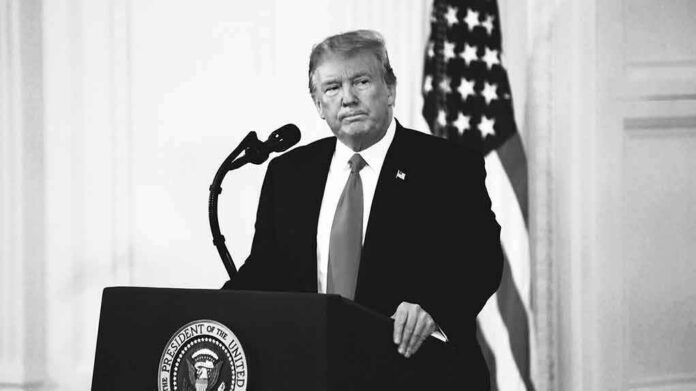
President Trump said he will accept the midterm results if there is no cheating, and that single word—if—now drives the whole fight over trust in our elections.
Story Snapshot
- Trump set a condition: accept results if no cheating or fraud occurs.
- Federal election-security officials previously said voting systems showed no signs of compromise in 2020.
- Critics claim Trump is setting up a story to reject losses while embracing wins.
- Polls show many Americans expect a dispute over the outcome.
Trump’s Conditional Standard, Stated Plainly
Trump tied acceptance of the midterm results to a basic test: was there cheating. He stressed audits, recounts, paper records, and testing as the tools to prove it. That moves the question from feelings to files. It places the burden on proof and process, not on spin. The line also keeps pressure on county clerks and secretaries of state to show their work. Voters heard a challenge with a door left open—produce clean books, or expect a fight.
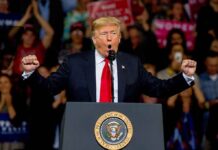
Trump’s rallies leaned hard on election integrity. He used sharp barbs about “cheating,” then pointed to the need for transparent checks. He did not lay out a legal threshold for proof. He did not name counties or show affidavits tied to a count. That gap invites critics to call it a moving goalpost. Yet his standard, read literally, is not radical: verify, then accept. The friction lives in who verifies, how fast, and what level of error flips a race.
What Officials Say Elections Can Prove
Federal and state officials built layers to test outcomes before and after the count. They run logic and accuracy tests on machines, certify equipment, and keep paper records that can be checked. After 2020, the election infrastructure councils said there was no evidence that voting systems deleted, lost, or changed votes. That claim does not close every type of misconduct, but it knocks down the idea of a broad tech hack. It strengthens trust in recounts and paper trails.
Courts also send a clear message. Judges want specific, outcome-sized proof. Broad claims do not survive. After 2020, more than sixty challenges fell short because they lacked solid evidence or a legal path to the remedy sought. That history shapes today’s terrain. If anyone alleges fraud this cycle, the path is the same: file, show records, link the claim to the margin, and seek a lawful fix. Talk is free. Evidence must be counted, matched, and sworn.
The Critics’ Charge and How It Lands
Critics argue Trump’s line sets up a win-win script for him. If Republicans win, the system worked. If they lose, it was stolen. A Republican strategist told Newsweek that his remarks create that very frame. That accusation bites because Trump has not defined a fixed evidentiary bar. Without a bar, opponents say the test bends to the outcome. Voters who want a neutral umpire will ask who calls “cheating” and what proof flips a call in the ninth inning.
Public opinion shows the wear and tear. One survey reported that over half of respondents expected Trump not to accept the midterm results, while a large majority said he should accept them if Republicans lose Congress. That is a trust warning light. People doubt the postgame handshake as much as the game itself. The only cure is public evidence that ordinary citizens can see. Chain-of-custody logs, ballot reconciliation sheets, and transparent audits calm nerves better than podiums do.
The Conservative Common-Sense Test
Conservative principles point to a simple standard. Election rules should be clear before the vote, applied evenly during the vote, and audited after the vote. Paper backstops, signature checks, and public recounts serve everyone. If officials produce clean records, conservatives should accept the result. If real evidence shows a material break—enough ballots to change the winner—conservatives should demand a lawful remedy. That is not chaos. That is order under rules, not under personalities.
Here is the scoreboard to watch on election night and beyond. Do counties reconcile ballots to voter check-ins without big gaps. Do audits match the machine totals to the paper records. Do courts, when asked, see specific, sworn, outcome-sized proof. Do state canvasses and any recounts converge on the same answer. If yes, then the condition “no cheating” has met its burden. If not, then the system must fix it, fast and in the open. That is how trust returns, one verified sheet at a time.
Sources:
youtube.com, clickondetroit.com, engadget.com, brennancenter.org, npr.org, axios.com
© conservativehub.com 2026. All rights reserved.