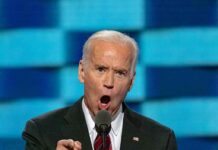

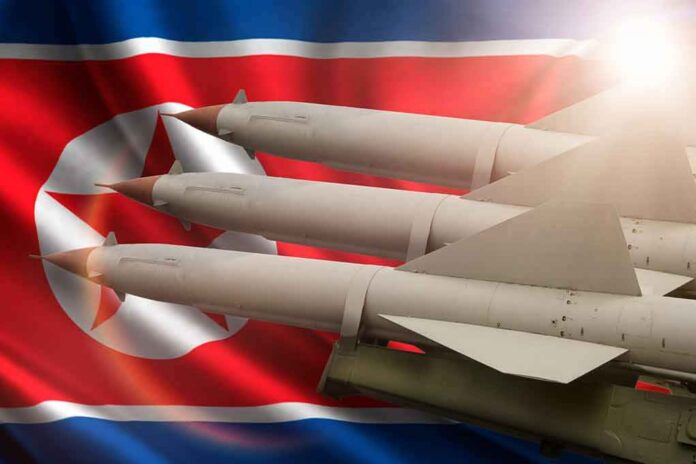
Trump said North Korea’s nuclear problem is “fine” as long as he is in office, because Kim Jong-un is his friend.
Story Snapshot
- Trump called Kim Jong-un a friend and said their rapport keeps the situation stable.
- He acknowledged North Korea’s “pretty large” nuclear capacity, not denying the arsenal.
- He blamed past presidents for failing to stop Pyongyang’s program.
- Critics argue the arsenal kept growing and see no verified rollback.
What Trump Actually Said And Why It Matters
President Trump told reporters that Kim Jong-un is “a friend of mine,” and said North Korea will be “fine” as long as he remains on the scene. He framed the risk as manageable through his personal tie with Kim, not a looming crisis. He also said North Korea holds a “pretty large” or “substantial” nuclear capacity. That admission set his message apart from denial and moved it into deterrence management, not disarmament victory laps.
Trump also drew a bright line with Iran. He argued North Korea already has nuclear weapons, while Iran must not. He said earlier presidents could have stopped Pyongyang but failed. He cast his time in office as the stabilizer that tones down risk through respect and direct contact. He claimed Kim “likes” him and responds to him personally, suggesting a leader-to-leader channel that keeps tests and tensions from boiling over.
Numbers, Claims, And The Credibility Gap
Trump’s remarks included an unsourced figure on warheads in another venue, citing “57 very powerful nuclear weapons.” South Korean estimates run higher, between 80 and 120, which undercuts the precision of his claim and invites pushback. The core point still stands: Trump accepts that North Korea is a nuclear-armed state. But the specific number matters because deterrence policy rests on real capacity, not round numbers from a podium.
Reporters and experts noted that North Korea kept developing and testing weapons after past summits. They also pointed out that summit statements lacked timelines and verification tools. That leaves a hole in the argument that personal ties alone reduce risk in a durable way. Without monitoring and terms, the arsenal can grow even while leaders smile for cameras and trade letters.
Does Personal Diplomacy Keep The Peace?
Summit history shows leaders often bet on chemistry. Trump says Kim respects him, and that respect keeps tensions in check. That claim is hard to prove from public records alone. No North Korean documents in the public sphere confirm that Kim holds back because of Trump. Still, the logic fits deterrence basics: when each side expects clear costs, they pause and probe before they act.
Conservative common sense asks for results you can see: fewer tests, fewer warheads, real inspections. On that score, critics say the record does not show lasting rollback. They argue that praising a dictator while his arsenal grows sends the wrong signal and blurs moral lines. Their bottom line is simple: talk is cheap; verification is priceless. That is a fair standard for any White House, any party.
What Stabilization Really Requires Now
Deterrence, not delusion, is the current ground truth. North Korea is nuclear-armed. The United States must keep allies close, keep sanctions aimed at the weapons complex, and keep channels open without granting freebies. A leader-to-leader line can lower the chance of a spiral, but it must ride on hard power, clear red lines, and a plan that matches pressure with off-ramps when behavior improves. Respect does not replace rigor; it should help deliver it.
US President @realDonaldTrump has described North Korean leader Kim Jong Un as his friend while discussing Pyongyang’s nucle@r ars_nal and explaining his differing approach towards North Korea and Ir@n.
Speaking to reporters at the White House on September 29, Trump said North… pic.twitter.com/ZNMgoUYCHa
— The Public Purview (TPP) (@publicpurviewpk) September 30, 2026
Trump’s claim boils down to this: as long as he is there, Kim behaves. Voters should ask two questions. First, did missile shots, warhead counts, and fissile production drop in a way that holds up to scrutiny? Second, did the United States lock in any enforcement that survives a bad week or a bad text? If the answers are thin, then the friendship story is, at best, a useful icebreaker that still needs steel behind it.
Sources:
youtube.com, reuters.com, m.ajupress.com, europesays.com, biz.chosun.com
© conservativehub.com 2026. All rights reserved.