
A grieving mother told Congress she is ashamed of her party after a newlywed couple died in a crash tied to a trucker licensed under California’s rules.
Story Snapshot
- Families told Congress sanctuary and licensing gaps let unqualified truckers on the road.
- A father described his daughter’s catastrophic injuries from a crash involving an undocumented driver with a California commercial license.
- California cited a federal pause while canceling thousands of non-domiciled commercial licenses.
- Lawmakers pressed how verification failed before the truck moved, not after the crash.
What Congress Heard And Why It Landed Like A Thunderclap
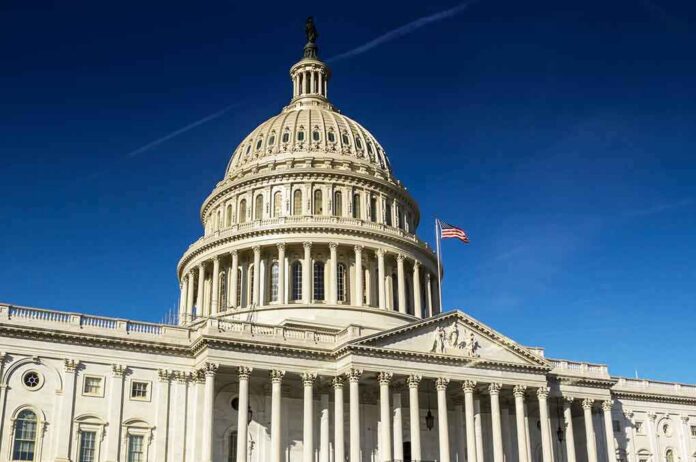
Lawmakers on the House Judiciary Subcommittee held a hearing on how sanctuary policies and licensing rules intersect with public safety. Marcus Coleman testified that a commercial truck driver, whom he described as undocumented and licensed in California, slammed into traffic and left his daughter with a fractured skull and a traumatic brain injury. He said the government must find ineligible or unqualified drivers before they drive, not after families pay the price. His anger cut past talking points and forced a simple question: who failed to check first?
Other witnesses and members connected that case to a broader pattern. The hearing record focused on non-domiciled commercial licenses and whether state practices aligned with federal rules. Reporting on the crash said the driver, Partap Singh, drove at an unsafe speed and failed to stop in a work zone before the impact, which widens the aperture from immigration status to core safety standards and enforcement. The policy stakes were not abstract. They were bruises, broken bones, and funeral plans.
The California Licensing Backdrop And The Federal Clampdown
California’s Department of Motor Vehicles told the public it paused issuing non-domiciled commercial permits and licenses after a federal directive. The department said it is only issuing domiciled commercial licenses and canceled about 13,000 non-domiciled licenses at the federal government’s direction. Federal transportation officials also issued a formal finding about California’s commercial licensing compliance, raising pressure on the state to tighten checks and align with verification rules. These actions show the system knew it had gaps and started to close them.
The definition matters. California law treats non-domiciled commercial licenses as credentials for people domiciled in another state or country, which often includes noncitizens with work eligibility. That does not by itself make a driver unsafe. But it puts a spotlight on the screening. Did agencies validate identity, lawful presence, training, and English skills to the federal standard every time? Families want a firm yes, not a shrug. Conservative common sense says a semi truck is not a place for paperwork guesses.
Two Stories, One Policy Question: Stop The Unfit Before The Keys Turn
The mother’s account of losing her newlywed son and his bride carried the same charge: the state handed a license to someone who should not have had one, and two lives vanished. The official crash files and licensing record are not all public, so precision on the specific administrative failure remains limited. That gap does not blunt the core demand. Congress heard a plain request: verify status, skill, and safety before trucks roll, and hold leaders accountable when systems miss obvious red flags.
Counterpoints surfaced too. David Bier told the committee that immigrants with temporary work authorization in California were less likely to be in crashes and fatal crashes than others, and that large-truck fatality rates per miles traveled fell over decades. Those numbers speak to averages across many drivers. They do not answer the narrow, urgent question families asked: why did the screening on this driver in this jurisdiction fail at the exact moment when it mattered most?
Where Policy Meets The Pavement: What Fixes Look Like Now
Congress can force clarity on identity checks, lawful presence verification, and training audits in high-risk corridors. States can tie every commercial road test and renewal to hard document reviews and real-time federal database checks, with mandatory flags for any mismatch. Carriers can face stiffer penalties for hiring drivers with doubtful files. California has already started to cancel questionable licenses under federal pressure. That momentum should continue until every record matches the rules with zero exceptions.
‘Lifelong Democrat’ admits she is ‘ashamed’ of party after son killed in illegal immigrant crash | Fox News, New York Post
In testimony before Congress this morning, self-identified “lifelong Democrat” Elizabeth Carter admitted that she is “ashamed” of her party’s handling of… pic.twitter.com/RFTUHBENNo
— Owen Gregorian (@OwenGregorian) September 16, 2026
No family should have to master the maze of acronyms after a funeral. The fix is simple in spirit and strict in practice: trust, but verify, every time. Congress heard the pain. Now it must close the loop. If a state issues the license, the state owns the vetting. If Washington sets the standard, Washington must audit and enforce it. And if leaders miss again, they should explain it to the next mother who walks into that hearing room with an empty chair at home.
Sources:
presidentialwire.com, redstate.com, courts.oregon.gov, foxnews.com, opb.org, dmv.ca.gov, transportation.gov, calmatters.org
© conservativehub.com 2026. All rights reserved.