
The Supreme Court’s split-second order let parts of a hard-edged mail-ballot plan move ahead—then the legal ground shifted under it.
Story Snapshot
- The Court allowed limited implementation of mail-ballot limits while cases continued.
- The policy leaned on unique barcodes and federal voter-list cross-checks.
- Lower courts flagged timing, authority, and voter disruption concerns.
- Appeals courts later kept key blocks in place before the election.
What the Supreme Court Actually Did
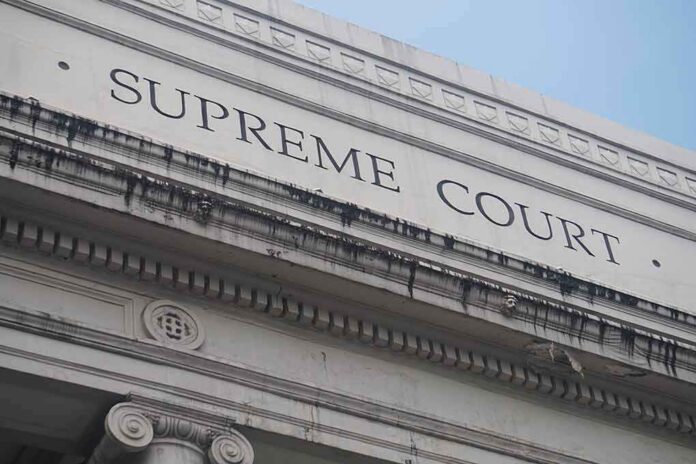
The Supreme Court issued an emergency order on August 24, 2026, that let the administration move forward, for now, with parts of its mail-voting policy while litigation continued. The order did not end the cases or bless the full rule. It opened a narrow lane for interim steps. News outlets framed it as a partial win because it lifted a specific block. Later rulings by other courts narrowed that lane again before ballots flooded the mail.
The high court’s move reflected a common emergency posture. It weighed equities on speed, not ultimate legality. That is why the order stressed that litigation on the merits would go on. Some justices favored mail-security priorities and saw federal authority in the Postal Service’s powers to protect the mail. Others saw a federal reach into state election space. The short fuse before the midterms made every hour count, which raised the stakes for both sides.
What the Rule Tried to Change
The rule asked states to send the United States Postal Service detailed lists of mail-ballot recipients. It tied every ballot envelope to a unique, serialized barcode. It also said the United States Postal Service could refuse to deliver ballots that did not match the lists or lacked the required identifiers. The administration said this would strengthen chain of custody and help find fraud, including noncitizen voting, using Department of Homeland Security lists.
Supporters argued this looked like basic inventory control. Track every ballot like a package; flag duplicates or mismatches; stop suspicious mail at the door. The White House said mail-integrity is part of the Postal Service’s job and that uniform standards prevent weak links across states. The plan aimed to raise the floor on identity checks and custody logs. Backers pointed to the Supreme Court’s interim green light as a sign the theory was not frivolous.
Why Courts Pushed Back Hard
Trial and appeals judges focused on authority and timing. They said Congress did not give the United States Postal Service power to create a nationwide election-screening regime or to refuse lawful ballot mail. They warned that forcing new envelopes, portals, and lists weeks before voting would cause chaos and block eligible ballots. Judges also noted the thin record of proven, large-scale mail fraud to justify such a sweeping fix on the eve of an election.
One appeals decision left key blocks in place before November, stressing the risk of widespread disenfranchisement if the system misfired. News reports echoed election officials who said reprinting envelopes and standing up a new federal portal in time was not realistic. A separate judge said the Postal Service could not lawfully refuse to deliver ballots due to noncompliance with the new rules. That made the core “gatekeeper” feature look untenable for now.
Security Claims Versus Disruption Costs
Election security is not optional, and serialized barcodes plus list checks can tighten audits in many fields. But courts ask for proof and fit. A fix should match a measured risk, not rewrite voting logistics nationwide weeks before election day. The best available research finds documented mail-ballot fraud is rare. That weakens arguments for a last-minute overhaul that could block many valid votes if database or printing errors occur at scale.
AP confirms: the Supreme Court rejected Trump's mail ballot restrictions Monday, with voting already underway in Alabama, North Carolina and Wisconsin.
The split was roughly 7-2 — Thomas and Alito dissented publicly, and the majority gave no reasoning, as is typical on the… https://t.co/K8CMumKrRw— WORLD COMPASS (@world_compass_) September 15, 2026
Conservative common sense says secure the system with clear rules, strong identity checks, and hard audits—well before ballots go out. Build the record with pilot programs, public test results, and clean statutory authority. If the administration wants the United States Postal Service as a stronger guardrail, it should seek explicit congressional authorization, run real pilots in off-cycle elections, and publish error rates. That path beats courtroom sprints and preserves both integrity and confidence.
Sources:
apnews.com, reuters.com, pbs.org, scotusblog.com, jurist.org, npr.org, theguardian.com
© conservativehub.com 2026. All rights reserved.