The suspects in a North Carolina family shooting ended their flight dead in an Ohio car, minutes after a high-speed chase.
Story Snapshot
- Camryn Moore and Cory Armstrong were found dead after a multi-county pursuit in southern Ohio.
- The pair were wanted in a Gaston County, North Carolina quadruple shooting, with first-degree murder charges pending.
- Ohio State Highway Patrol reported gunshot wounds and opened an investigation into the deaths.
- The case highlights a growing national toll from police pursuits, which make up about one percent of motor-vehicle deaths.
What Happened On The Road In Ohio
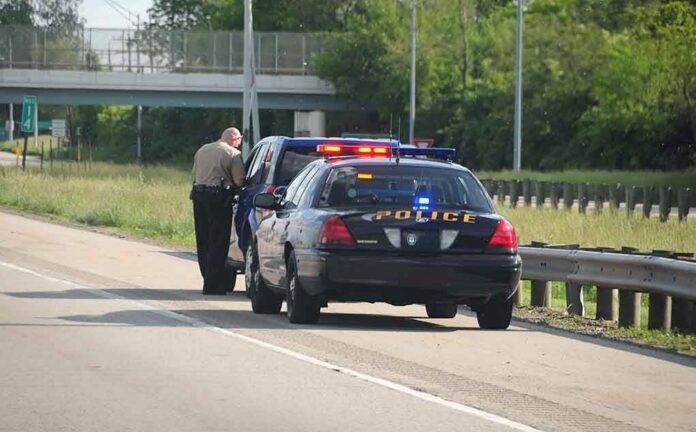
Authorities in Ohio say troopers chased a vehicle tied to a North Carolina homicide case across multiple southern counties on Friday morning. After the vehicle stopped, officers found two people dead inside. Officials identified them as Camryn Moore, 26, and Cory Armstrong, 29. Both were wanted in a Gaston County quadruple shooting. Reporting from Charlotte station WBTV and other Ohio outlets confirms the chase and the discovery of the bodies at the scene.
The Ohio State Highway Patrol said both Moore and Armstrong had gunshot wounds. Troopers opened an investigation into the circumstances around the stop and the deaths. The agency’s initial statements did not detail a timeline between the vehicle stopping and the discovery of the bodies, or whether anyone fired from outside the car. That level of clarity usually comes later from investigative files or a coroner’s report.
The North Carolina Case That Sparked The Pursuit
Gaston County authorities had named Moore and Armstrong as suspects in a Thursday shooting that left four family members shot, at least one fatally. Police obtained warrants for first-degree murder and attempted first-degree murder, which put the pair on regional alerts. Local reports describe a quick turn from the crime scene to the interstate, with tags and vehicle details pushed to partnering agencies. That information set the stage for the Ohio stop and the end of the flight.
Investigators across states often build these cases in layers. The home agency secures warrants and evidence, while partner agencies handle the stop if suspects cross state lines. The handoff works when details are precise and fast. In this case, the agencies connected quickly enough to catch the suspects on the move. That kind of coordination gives families a faster path to answers and protects the next town from more harm.
Why Pursuits Turn Deadly So Often
Police chases are rare compared with daily traffic stops, but when they fail, they fail hard. A recent analysis in a leading medical journal found that pursuits account for about one percent of motor-vehicle deaths nationwide, which is a heavy share for a small slice of events. Earlier federal data showed an average of about one pursuit death per day over two decades. The numbers frame a tough balance: stop violent suspects before they strike again, while cutting the risk to everyone else on the road.
Suspects in NC quadruple shooting die during dramatic Ohio chase, police say https://t.co/VyBK2qUKFh
— Miami Herald (@MiamiHerald) September 12, 2026
Policy debates often miss a simple point that matters to people who live near these roads. The danger is not abstract. When suspects run, they choose to turn a street into a weapon. That choice puts families, officers, and bystanders in the blast zone. Common-sense policy says agencies should chase when the danger of letting a suspect go is worse than the chase itself. That standard respects public safety and officer duty at the same time.
What To Watch Next
Ohio investigators will map the end of the chase, round by round and minute by minute. Expect a timeline of the pursuit route, any tire deflation devices used, radio calls, body camera clips, and a coroner’s ruling on manner and cause of death. Gaston County will press on with the homicide case, now as a closed file on suspects but an open file on motive and method. The victims’ families deserve that full accounting, down to the last detail.
Public trust rests on clear facts, not fog. If the evidence shows the suspects died by their own hands, that will likely track with the quick end reported at the scene. If it shows outside gunfire, that will need to match policy and training. Either way, the core duty remains the same: protect the innocent, pursue the dangerous, and end the threat with as little harm as possible. That is the line every responsible agency should hold.
Sources:
nypost.com, wbtv.com, dayton247now.com, wsaz.com, abc6onyourside.com, nbc24.com
© conservativehub.com 2026. All rights reserved.