

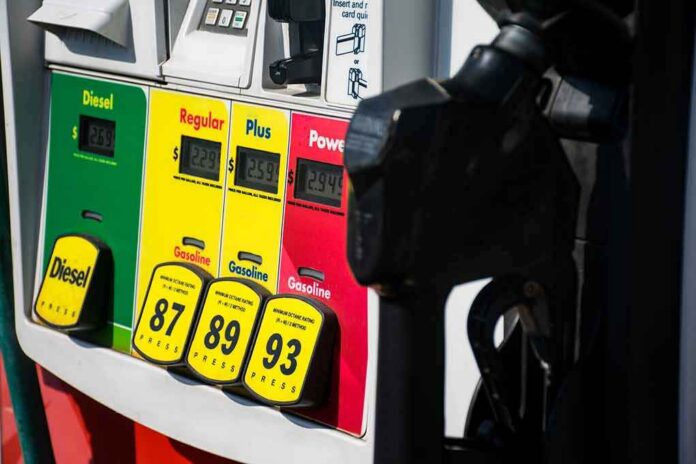
Fuel prices are lighting fires in the streets of nations that haven’t seen this kind of unrest in years, and in some cases, decades.
Quick Take
- Syria saw its widest protests since the fall of Bashar al-Assad after diesel prices jumped 40% to 175 Syrian pounds a litre.
- Demonstrators burned tyres and blocked the Damascus-Aleppo highway as anger spread across the country.
- The Israel-Iran war has pushed global oil prices past $101 a barrel, driving up diesel and gasoline costs worldwide.
- Iran itself raised gasoline prices for heavy users this month as it struggles under war costs and sanctions.
- President Trump has publicly pressed Ukraine to stop striking Russian diesel facilities, calling the resulting shortage a global problem.
Syria’s Streets Boil Over Diesel Prices
Syria’s government raised diesel prices by 40% over a single weekend, pushing the cost to 175 Syrian pounds a litre, or about $1.32. That decision triggered the country’s most widespread protests since Assad’s government collapsed nearly two years ago. People burned tyres and shut down the highway linking Damascus to Aleppo, a critical artery for trade and daily life. For a country still rebuilding its government, that kind of nationwide pushback sends a clear warning.
Protests also reached Syria’s Kurdish-majority city of Qamishli, where crowds gathered over the same fuel grievances. The unrest spans different regions and different political factions, a sign that fuel costs cut across old divides. When diesel gets too expensive, farmers can’t run tractors, truckers can’t move goods, and families can’t heat homes. That kind of pain doesn’t care about politics.
A War-Driven Oil Shock Hits The Whole Planet
The unrest in Syria did not happen in a vacuum. Oil prices have surged for months as the United States and Iran traded military strikes, with Brent crude spiking to $101.21 a barrel in September, its highest level in the current conflict. Houthi attacks on Saudi energy facilities added more fuel to the fire, pushing oil to six-week highs and raising fears of a wider Middle East war. Every barrel that gets more expensive eventually shows up at a gas pump somewhere.
Diesel has been hit especially hard, with prices near record highs and running about 90% above pre-war levels according to market data cited by Reuters. Diesel isn’t just for trucks. It powers shipping, farming, and manufacturing across the globe. President Trump called out Ukraine directly, urging President Volodymyr Zelenskiy to stop targeting Russian diesel infrastructure because the strikes were “hurting the world” by choking off supply. The Kremlin welcomed that message, though it blamed the Gulf conflict as the bigger driver of market chaos.
Iran Raises Prices Even As It Wages The War
Tehran raised gasoline prices for heavy users starting September 8, targeting anyone who burns through more than 110 litres a month. The government said the move was meant to address problems created by the war and by crippling American sanctions. Raising prices while your own population absorbs war costs is a dangerous gamble for any regime, and history shows these moves rarely go unnoticed by angry citizens.
Americans Feel It Too, Just Differently
The pain isn’t limited to war zones. Americans faced record-high gasoline prices heading into Labor Day weekend, with the Middle East conflict cited as a major driver of the increase. Global bond markets sold off as oil surged past five-week highs, with Brent jumping over 4% in a single session. Rising pump prices squeeze household budgets everywhere, but Americans aren’t burning tyres in the streets. That difference says something important about institutional stability, not just economics.
Fuel Anger Has Toppled Governments Before
This pattern isn’t new, and it isn’t rare. Researchers at the International Monetary Fund studied 101 developing countries from 2001 to 2020 and found fuel price hikes are consistently linked to anti-government demonstrations. Countries from Kenya to Indonesia to Bolivia have already seen protests this year tied to energy costs and the rising price of everyday life. In Angola, fuel protests escalated into deadly unrest that killed at least 22 people and led to more than 1,000 detentions, prompting the United Nations to call for restraint.
Nigeria offers a cautionary tale worth remembering. When its government ended a fuel subsidy years ago, the backlash morphed from simple price anger into a broader uprising against corruption and misgovernment. Fuel prices are rarely just about fuel. They become the spark that exposes every other grievance citizens have been sitting on, from weak institutions to broken promises from leaders who asked for patience they never repaid.
Hundreds of people took to the streets in Syria's Kurdish-majority city of Qamishli on Tuesday amid wider protests over fuel price hikes, the largest against the new authorities.
Syrian authorities on Sunday announced an increase in fuel prices amid global surges due to the…
— Wladimir van Wilgenburg (@vvanwilgenburg) September 16, 2026
What’s happening now, from Aleppo’s blocked highways to Tehran’s price hikes to record gas prices in American driveways, is the same economic pressure landing on very different political systems. Some governments will absorb the anger. Others, history suggests, will not survive it.
Sources:
humanevents.com, reuters.com, cnn.com, aa.com.tr, news.un.org, tbsnews.net, ideas.repec.org, sciencedirect.com
© conservativehub.com 2026. All rights reserved.