Passengers watched ceiling panels crack and fall as a shaking Boeing 737 raced back to the runway—and everyone walked off alive.
Story Snapshot
- A Sepehran Airlines Boeing 737 returned to Mashhad after a reported tire failure and engine issue.
- Cabin video shows violent vibrations and interior panels coming loose.
- The crew landed safely; no injuries were reported.
- Tire debris can damage engines, a known aviation hazard with past cases documented.
What Happened On Board And How It Ended Safely
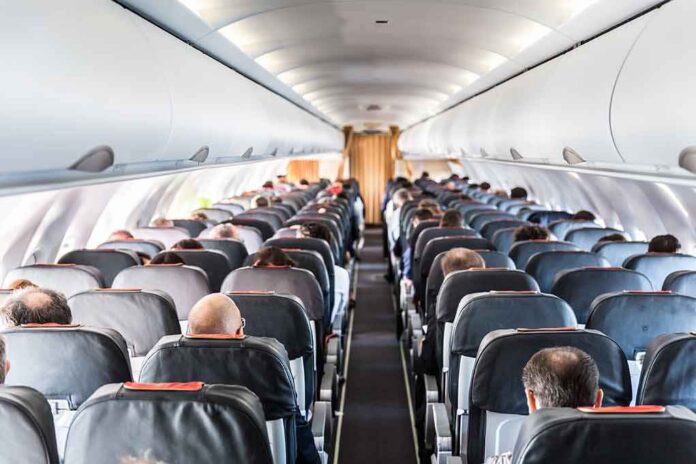
Sepehran Airlines operated a domestic flight from Mashhad to Kermanshah when trouble hit soon after takeoff. Reports say a tire failed on departure, and the crew reported an engine emergency. The pilots turned back to Mashhad and landed without injuries. Video from inside the cabin shows severe shaking and ceiling panels pulling loose as passengers braced and prayed. The event drew fast coverage because the footage delivered raw sound, falling panels, and a tight landing that ended well.
Investigators will trace the sequence, but the early picture is clear enough for the basics. The trigger was reported as a tire problem, followed by engine trouble. That chain fits a known pattern. When a tire sheds rubber at high speed, debris can strike the fuselage or get sucked toward an engine. That damage can cause heavy vibration, which matches what passengers filmed in the cabin as panels detached under stress.
Why A Failed Tire Can Threaten An Engine
Past investigations show how tire debris becomes a flying hammer. The Air Accident Investigation Sector documented a case where a nose wheel tread broke loose and went into an engine, causing failure. A Boeing 777 in Abu Dhabi lost an engine after tread separation sent debris into the fan, forcing an overweight return and a safe landing. The National Transportation Safety Board has cited tread separation and engine ingestion as the cause in similar events. The physics are simple: rubber becomes shrapnel at takeoff speed.
Safety guidance treats tread separation as a serious red flag. Engineering notes and bulletins stress correct tire pressure, careful inspection, and removing any tire with signs of bond failure or deep cuts. Underinflation, overload, or runway debris can set up a weak spot. At rotation speed, that weakness can rip into strips that peel off and ricochet. That is why pilots are trained to keep flying, clean up the airplane, run checklists, and then return to land. That is exactly what the Sepehran crew did.
Inside The Cabin: Why Panels Came Loose
Cabin trim is not flight critical, but it can fail under intense vibration. The videos show ceiling sections and side panels coming free as the aircraft shook. That violence suggests a strong imbalance, possibly from engine damage, landing gear issues, or aerodynamic buffet from disturbed airflow. The sight looks like a structural crisis, but airliners are designed to keep flying even when interior fittings give way. The structure that matters lives under the skin; trim is there to keep it quiet and tidy for passengers.
Passengers faced a primal fear: noise, shaking, and parts dropping. The crew faced a checklist. Aviate, navigate, communicate—keep the jet stable, reduce thrust on the hurt side if needed, and line up for home. The safe outcome proves the discipline worked. The final judgment on the exact failure mode belongs to inspectors with the tire carcass, engine parts, and flight data. The known risk chain from tires to engines makes the early reports plausible on their face.
The Bigger Picture: Known Risks And Practical Fixes
Airlines reduce these risks with basics that never make headlines. Keep tires at the right pressure. Swap any tire with signs of aging or bond failure. Sweep runways for debris. Inspect gear bays and engine inlets after hard takeoffs. Training and checklists buy time when parts do not. When a tire lets go, the margin comes from how fast crews stabilize the aircraft and how well maintenance kept the system strong enough to absorb a hit.
WATCH: Terrifying video captures passengers screaming and praying as violent shaking sends ceiling panels and debris crashing down inside a Boeing 737 over Iran.
Travelers grip seatbacks and reach overhead as parts of the cabin appear to come apart around them. The Sepehran…
— Amerivox Report (@AmerivoxReport) September 17, 2026
The Mashhad return checks the boxes of a professional save. Clear problem, simple plan, tight execution, safe landing. The videos will loop for days because fear sells. The lesson that matters is quieter and more useful. Tire problems can snowball into engine hits. Engines can shake a cabin to pieces. Good training and sturdy airframes turn that worst minute into a walk down the stairs. That is not luck. That is design, discipline, and a crew doing the job.
Sources:
facebook.com, aljazeera.com, english.mathrubhumi.com, migflug.com, skybrary.aero
© conservativehub.com 2026. All rights reserved.