

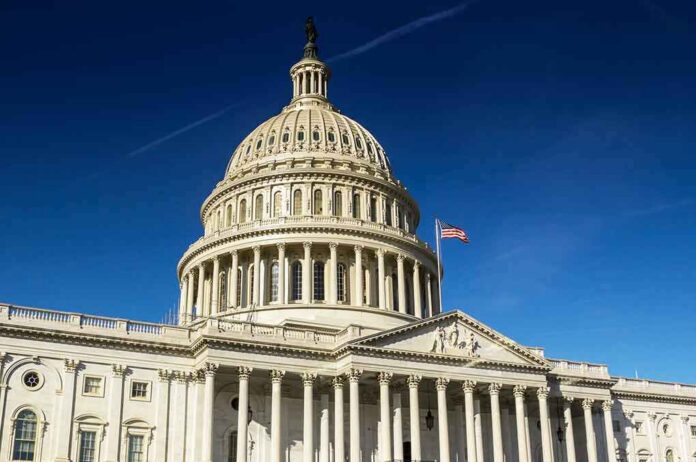
After a wipeout election, House Republicans face a blunt choice: steady operator or street fighter.
At a Glance
- Mike Johnson stepped aside, triggering a two-man race to lead House Republicans.
- Steve Scalise leans on long leadership experience and a unity-first pitch.
- Jim Jordan promises a sharper, organized pushback against Democrats.
- A secret-ballot vote will settle it behind closed doors.
What set the race in motion
Speaker Mike Johnson said he will not seek to lead House Republicans after their midterm losses, clearing the way for a fast contest. Reports outlined a compressed window: declarations due within days, with a conference vote set by party rules soon after. The decision set up a direct clash between Steve Scalise and Jim Jordan to run the minority operation next year. The stakes are simple: who can hold the ranks together while Democrats press their agenda.
Democrats gained wide control, which raised the pressure on Republicans to pick a leader who can steer a smaller ship through rough water. Party insiders describe a rematch of their 2023 speaker saga that showed how winning a room does not always translate to winning the floor. Members remember how both men drew strong support then, yet neither could close the deal. That history will shadow this vote and the months that follow.
Scalise’s case: institution, discipline, and calm
Steve Scalise points to more than a decade inside leadership. He was serving as House majority leader as this race began. His pitch stresses unity, coordination, and sober planning. He argues Republicans need a tested hand to align messaging, floor tactics, and negotiations with the administration while in the minority. Supporters cast him as the conference builder who can keep factions from drifting apart while Democrats pursue investigations and edge their bills forward.
Scalise’s written message promises to keep Republicans “unified” and to calibrate responses to Democratic tactics. He also signals readiness to push back on Democratic oversight moves, including those aimed at President Trump’s team. That stance will please many conservatives who want firm resistance without daily chaos. The risk for Scalise is clear: he represents continuity after a beating at the polls. Voters often punish sameness after losses, even if the operator is capable.
Jordan’s case: energy, clarity, and confrontation
Jim Jordan says Republicans have been living day to day without a clear plan. He vows a leadership team that is active, engaged, forward-looking, and straight-shooting. He leans on his oversight chops and promises to counter Democratic probes that he frames as sprawling and invasive. The offer is direct: pick a fighter who will set the pace, keep members on message, and force Democrats to answer for policy and process. That tone fits a rearguard minority role.
Jordan’s argument centers on structure and speed. He says the conference needs a map that lines up hearings, messaging, and votes so members know the play before the snap. He claims he can maintain unity while driving a tougher line. That is a tall order in a slim minority with many personalities. Some members may want an edge but fear backlash in swing districts. Jordan must show he can dial intensity up or down without splitting the team or risking key seats.
The vote mechanics and the real test ahead
The conference will choose its leader by secret ballot. That method shields wavering members from activist blowback and cable-news pressure. It also makes public whip counts unreliable. Outside observers will see rumors, not receipts, until a winner emerges. The timeline is tight, which helps candidates with prebuilt networks and punishes detailed but slow-moving plans. A hurried process can lock in a result that looks solid on paper but wobbles under governing strain.
Ohio Republican Jim Jordan is making another bid for House leadership, announcing he’ll run for minority leader after Democrats won control of the chamber. Steve Scalise is also seeking the post. pic.twitter.com/MCsWkgs31d
— clevelanddotcom (@clevelanddotcom) November 7, 2026
The winner must solve three problems on day one. First, set a disciplined message that connects with voters who blamed Republicans for dysfunction. Second, manage oversight so it exposes facts and waste without turning every hearing into noise. Third, recruit and protect candidates in swing seats to rebuild a majority. Conservative common sense favors order over drama, results over press hits, and measurable gains over slogans. The conference will reward whoever proves that in practice.
Sources:
washingtonpost.com, spokesman.com, politico.com, 13abc.com, wfla.com, abc13.com, academic.oup.com
© conservativehub.com 2026. All rights reserved.